
All mysteries

Claims and evidence · Folklore & evidence

The Amityville Horror

0 of 3 evidence items examined
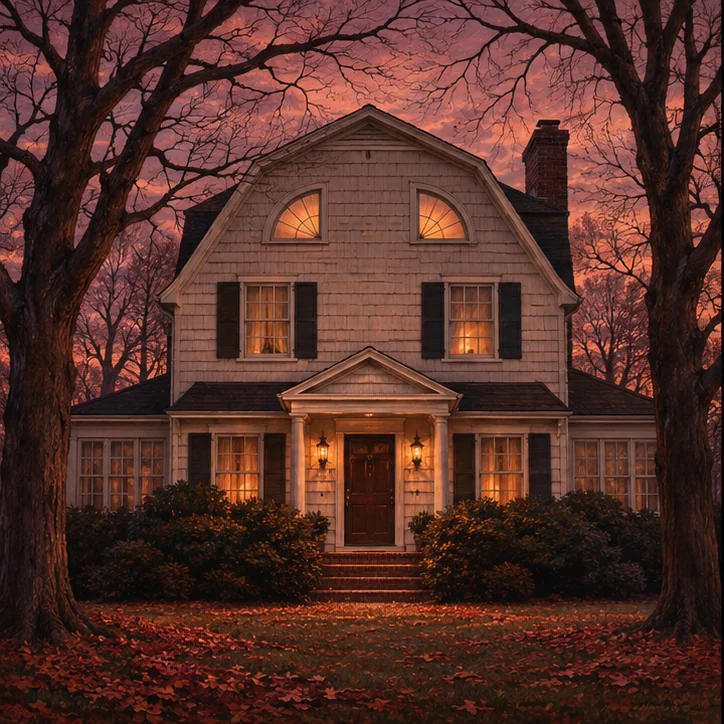
AI-generated editorial illustration: Imagined generic house at twilightView image
AI illustration · imagined scene

How did a family’s reported experiences become a supposedly factual horror franchise?

1974–1979

The story

What we know

Six members of the DeFeo family were murdered in Amityville in November 1974. Ronald DeFeo Jr was convicted. George and Kathy Lutz subsequently lived in the house briefly and reported disturbing experiences. Their account became Jay Anson’s 1977 book and the 1979 film The Amityville Horror. The murders are documented history; the supernatural explanation is not established fact. [1] [2] [3]

More context & timeline

The American Film Institute traces the adaptation’s publishing and production history, including disputes about calling the story true. The Society for Psychical Research’s critical account describes challenges to the haunting narrative, including accusations of invention and commercial negotiations. Those sources concern how the story was produced and contested, rather than demonstrating a supernatural cause. [1] [2] [3]
  1. November 1974

    Six DeFeo family members are murdered. [1]

  2. December 1975–January 1976

    The Lutz family’s brief occupancy supplies the later haunting narrative. [2]

  3. 1977–1979

    Anson’s book and the film adaptation bring the story to a mass audience. [1]

Look closely

Follow the evidence

The house is an imagined setting, not the actual private property; the scenes illustrate the story’s cultural life rather than evidence of a haunting.

AI-generated editorial illustration: Imagined generic house at twilight
AI illustration · imagined scene
Evidence 1

A conviction independent of the haunting

New York appellate records document DeFeo’s conviction and later legal applications. The existence of a criminal case does not authenticate a paranormal account told by later occupants. These require separate evidence. [3]

AI-generated editorial illustration: Illustrated unidentified suburban street
AI illustration · imagined scene
Evidence 2

An adaptation acknowledges changes

AFI records the film’s acknowledgment that events and characters were changed for dramatic effect. A scene in the movie therefore cannot be treated as an independent witness statement simply because the marketing invokes a true story. [1]

AI-generated editorial illustration: Symbolic book and 1970s television
AI illustration · imagined scene
Evidence 3

Conflicting participants with interests

Defence lawyer William Weber alleged that the story had been invented, while George Lutz continued defending its substance. The dispute involved publishing opportunities and litigation. Either participant’s assertion needs corroboration beyond their stake in the account. [2]

Interpret the evidence

Fact, record and legend

Follow a possibility. Weigh what supports it. See where the evidence stops.

AI artwork sets the scene; it does not reconstruct an established answer.

Explore an explanationExperience interpreted through fear and expectation

The support

A family occupying the scene of a notorious crime could interpret unsettling experiences through that knowledge. [2]

The limit

This is a possible framework, not a verified diagnosis of the family or an explanation established for every reported incident. [2]

Explore an explanationInvention and dramatic amplification

The support

Commercial negotiations, contradictory accounts and acknowledged film alterations support examining how an effective story was assembled. [1]

The limit

A profitable narrative does not automatically prove every participant knowingly fabricated every detail. Specific claims require specific tests. [1]

Explore an explanationA genuine haunting

The support

The Lutz family’s account and later paranormal interpretations supplied the central claim. [2]

The limit

Personal conviction, repeated retelling and a film’s success do not establish a supernatural mechanism. The cited critical inquiry found major credibility problems. [2]

When a story moves from testimony to book to film, which details would you insist on tracing back to an independently documented source?
AI-generated editorial illustration: Imagined generic house at twilight
AI illustration · imagined scene

Connected place

American Film Institute Catalog

The public catalog explains the adaptation and its production context.

Visitor guide

This learning destination replaces a visit to the private house. No access to the residence is offered or encouraged.

AI-generated editorial illustration: Symbolic book and 1970s television
AI illustration · imagined scene

Keep investigating

Step beyond the story.

Explore the connected place, examine the records, and form your own reading of the evidence.

Photo credits & full-image view
AI-generated editorial illustration for The Amityville Horror. It is an imagined scene, not a historical photograph or source evidence.

Created for TrekboundX · Image source · AI artwork details

Left panel extracted from a generated triptych and optimized as WebP without enlargement. The original PNG and generation prompt are preserved in the project artwork ledger.

Scene artwork is AI-generated editorial illustration. Real photographs and original records retain their separate credits.

Sources & further reading

Original TrekBoundX writing. Research reviewed November 25, 2026. Source links do not imply institutional endorsement.

  1. American Film InstituteThe Amityville Horror (1979): catalog and production historyExamine the source
  2. Society for Psychical Research / Psi EncyclopediaAmityville HoaxExamine the source
  3. New York State Law Reporting BureauPeople v DeFeo: appellate application reported in 307 AD2d (2003)Examine the source
Suggest a correction
All mysteriesNext mysteryThe Lindbergh Kidnapping

The Amityville Horror — image

AI-generated editorial illustration: Imagined generic house at twilight
AI-generated editorial illustration for The Amityville Horror. It is an imagined scene, not a historical photograph or source evidence.

Created for TrekboundX · Image source · AI artwork details

Left panel extracted from a generated triptych and optimized as WebP without enlargement. The original PNG and generation prompt are preserved in the project artwork ledger.