Where did Egypt’s last Ptolemaic queen finally rest?
30 BCE–present
The story
What we know
In 30 BCE, Cleopatra VII and Mark Antony died as Octavian took control of Egypt. Plutarch later reported that Octavian ordered her burial beside Antony. That account gives the search a human ending, but it does not give archaeologists an address they can confidently find today. [1][2][5]
More context & timeline
The tomb remains unidentified. A major scholarly argument places it in Alexandria, near the royal palace described in ancient accounts. Taposiris Magna, west of the city, is another proposed location under investigation. The existence of an ancient sanctuary there is established; its identification as Cleopatra’s burial place is not. [1][2][5]
30 BCE
Antony and Cleopatra die; the later literary account describes their joint burial. [1]
Early second century CE
Plutarch writes his surviving account, long after the events he describes. [1]
2026
A university archaeology forum stresses that the discoveries do not confirm Cleopatra’s tomb. [5]
Look closely
Follow the evidence
Imagined historical context. No scene identifies Cleopatra’s tomb, reconstructs her burial or shows a discovered royal body.
AI illustration · imagined scene
Evidence 1
A building in the story
Plutarch describes Cleopatra taking refuge in a funerary monument and the wounded Antony being brought to her. This supplies an architectural setting, although a narrative cannot locate its surviving foundations. [1]
AI illustration · imagined scene
Evidence 2
Alexandria has the textual case
Classicist Duane Roller reads the palace references as evidence for Alexandria. His argument challenges the leap from objects associated with Cleopatra to a tomb elsewhere. [2]
AI illustration · imagined scene
Evidence 3
A scan cannot identify an occupant
Geophysical work at Taposiris can locate buried features worth investigating. Subsurface anomalies require excavation and interpretation; they do not identify a queen or establish a royal burial. [3]
1 / 3
Interpret the evidence
What could explain it?
Follow a possibility. Weigh what supports it. See where the evidence stops.
AI artwork sets the scene; it does not reconstruct an established answer.
AIExplore an explanationA royal tomb in Alexandria
The support
The ancient narrative’s palace setting supports a burial in the royal city, the strongest location argument presented in Roller’s study. [2]
The limit
No securely identified structure, inscription, or remains currently supplies the missing physical confirmation. [2]
AIExplore an explanationA burial at Taposiris Magna
The support
The sanctuary is a genuine ancient site where researchers have tested a proposed alternative with archaeological and geophysical methods. [3]
The limit
A plausible search location is not a discovery. Temples, coins, or tunnels require an independent link to Cleopatra’s interment. [3]
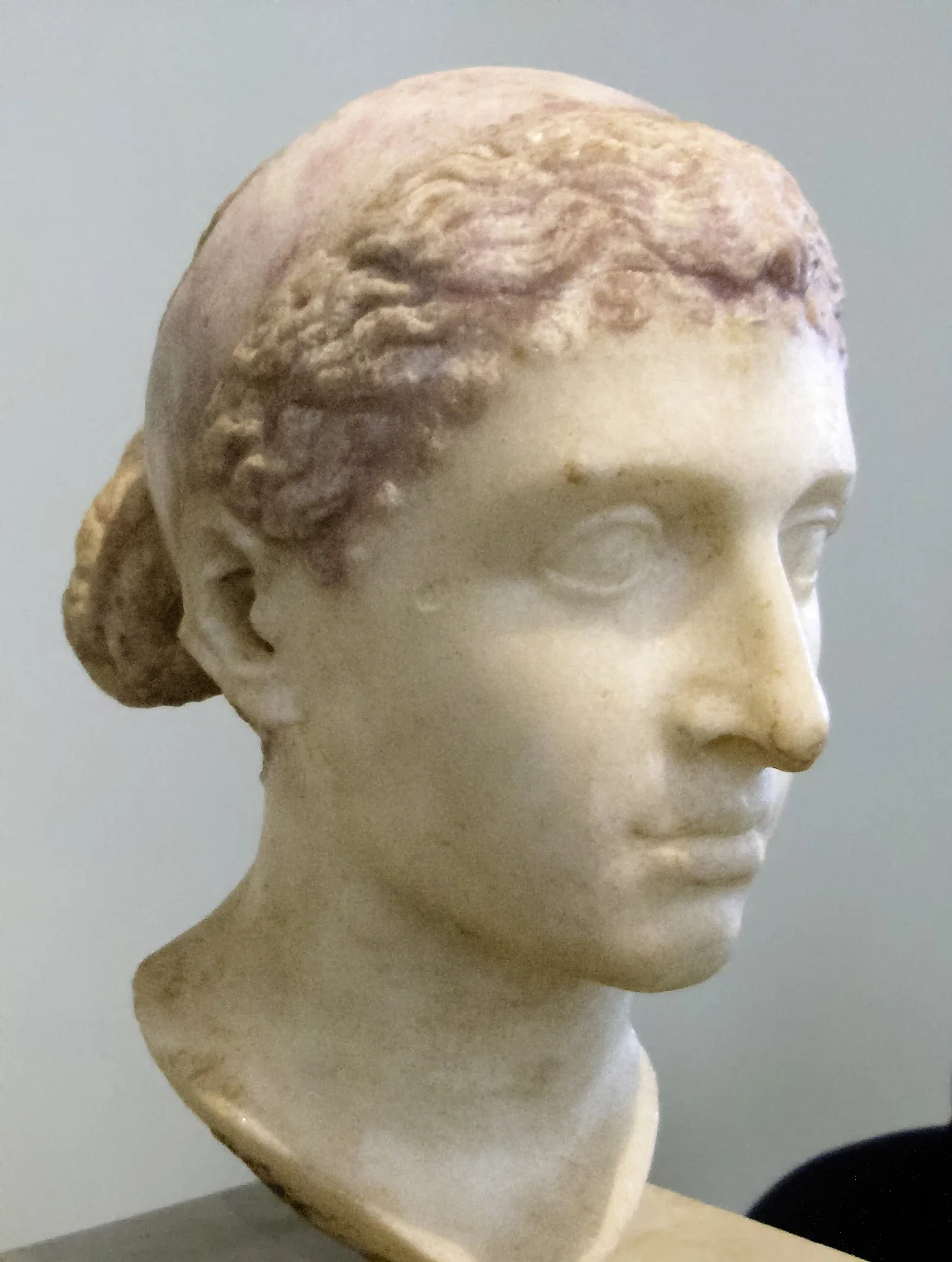
Would a royal portrait persuade you—or would you require an inscription naming the person buried?
Ancient portrait bust photograph
Connected place
Alexandria National Museum
A public museum for the city’s archaeological history.
Use the official museum information to plan a visit. This is a historical context stop, not the location of Cleopatra’s tomb or a promise of particular objects on display.
AI illustration · imagined scene
Keep investigating
Step beyond the story.
Explore the connected place, examine the records, and form your own reading of the evidence.
Photo credits & full-image view
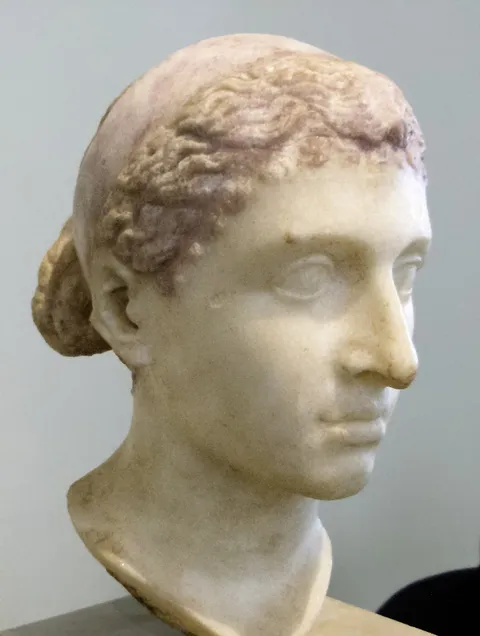
A marble bust identified as Cleopatra VII, photographed at the Altes Museum in Berlin. Museum context for the ruler, not a tomb discovery.
Resized without enlargement and converted to WebP; orientation follows source metadata. No manual crop or content alteration. The complete downloaded frame is preserved; card or banner display crops may be used. Image derivatives retain the stated rights or license.
Scene artwork is AI-generated editorial illustration. Real photographs and original records retain their separate credits.
Sources & further reading
Original TrekBoundX writing. Research reviewed November 24, 2026. Source links do not imply institutional endorsement.