The story
What we know
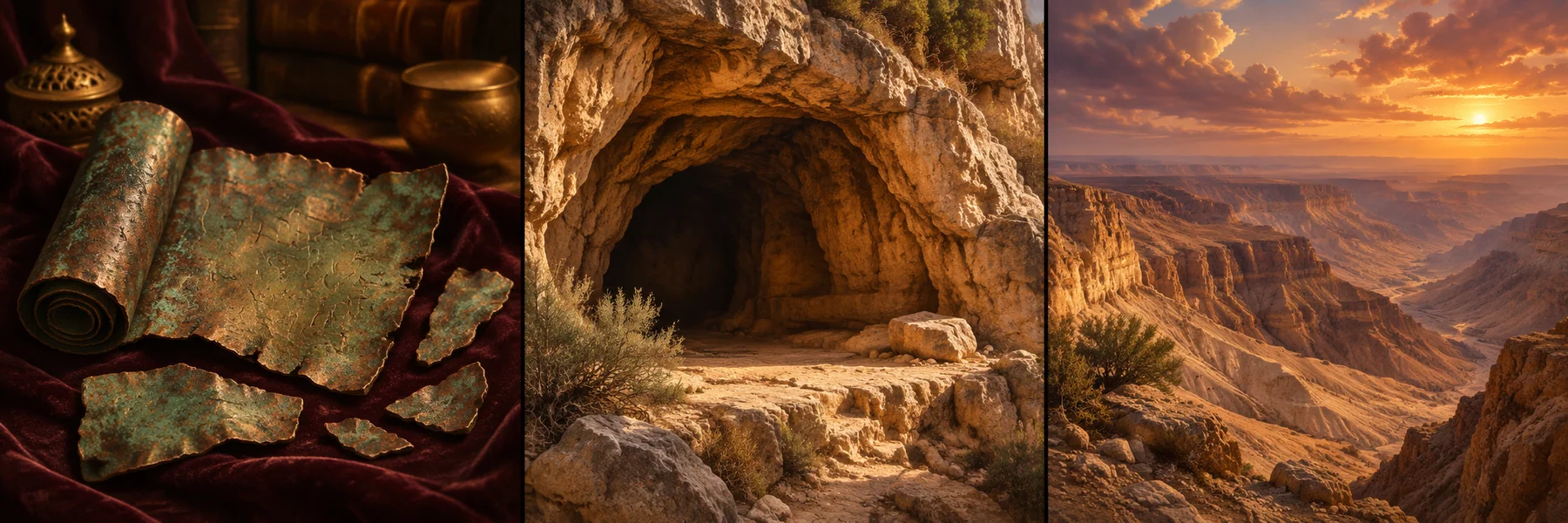
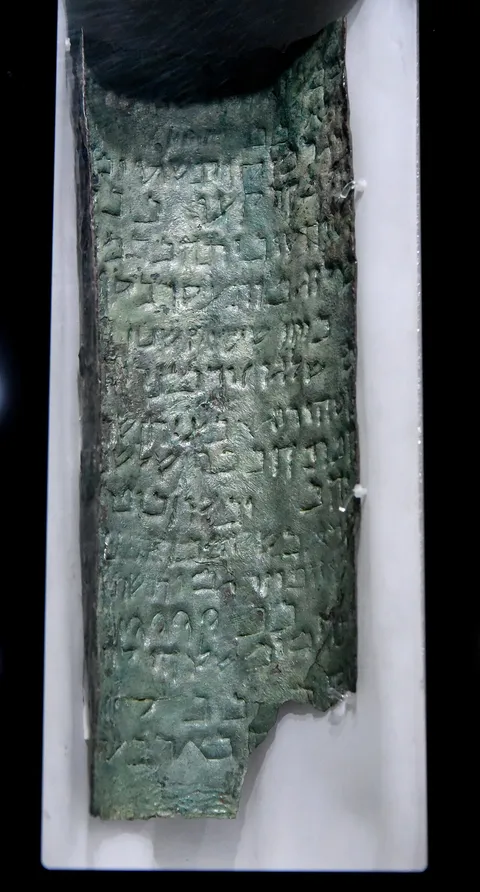
In 1952, archaeologists exploring Cave 3 near Qumran found two corroded copper rolls. They belonged to one manuscript. Unlike the leather and papyrus scrolls from other caves, this text had been engraved into metal—and it described valuable objects hidden in numerous places. [1] [2]
More context & timeline
The fragile rolls could not simply be opened. Cutting them into segments made the Hebrew text readable, revealing twelve columns. The manuscript is real; the status of its inventory is debated. Its directions are an ancient document to interpret, not a verified modern treasure map. [1] [2]