
All mysteries

History and claims · Documented history

John Dillinger’s Death and the Impostor Claim

0 of 3 evidence items examined
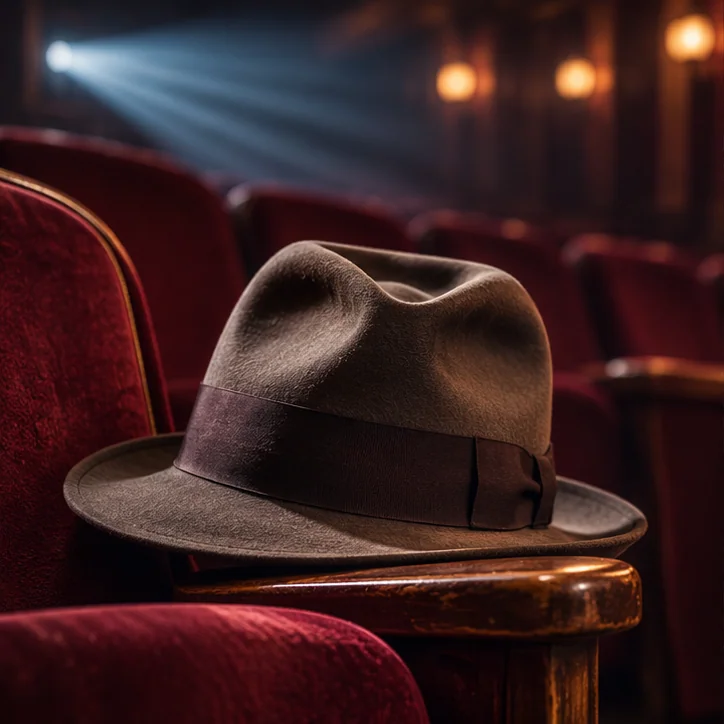
AI-generated editorial illustration: A felt hat resting beside an empty cinema seat.View image
AI illustration · imagined scene

Why do identity doubts outlive records created at the time of a death?

1934 and later retellings

The story

What we know

Federal agents confronted John Dillinger near Chicago’s Biograph Theater on 22 July 1934, where he was killed. The historical task is to evaluate identification evidence, not presume a substitute-body mystery. [1] [2] [3]

More context & timeline

The FBI documents the death and preserves a substantial case file. Contemporary fingerprint material was forwarded for identification, and a surviving card is reproduced in the Justice Department’s museum catalogue. These records concern a specific person and event, rather than a resemblance inferred decades later from a photograph. [1] [2] [3]

  1. 22 July 1934

    Dillinger is killed near the Biograph Theater in Chicago. [1]

  2. That night

    Fingerprints are sent to the federal identification service, as recorded in the case file. [2]

  3. Later collections

    Archives and museums preserve fingerprints, reports, photographs, and objects associated with the event. [3]
Look closely

Follow the evidence

Imagined cinema and archive imagery for documented history. Dillinger’s death is not treated as an established impostor case; no scene recreates forensic evidence or identifies a substitute.

AI-generated editorial illustration: A felt hat resting beside an empty cinema seat.
AI illustration · imagined scene
Evidence 1

Identity left a contemporary paper trail

The case file records fingerprint transmission and identification testimony. Its timing and provenance make it different from an unsupported modern claim about appearance. [2]

AI-generated editorial illustration: An anonymous historical cinema at evening.
AI illustration · imagined scene
Evidence 2

Concealment attempts do not prove substitution

The surviving fingerprint card reflects Dillinger’s efforts to evade recognition. Changes in appearance or damaged prints need interpretation; they do not establish that another person took his place. [3]

AI-generated editorial illustration: A closed folder on an archive table.
AI illustration · imagined scene
Evidence 3

Public memory selects dramatic objects

Museum collections preserve objects and images associated with famous crimes. Such material should be read alongside identification records rather than treated as a theatrical substitute for them. [4]

Interpret the evidence

Fact, record and legend

Follow a possibility. Weigh what supports it. See where the evidence stops.

AI artwork sets the scene; it does not reconstruct an established answer.

Explore an explanationDillinger was the man killed in Chicago

The support

The historical account is supported by contemporary investigation and identification records, with federal institutions preserving the evidence. [1]

The limit

Some details of the confrontation or later recollections can still be examined critically. That does not automatically reopen the identity of the deceased. [1]

Explore an explanationAn impostor story grew around a famous death

The support

A fugitive known for evasion offers a powerful starting point for stories that he escaped one final time. [2]

The limit

Narrative appeal is not identification evidence. A substitute-body claim must explain the contemporary record and provide affirmative proof, not simply point to a disputed photograph or an apparent inconsistency. [2]

When appearance and a contemporary identification record seem to conflict, how would you test the apparent contradiction?
AI-generated editorial illustration: A felt hat resting beside an empty cinema seat.
AI illustration · imagined scene

Connected place

Chicago History Museum

A public museum and research institution documenting the city’s history and crime narratives.

Visitor guide

Consult museum and research access information. Particular records may require arrangements; this card proposes no cemetery investigation, private location, or reconstruction of the shooting.

AI-generated editorial illustration: A closed folder on an archive table.
AI illustration · imagined scene

Keep investigating

Step beyond the story.

Explore the connected place, examine the records, and form your own reading of the evidence.

Photo credits & full-image view
AI-generated editorial illustration for The death of John Dillinger. It is an imagined scene, not a historical photograph or source evidence.

Created for TrekboundX · Image source · AI artwork details

Left panel extracted from a generated triptych and optimized as WebP without enlargement. The original PNG and generation prompt are preserved in the project artwork ledger.

Scene artwork is AI-generated editorial illustration. Real photographs and original records retain their separate credits.

Sources & further reading

Original TrekBoundX writing. Research reviewed November 25, 2026. Source links do not imply institutional endorsement.

  1. Federal Bureau of InvestigationJohn Dillinger: Famous CasesExamine the source
  2. Federal Bureau of Investigation: Records VaultJohn Dillinger, Part 1Examine the source
  3. U.S. Department of Justice / The FBI ExperienceMuseum Exhibit Catalog: Dillinger fingerprint cardExamine the source
  4. Chicago History MuseumTrue Crime research guide: Specific CasesExamine the source
Suggest a correction
All mysteriesNext mysteryThe Missing Tesla Papers

John Dillinger’s Death and the Impostor Claim — image

AI-generated editorial illustration: A felt hat resting beside an empty cinema seat.
AI-generated editorial illustration for The death of John Dillinger. It is an imagined scene, not a historical photograph or source evidence.

Created for TrekboundX · Image source · AI artwork details

Left panel extracted from a generated triptych and optimized as WebP without enlargement. The original PNG and generation prompt are preserved in the project artwork ledger.