
All mysteries

Science mysteries

The WWII Foo Fighters Phenomenon

0 of 3 evidence items examined
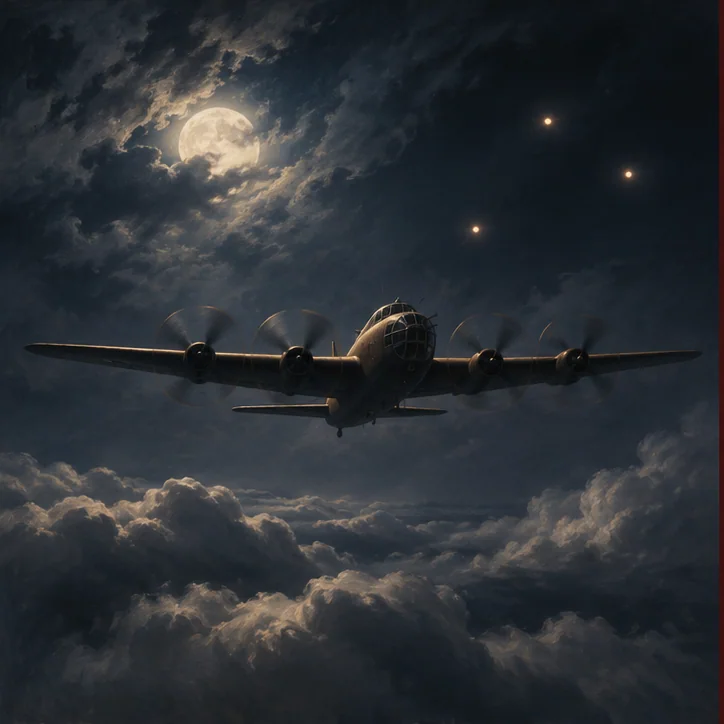
AI-generated editorial illustration: Illustrative period aircraft with ambiguous distant night lights.View image
AI illustration · imagined scene

What did aircrews report, and what can surviving records establish about the lights they could not identify?

1940s

The story

What we know

During the Second World War, Allied aircrews reported unusual lights that appeared near aircraft. Late-1944 accounts from the American 415th Night Fighter Squadron became especially famous. The nickname foo fighters grouped observations together, without establishing that they all involved the same object or phenomenon. [1] [2]

More context & timeline

The National Archives describes British collection of night-phenomena reports from 1942 and exchanges with American authorities. Wartime officials considered enemy technology. The archive’s guide notes that the occupation of Germany did not reveal an advanced weapon that explained the reported lights. [1] [2]
  1. 1942 onward

    The RAF collects reports of night phenomena. [1]

  2. Late 1944

    The 415th Night Fighter Squadron reports unfamiliar lights over Europe. [2]

  3. 1945

    Press reporting gives the nickname and observations a wider audience. [2]

Look closely

Follow the evidence

Report-inspired illustration, not an authentic encounter photograph or proof of extraterrestrial craft. Ambiguous lights remain ambiguous; no operational military or flight guidance.

AI-generated editorial illustration: Illustrative period aircraft with ambiguous distant night lights.
AI illustration · imagined scene
Evidence 1

A report establishes an observation claim

Pilot and crew descriptions preserve what witnesses said they saw under difficult conditions. Their professionalism matters, but it does not turn an uncertain estimate of distance, speed, or shape into a measurement made by an independent instrument. [2]

AI-generated editorial illustration: Imagined historical aircrew desk with closed flight log.
AI illustration · imagined scene
Evidence 2

An absent radar return has limits

Some reported episodes lacked a corresponding radar indication. That can help test an explanation, yet it does not uniquely identify a luminous atmospheric event, an optical effect, or a physical object outside the instrument’s effective detection conditions. [2]

AI-generated editorial illustration: Illustrative historical airfield beneath low cloud.
AI illustration · imagined scene
Evidence 3

Archival categories affect later research

The National Archives explains how wartime combat reports were created and organized. Researchers must distinguish an original report, an intelligence summary, a newspaper story, and a recollection decades later. Several retellings can derive from one underlying account. [3]

Interpret the evidence

What could explain it?

Follow a possibility. Weigh what supports it. See where the evidence stops.

AI artwork sets the scene; it does not reconstruct an established answer.

Explore an explanationEnemy experimental technology caused the sightings

The support

Crews were operating in a war where unfamiliar aircraft and weapons were real possibilities. Investigating that explanation was a reasonable contemporary intelligence task. [1]

The limit

The National Archives guide records no recovered advanced German system that explained the phenomenon. A wartime suspicion is not confirmation, and later invented flying-disc stories do not fill that evidentiary gap. [1]

Explore an explanationSeveral natural or perceptual causes were grouped together

The support

Lights observed at night can be difficult to place in three-dimensional space. Atmospheric effects, visual interpretation, and differing circumstances offer categories to test against individual reports. [2]

The limit

A general category is not a demonstrated diagnosis for every event. Incomplete records may prevent a confident explanation, and unexplained observations do not by themselves establish extraterrestrial vehicles. [2]

If several reports share a nickname, what evidence would show that the observers encountered the same kind of thing?
AI-generated editorial illustration: Illustrative period aircraft with ambiguous distant night lights.
AI illustration · imagined scene

Connected place

The National Archives, United Kingdom

Public research guides explain wartime aviation records and the documentary history of unusual aerial reports.

Visitor guide

This is an archival learning connection. Record availability varies; no particular aircraft, sighting site, or current military facility is offered for access.

AI-generated editorial illustration: Illustrative historical airfield beneath low cloud.
AI illustration · imagined scene

Keep investigating

Step beyond the story.

Explore the connected place, examine the records, and form your own reading of the evidence.

Photo credits & full-image view
AI-generated editorial illustration for The WWII Foo Fighters phenomenon. It is an imagined scene, not a historical photograph or source evidence.

Created for TrekboundX · Image source · AI artwork details

Left panel extracted from a generated triptych and optimized as WebP without enlargement. The original PNG and generation prompt are preserved in the project artwork ledger.

Scene artwork is AI-generated editorial illustration. Real photographs and original records retain their separate credits.

Sources & further reading

Original TrekBoundX writing. Research reviewed November 25, 2026. Source links do not imply institutional endorsement.

  1. The National ArchivesUFO research guide: historical background, 2011Examine the source
  2. Smithsonian Air & Space MagazineWhat Were the Mysterious Foo Fighters Sighted by WWII Night Flyers?Examine the source
  3. The National ArchivesRoyal Air Force combat reports, 1939–1945Examine the source
Suggest a correction
All mysteriesNext mysteryThe Anthrax Investigation

The WWII Foo Fighters Phenomenon — image

AI-generated editorial illustration: Illustrative period aircraft with ambiguous distant night lights.
AI-generated editorial illustration for The WWII Foo Fighters phenomenon. It is an imagined scene, not a historical photograph or source evidence.

Created for TrekboundX · Image source · AI artwork details

Left panel extracted from a generated triptych and optimized as WebP without enlargement. The original PNG and generation prompt are preserved in the project artwork ledger.