What did the final submarine voyages actually carry—and what was added by later escape stories?
1945
The story
What we know
German submarines continued operating as the Nazi regime collapsed in 1945. U-234 was attempting to reach Japan with military specialists and advanced equipment before surrendering. U-530 and U-977 later reached Argentina. The unusual timing and destinations encouraged stories about hidden leaders and treasure, but those stories need evidence beyond a late arrival. [1][2]
More context & timeline
Naval History and Heritage Command distinguishes the documented voyages from the claim that the Argentine-bound boats transported senior Nazis or treasure. U-234’s cargo included uranium oxide and military technology; that fact belongs to wartime exchange with Japan, not automatic proof of a working German atomic weapon or an escape by Hitler. [1][2]
March 1945
U-234 begins its final attempt to transport cargo to Japan. [1]
May 1945
Germany capitulates and submarines receive surrender instructions. [3]
July–August 1945
U-530 and U-977 reach Argentina and surrender. [2]
Look closely
Follow the evidence
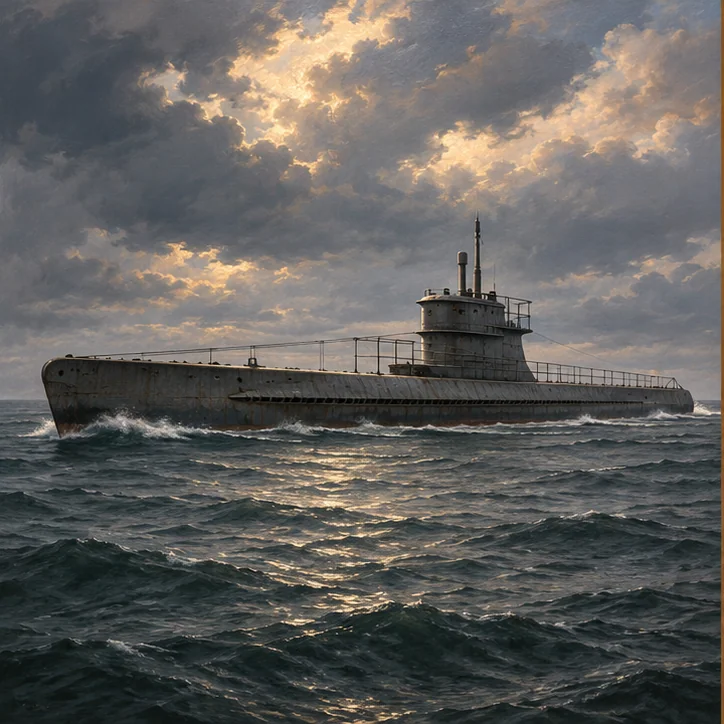
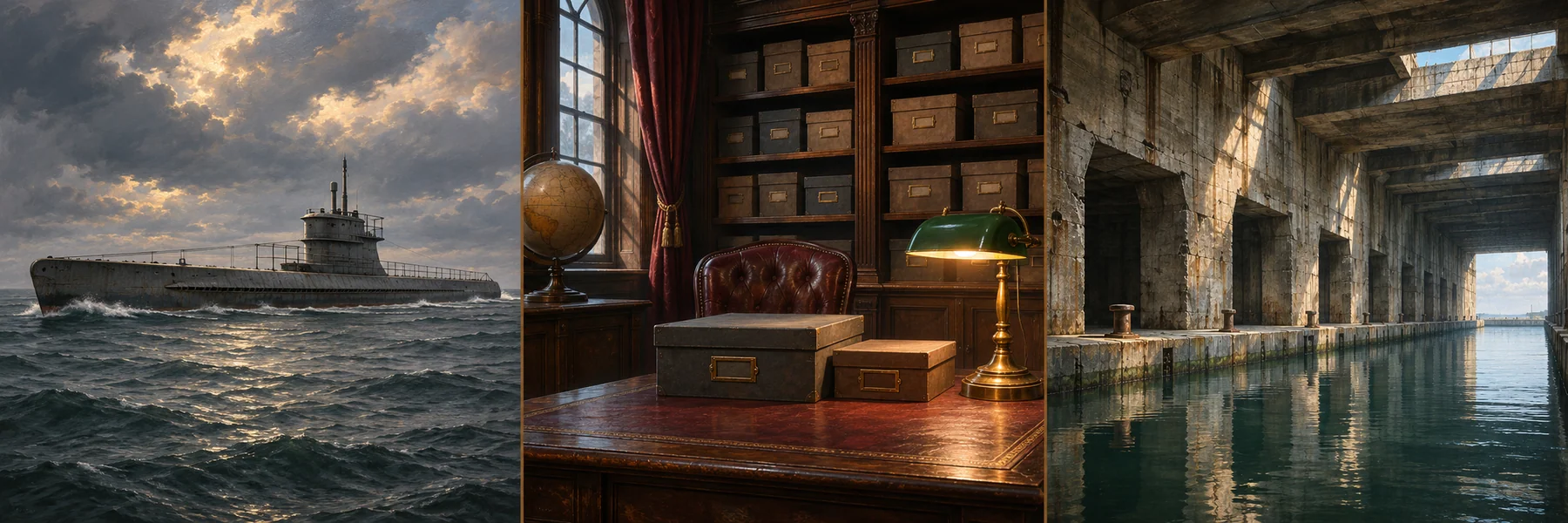
Illustrations evoke submarine operations and records, not a confirmed secret voyage, treasure cargo, or evidence that Hitler escaped.
AI illustration · imagined scene
Evidence 1
Cargo with a documented mission
U-234’s passengers included technical personnel and Japanese officers. Its supplies fit the wider history of exchanges between Germany and Japan. A specific cargo list is more informative than calling every late voyage a secret escape mission. [1]
AI illustration · imagined scene
Evidence 2
A surrender order and an exceptional route
The RAF’s maritime narrative records the May surrender signal and U-530’s continuation toward South America. This creates a genuine question about command decisions and timing, but it does not identify an unrecorded passenger. [3]
AI illustration · imagined scene
Evidence 3
Suspicion tested against another disaster
The two Argentine arrivals were suspected in the loss of Brazil’s cruiser Bahia. The Navy account instead attributes that loss to an accidental explosion. An alarming coincidence was investigated; it did not remain equally persuasive after contrary evidence. [2]
1 / 3
Interpret the evidence
Fact, record and legend
Follow a possibility. Weigh what supports it. See where the evidence stops.
AI artwork sets the scene; it does not reconstruct an established answer.
AIExplore an explanationWartime technology exchange
The support
U-234’s mission fits established efforts to move specialists, equipment and materials between the Axis partners. [1]
The limit
Its unusual cargo does not justify claims about the ultimate use of every item without further documentation. [1]
AIExplore an explanationCrews choosing a distant surrender destination
The support
The Argentine voyages can be examined through surrender records, interrogation and each boat’s movements after Germany’s defeat. [2]
The limit
A late surrender creates questions about a crew’s choices; it is not proof that prominent fugitives were aboard. [2]
AIExplore an explanationA hidden escape or treasure fleet
The support
Secrecy, long underwater voyages and the Argentine destination supplied attractive ingredients for later narratives. [2]
The limit
The institutional histories cited here do not substantiate the claimed transport of Hitler, other senior leaders or a concealed treasure cargo by these boats. [2]
If a boat carried genuinely secret cargo, what additional evidence would connect that secrecy to a particular person or destination?
AI illustration · imagined scene
Connected place
Naval History and Heritage Command
Public historical essays explain the final U-boat operations and surrender stories.
Left panel extracted from a generated triptych and optimized as WebP without enlargement. The original PNG and generation prompt are preserved in the project artwork ledger.
Scene artwork is AI-generated editorial illustration. Real photographs and original records retain their separate credits.
Sources & further reading
Original TrekBoundX writing. Research reviewed November 25, 2026. Source links do not imply institutional endorsement.