
All mysteries

Historic investigations · Documented history

The Assassination of John F. Kennedy

0 of 5 evidence items examined
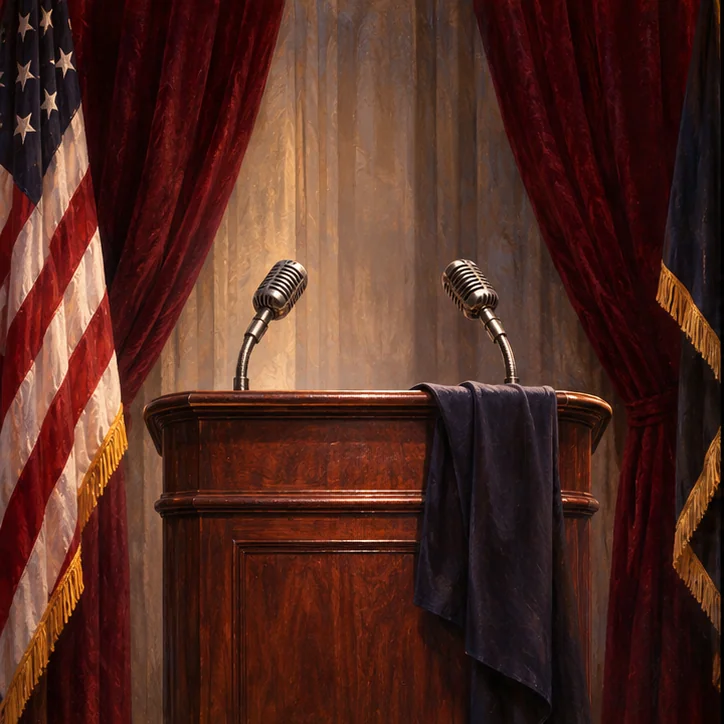
AI-generated editorial illustration: Symbolic empty presidential lecternView image
AI illustration · imagined scene

How should conflicting investigations be weighed when a key piece of scientific evidence is later challenged?

1963–present

The story

What we know

President John F. Kennedy was assassinated in Dallas on November 22, 1963. Lee Harvey Oswald was arrested and was killed by Jack Ruby two days later, before a trial. The Warren Commission reported in 1964 that Oswald acted alone. The House Select Committee on Assassinations later agreed that Oswald fired the fatal shots but reached a different conclusion about possible conspiracy. [1] [2] [3] [4]

More context & timeline

The House committee’s 1979 probable-conspiracy finding relied heavily on acoustic analysis suggesting another gunman. A subsequent National Research Council review rejected that acoustic basis. These are dated findings with different evidential foundations, not interchangeable official verdicts. NARA continues to publish records, including a January 2026 release listed on its current release page. [1] [2] [3] [4]
  1. November 22–24, 1963

    Kennedy is assassinated; Oswald is arrested and then killed before trial. [1]

  2. 1964–1982

    The Warren report, House inquiry and acoustic reassessment reach differing conclusions. [3]

  3. January 30, 2026

    NARA posts an additional release of assassination records. [4]

Look closely

Follow the evidence

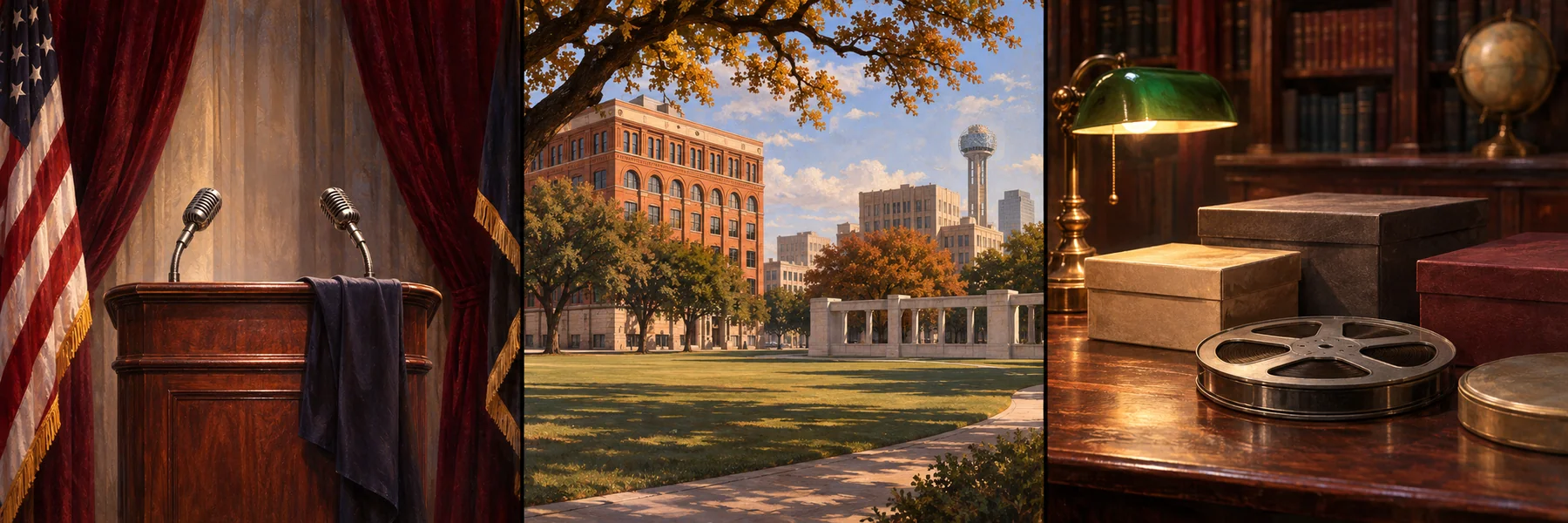
The images evoke public history and archival inquiry without depicting the assassination, a victim, a gunman, or a conspiracy as fact.

AI-generated editorial illustration: Symbolic empty presidential lectern
AI illustration · imagined scene
Evidence 1

Agreement beneath the disagreement

Both the Warren Commission and House committee attributed the shots that struck Kennedy to Oswald. Their disagreement over conspiracy should not obscure that substantial shared conclusion or imply that the House identified an alternative assassin. [2]

AI-generated editorial illustration: Imagined unoccupied urban plaza
AI illustration · imagined scene
Evidence 2

A recording must first be synchronised

The later acoustic review concluded that the impulses used to suggest another gunman occurred after the assassination. If timing is wrong, a visually persuasive match between sound patterns cannot establish an additional shot at the relevant moment. [3]

AI-generated editorial illustration: Illustrated archive boxes and film reel
AI illustration · imagined scene
Evidence 3

Release dates are not event dates

The NARA release page distinguishes newly published material from records created decades earlier. Declassification opens evidence to scrutiny; it does not automatically authenticate every allegation an intelligence agency collected. [4]

AI-generated editorial illustration: Symbolic empty presidential lectern
AI illustration · imagined scene
Evidence 4

The rifle and the purchase documents

The Warren Commission connected the recovered rifle to purchase records and reported forensic matches involving the cartridge cases and recovered bullet material. These were distinct parts of its case against Oswald. They should be assessed through the documented examinations, rather than treated as proof merely because a report states a conclusion. [1]

AI-generated editorial illustration: Imagined unoccupied urban plaza
AI illustration · imagined scene
Evidence 5

Frames that anchor the sequence

The Commission compared films by Abraham Zapruder, Orville Nix and Mary Muchmore with testimony and site measurements. Camera testing helped translate frames into time estimates. A film can constrain the sequence and positions within its view; it does not show every location or resolve every question outside that view. [5]

Interpret the evidence

Fact, record and legend

Follow a possibility. Weigh what supports it. See where the evidence stops.

AI artwork sets the scene; it does not reconstruct an established answer.

Explore an explanationOswald acting alone

The support

The Warren Commission connected Oswald with the rifle, location and sequence of events and found no established conspiracy. [1]

The limit

The Commission’s methods and completeness remain legitimate subjects of historical criticism; its conclusion should be assessed through its evidence. [1]

Explore an explanationA conspiracy as proposed by the House committee

The support

The committee regarded acoustic evidence as supporting another gunman while acknowledging it could not identify the conspiracy’s extent. [3]

The limit

The subsequent scientific rejection of that acoustic foundation materially weakens this particular argument. It must accompany any description of the committee’s finding. [3]

If an inquiry’s most distinctive conclusion depends on one scientific result, how should your assessment change when that result fails a later review?
AI-generated editorial illustration: Symbolic empty presidential lectern
AI illustration · imagined scene

Connected place

National Archives JFK collection

Public access brings reports and released records together for independent study.

Visitor guide

Online availability and redactions vary by record. A catalog entry or official file is not an endorsement of every claim inside it.

AI-generated editorial illustration: Illustrated archive boxes and film reel
AI illustration · imagined scene

Keep investigating

Step beyond the story.

Explore the connected place, examine the records, and form your own reading of the evidence.

Photo credits & full-image view
AI-generated editorial illustration for The assassination of JFK. It is an imagined scene, not a historical photograph or source evidence.

Created for TrekboundX · Image source · AI artwork details

Left panel extracted from a generated triptych and optimized as WebP without enlargement. The original PNG and generation prompt are preserved in the project artwork ledger.

Scene artwork is AI-generated editorial illustration. Real photographs and original records retain their separate credits.

Sources & further reading

Original TrekBoundX writing. Research reviewed November 26, 2026. Source links do not imply institutional endorsement.

  1. Warren Commission / National ArchivesReport, Chapter 1: Summary and Conclusions (1964)Examine the source
  2. House Select Committee on Assassinations / National ArchivesSummary of Findings (1979)Examine the source
  3. FBI Law Enforcement Bulletin / Office of Justice ProgramsAcoustic Gunshot Analysis: the Kennedy assassination and scientific review (1983)Examine the source
  4. National ArchivesJFK Assassination Records: 2025–2026 documents releaseExamine the source
  5. Warren Commission / National ArchivesReport, Chapter 3: The Shots from the Texas School Book Depository (1964)Examine the source
Suggest a correction
All mysteriesNext mysteryThe Phoenix Lights

The Assassination of John F. Kennedy — image

AI-generated editorial illustration: Symbolic empty presidential lectern
AI-generated editorial illustration for The assassination of JFK. It is an imagined scene, not a historical photograph or source evidence.

Created for TrekboundX · Image source · AI artwork details

Left panel extracted from a generated triptych and optimized as WebP without enlargement. The original PNG and generation prompt are preserved in the project artwork ledger.