All mysteries

Folklore & evidence · Folklore & evidence

The Hunt for the Kraken

0 of 3 evidence items examined
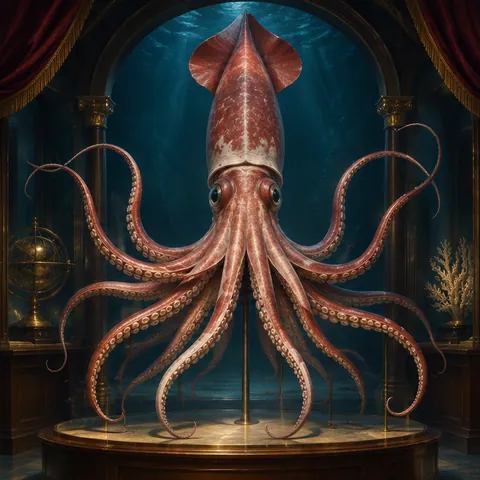
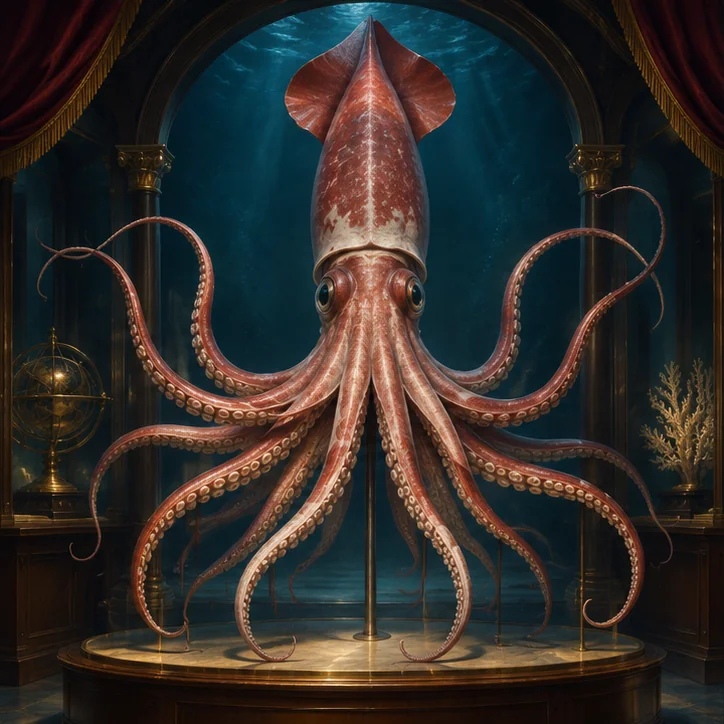
AI-generated editorial illustration: Illustrative museum model of a giant squid.View image
AI illustration · imagined scene

Which parts of the kraken tradition resemble known animals, and which remain storytelling rather than observation?

Maritime tradition to modern research

The story

What we know

Stories of enormous tentacled sea creatures long preceded detailed scientific knowledge of giant squid. Museums now preserve actual specimens and study their anatomy. Those animals help explain why a surprising body seen at sea could inspire a monster, without authenticating every legendary encounter. [1] [2]

More context & timeline

Smithsonian researchers distinguish the giant squid, Architeuthis, from the many imagined creatures attached to its reputation. The Natural History Museum compares sea-monster traditions with known animals and preserves a large squid specimen. Scientific evidence concerns identifiable bodies and observations, not simply a compelling illustration. [1] [2]

  1. Maritime storytelling

    Accounts of enormous sea creatures circulate before modern deep-sea observation. [2]

  2. Nineteenth-century illustration

    Artists popularize dramatic tentacled monsters attacking vessels. [2]

  3. Modern marine research

    Preserved specimens and rare observations support study of actual giant squid. [1]
Look closely

Follow the evidence

The kraken is folklore; real giant squid provide biological context, not proof of legendary ship-destroying monsters or an authenticated historical encounter.

AI-generated editorial illustration: Illustrative museum model of a giant squid.
AI illustration · imagined scene
Evidence 1

A specimen can be examined

A preserved squid supplies measurable anatomy, tissue, and an identifiable physical object. A story may describe impressive size, but without such evidence its estimate cannot be checked in the same way or automatically assigned to one species. [1]

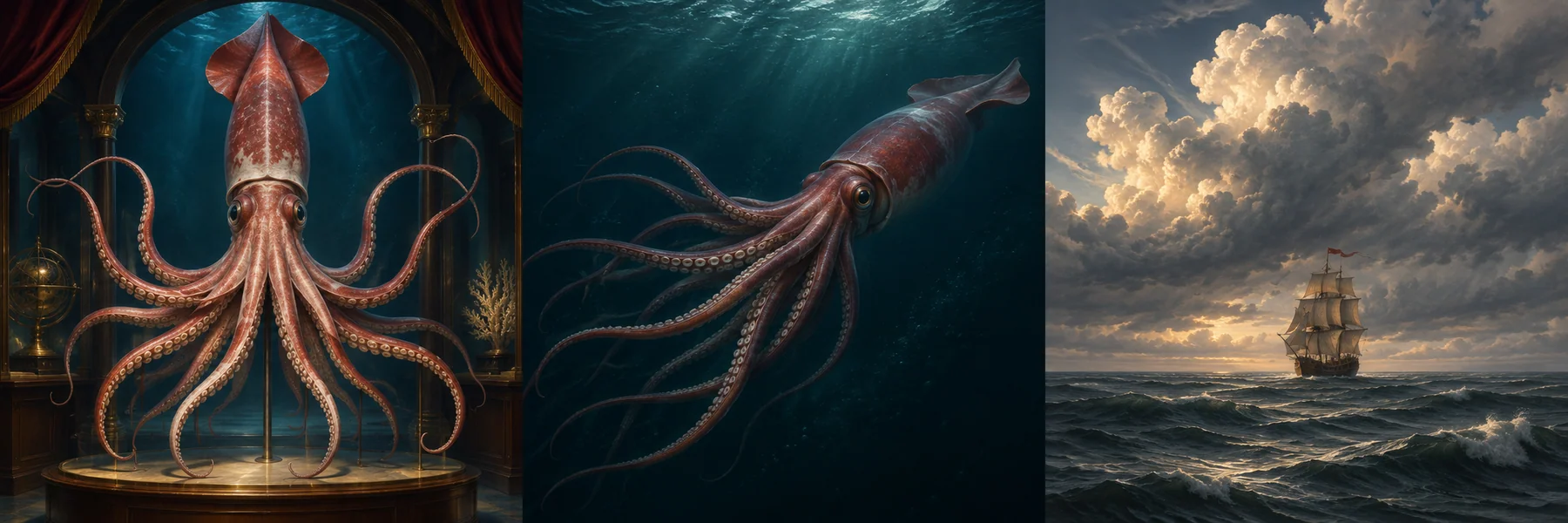
AI-generated editorial illustration: Imagined giant squid in deep water.
AI illustration · imagined scene
Evidence 2

Strandings can connect animal and legend

The Smithsonian notes that dead giant squid reaching shore helped inspire sea-monster tales. A distorted or incomplete carcass can be astonishing, while the later story may add behavior no observer actually witnessed. [3]

AI-generated editorial illustration: Illustrative historical sailing ship on an unsettled sea.
AI illustration · imagined scene
Evidence 3

A famous picture has a genre

The Natural History Museum discusses dramatic illustrations of tentacled creatures attacking ships. These are evidence of artistic imagination and the circulation of an idea. Their visual detail does not make them photographs or independent confirmations of an event. [2]

Interpret the evidence

Fact, record and legend

Follow a possibility. Weigh what supports it. See where the evidence stops.

AI artwork sets the scene; it does not reconstruct an established answer.

Explore an explanationKnown large squid helped inspire the kraken

The support

The animals’ size, unusual anatomy, and rarity near the surface make them credible contributors to a tradition about hidden creatures. Physical specimens provide the natural-history foundation. [3]

The limit

A possible inspiration does not identify the cause of every story. Traditions can combine different animals, exaggerated scale, and narrative conventions over many retellings. [3]

Explore an explanationThe legend describes an unknown ship-destroying species

The support

The deep ocean remains difficult to observe, and even known giant squid were elusive to direct study. That leaves meaningful scientific questions about behavior and distribution. [1]

The limit

Unexplored water is not positive evidence for a specific legendary animal. Establishing a new species requires verifiable biological evidence, not the assumption that every old account was literal. [1]

Which new observation would distinguish a known squid behaving unexpectedly from an entirely new species?
AI-generated editorial illustration: Illustrative museum model of a giant squid.
AI illustration · imagined scene

Connected place

Smithsonian National Museum of Natural History / Ocean Portal

Public natural-history resources explain giant squid and the evidence behind their study.

Visitor guide

The linked resource distinguishes specimens from folklore. Current museum displays and access arrangements may change.

AI-generated editorial illustration: Illustrative historical sailing ship on an unsettled sea.
AI illustration · imagined scene

Keep investigating

Step beyond the story.

Explore the connected place, examine the records, and form your own reading of the evidence.

Photo credits & full-image view
AI-generated editorial illustration for The hunt for the Kraken. It is an imagined scene, not a historical photograph or source evidence.

Created for TrekboundX · Image source · AI artwork details

Left panel extracted from a generated triptych and optimized as WebP without enlargement. The original PNG and generation prompt are preserved in the project artwork ledger.

Scene artwork is AI-generated editorial illustration. Real photographs and original records retain their separate credits.

Sources & further reading

Original TrekBoundX writing. Research reviewed November 25, 2026. Source links do not imply institutional endorsement.

  1. Smithsonian OceanGiant SquidExamine the source
  2. Natural History Museum, LondonSea monsters and their inspirationExamine the source
  3. Smithsonian OceanDeep-sea Giant SquidExamine the source
Suggest a correction
All mysteriesNext mysteryThe Murder of Sam Giancana

The Hunt for the Kraken — image

AI-generated editorial illustration: Illustrative museum model of a giant squid.
AI-generated editorial illustration for The hunt for the Kraken. It is an imagined scene, not a historical photograph or source evidence.

Created for TrekboundX · Image source · AI artwork details

Left panel extracted from a generated triptych and optimized as WebP without enlargement. The original PNG and generation prompt are preserved in the project artwork ledger.