What can new evidence reveal about the community that kept an Inca estate running?
Especially c. 1420–1530 CE
The story
What we know
Machu Picchu’s mountain setting can seem detached from ordinary history, but archaeology places it firmly within the Inca world. Research commonly interprets a royal estate with agricultural, residential, ceremonial, and administrative activities integrated into the landscape. [1][2][3]
More context & timeline
The site was known to local people before Hiram Bingham’s 1911 visit brought it wider international attention. Modern research can revise the chronology and investigate inhabitants without inventing unknown builders. A 2021 dating study placed use roughly between 1420 and 1530; a 2023 DNA study examined the origins of people buried there. [1][2][3]
c. 1420–1530
Radiocarbon research identifies this approximate span of occupation. [2]
1911
Bingham’s visit becomes a major event in international archaeological attention, not the beginning of local knowledge. [1]
2023
Genome-wide research investigates a diverse community associated with the estate. [3]
Look closely
Follow the evidence
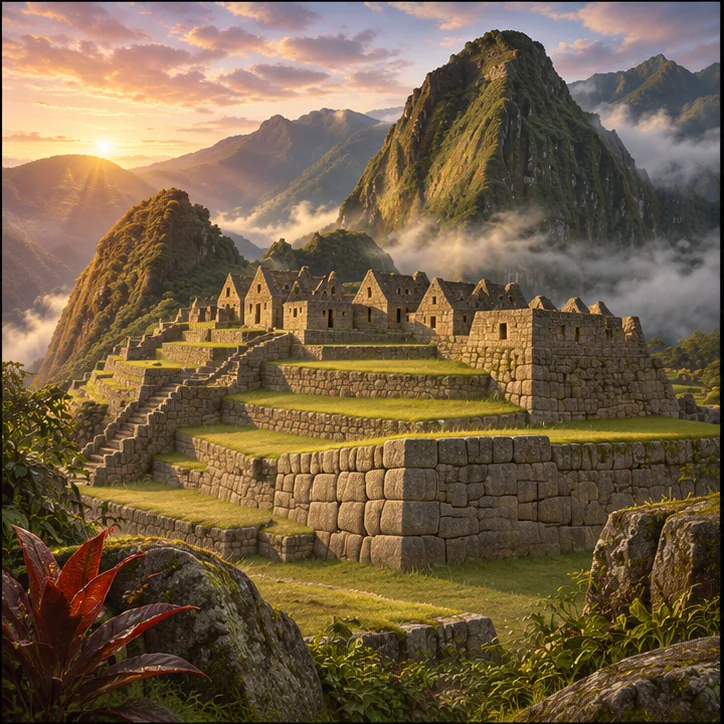
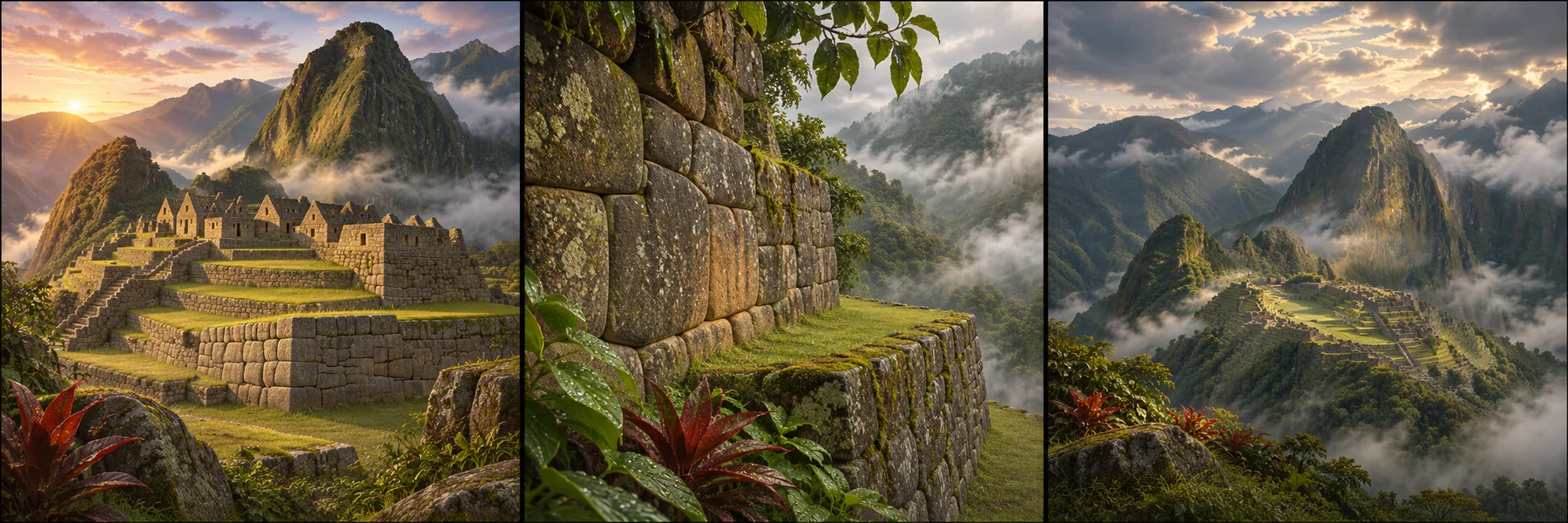
Interpretive views inspired by Machu Picchu’s known Inca architecture. They are not measured reconstructions, new discoveries, or claims of unknown builders.
AI illustration · imagined scene
Evidence 1
Dates can challenge chronicles
Scientific dating suggests an earlier start than a familiar chronology derived from historical accounts. The result invites revision of Inca timelines rather than a wholly different civilisation. [2]
AI illustration · imagined scene
Evidence 2
A community came from many places
The 2023 study found ancestry associated with several regions of the Inca realm among the sampled burials. The estate depended on people whose histories extended far beyond its ridge. [3]
AI illustration · imagined scene
Evidence 3
The landscape was engineered
Terraces, buildings, and planned spaces belong to an integrated Inca landscape. They provide evidence for activities and organisation, even where an individual room’s exact use remains uncertain. [1]
1 / 3
Interpret the evidence
Fact, record and legend
Follow a possibility. Weigh what supports it. See where the evidence stops.
AI artwork sets the scene; it does not reconstruct an established answer.
AIExplore an explanationA royal estate supported by retainers
The support
Historical and archaeological research connects Machu Picchu with Pachacuti’s royal lineage and a community maintaining the estate. [3]
The limit
This broad interpretation does not identify every individual’s occupation, choices, or experience. Genetic ancestry cannot itself supply a job title or personal story. [3]
AIExplore an explanationA place with several connected functions
The support
Agricultural, residential, ceremonial, and other activities can coexist within one planned complex. [1]
The limit
A single-purpose label can oversimplify the evidence. Specific interpretations still need architecture, finds, environmental evidence, and historical context. [1]
Which matters more for understanding a palace: the ruler who visited it, or the people who maintained it?
AI illustration · imagined scene
Connected place
Historic Sanctuary of Machupicchu
The protected Inca landscape at the centre of the research.
Use Peru’s official visitor information for current authorised circuits and arrangements. A research question does not imply access to restricted areas or permission to leave visitor routes.
AI illustration · imagined scene
Keep investigating
Step beyond the story.
Explore the connected place, examine the records, and form your own reading of the evidence.
Photo credits & full-image view
AI-generated editorial illustration for The mysteries of Machu Picchu. It is an imagined scene, not a historical photograph or source evidence.
Left panel extracted from a generated triptych and optimized as WebP without enlargement. The original PNG and generation prompt are preserved in the project artwork ledger.
Scene artwork is AI-generated editorial illustration. Real photographs and original records retain their separate credits.
Sources & further reading
Original TrekBoundX writing. Research reviewed November 25, 2026. Source links do not imply institutional endorsement.