
All mysteries

Ancient enigmas

Rapa Nui’s Moai and Island History

0 of 3 evidence items examined
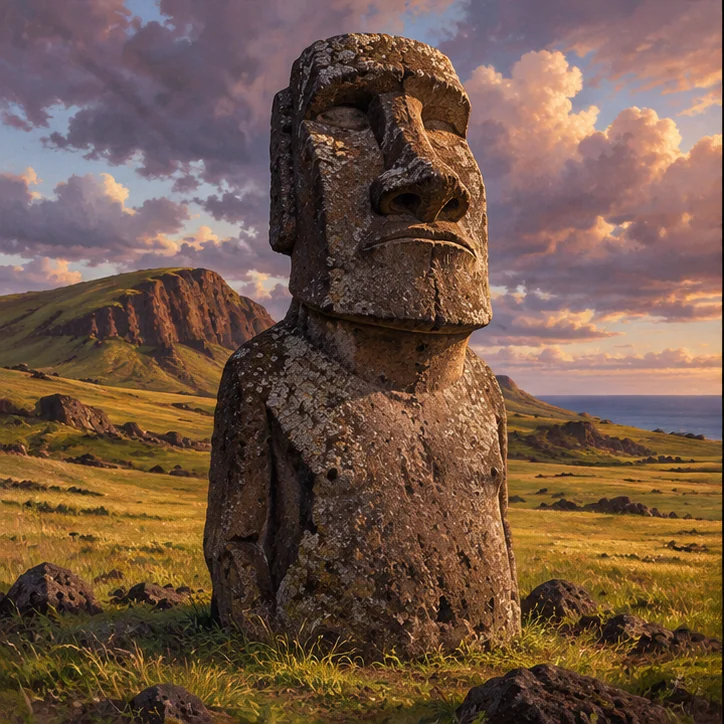
AI-generated editorial illustration: Illustrative moai statue in an island landscape.View image
AI illustration · imagined scene

What do quarries, roads, and community histories reveal about how the moai were made and moved?

Pre-European settlement onward

The story

What we know

Rapa Nui’s moai are ancestral monuments within a Polynesian cultural landscape of platforms, settlements, and quarries. Many were carved from volcanic tuff at Rano Raraku. The island’s people and cultural traditions survive; the statues are not evidence of a civilization that simply vanished. [1] [2]

More context & timeline

UNESCO recognizes the exceptional landscape and the relationship between its monuments and Rapanui society. Archaeological studies also test how statues travelled. A successful modern experiment can demonstrate a feasible technique, while the evidence for how particular ancient statues moved must still come from their own context. [1] [2]
  1. Before European arrival

    Rapanui communities develop monumental platforms, quarrying, and statue traditions. [1]

  2. 1995

    Rapa Nui National Park is inscribed on the World Heritage List. [1]

  3. 2011

    A replica experiment tests upright, rocking transport; the cited university account publicises it in 2012. [3]

Look closely

Follow the evidence

This case concerns moai and island history, not the already covered rongorongo script. Scenes are illustrations, not reconstructed ceremonies or evidence that Rapanui people vanished.

AI-generated editorial illustration: Illustrative moai statue in an island landscape.
AI illustration · imagined scene
Evidence 1

The quarry preserves a process

Unfinished sculptures and the volcanic source connect moai to local materials and craftsmanship. They provide evidence for stages of production, challenging accounts that remove the builders from their own cultural and geological setting. [2]

AI-generated editorial illustration: Illustrative moai carving stages at a volcanic quarry.
AI illustration · imagined scene
Evidence 2

Transport evidence has conditions

Researchers examine statues associated with ancient roads and test upright movement using a replica. Shape and balance matter. Demonstrating that one replica can move does not prove that every statue followed the same method. [3]

AI-generated editorial illustration: Illustrative coastal platform and moai silhouettes.
AI illustration · imagined scene
Evidence 3

A cultural landscape extends beyond statues

Platforms, settlements, agricultural traces, and ceremonial relationships belong in the same investigation. Focusing only on the largest carved heads can erase the labor, food systems, and community decisions that sustained monumental activity. [1]

Interpret the evidence

What could explain it?

Follow a possibility. Weigh what supports it. See where the evidence stops.

AI artwork sets the scene; it does not reconstruct an established answer.

Explore an explanationMoai could be moved upright

The support

The walking hypothesis connects Rapanui traditions with experimental transport and observations of statue form. It offers a practical explanation that can be tested against archaeological evidence. [3]

The limit

Experiments simplify ancient circumstances, and different sizes or routes may require different solutions. Feasibility alone does not establish the method used for each monument. [3]

Explore an explanationA single self-inflicted collapse explains the island

The support

Popular accounts connect forest change and statue building to social catastrophe. Environmental evidence is relevant to understanding the resources available to communities. [4]

The limit

University researchers challenge a simple ecocide narrative. Competing chronologies, resilience, and the later effects of outside contact must be examined rather than assuming one moral lesson explains everything. [4]

When an experiment succeeds, what additional traces would show that people used the same technique centuries earlier?
AI-generated editorial illustration: Illustrative moai statue in an island landscape.
AI illustration · imagined scene

Connected place

Rapa Nui National Park / UNESCO

Public heritage interpretation places the moai within a protected, living cultural landscape.

Visitor guide

Follow current Rapanui-led visitor arrangements and conservation rules. No climbing, touching, excavation, or guaranteed access to individual monuments is implied.

AI-generated editorial illustration: Illustrative coastal platform and moai silhouettes.
AI illustration · imagined scene

Keep investigating

Step beyond the story.

Explore the connected place, examine the records, and form your own reading of the evidence.

Photo credits & full-image view
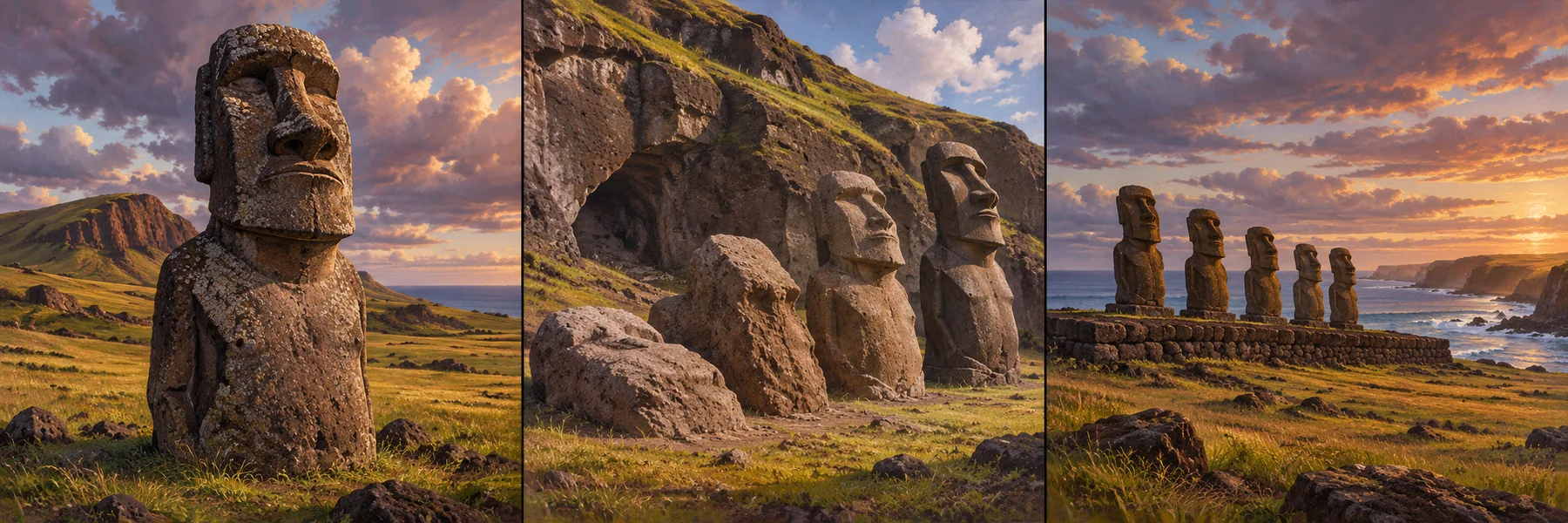
AI-generated editorial illustration for Easter Island’s moai and island history. It is an imagined scene, not a historical photograph or source evidence.

Created for TrekboundX · Image source · AI artwork details

Left panel extracted from a generated triptych and optimized as WebP without enlargement. The original PNG and generation prompt are preserved in the project artwork ledger.

Scene artwork is AI-generated editorial illustration. Real photographs and original records retain their separate credits.

Sources & further reading

Original TrekBoundX writing. Research reviewed November 25, 2026. Source links do not imply institutional endorsement.

  1. UNESCO World Heritage CentreRapa Nui National ParkExamine the source
  2. ICOMOS / UNESCORapa Nui National Park: advisory evaluationExamine the source
  3. University of HawaiʻiPacific Film Series previews the walking-statue experimentExamine the source
  4. University of HawaiʻiProfessor publishes controversial book on Easter Island discoveriesExamine the source
Suggest a correction
All mysteriesNext mysteryArea 51

Rapa Nui’s Moai and Island History — image

AI-generated editorial illustration: Illustrative moai statue in an island landscape.
AI-generated editorial illustration for Easter Island’s moai and island history. It is an imagined scene, not a historical photograph or source evidence.

Created for TrekboundX · Image source · AI artwork details

Left panel extracted from a generated triptych and optimized as WebP without enlargement. The original PNG and generation prompt are preserved in the project artwork ledger.