
All mysteries

Law and society · Documented history

Salem: How Accusations Became Evidence

0 of 3 evidence items examined
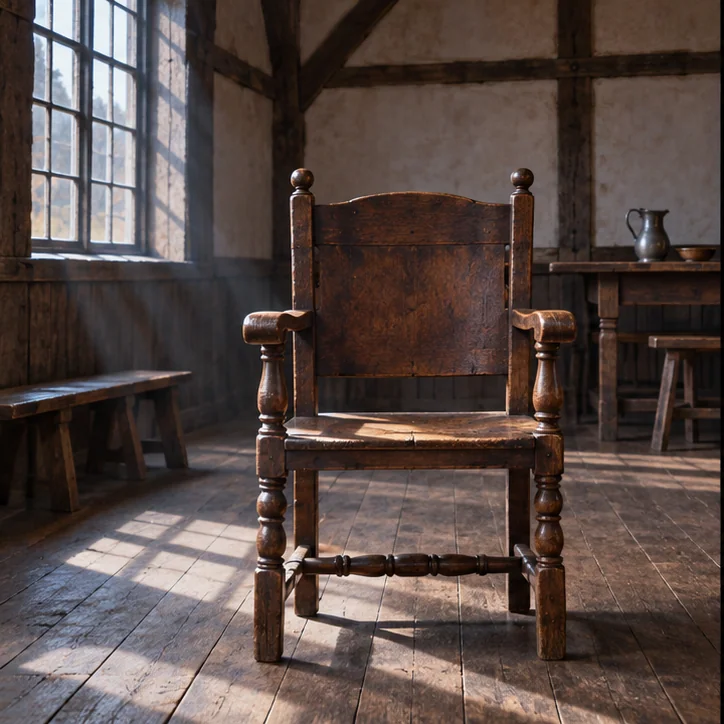
AI-generated editorial illustration: An empty wooden chair in a plain historical meeting room.View image
AI illustration · imagined scene

How did a legal system turn claims that could not be independently tested into convictions?

1692–1693

The story

What we know

The Salem witch trials document persecution. In 1692, accusations spread through Massachusetts communities and reached courts imposing lethal punishments. Testimony and legal papers let us investigate what people claimed and how authorities responded; they do not establish supernatural crimes. [1] [2] [3]

More context & timeline

Spectral evidence concerned visions or apparitions said to resemble accused people. Its use and reliability were contested at the time. Other forms of testimony and confession also mattered. Reducing the trials to one strange symptom, one malicious individual, or one accepted supernatural event would flatten a complicated legal and social crisis. [1] [2] [3]

  1. 1692

    Accusations, examinations, trials, and executions create the central legal record. [1]

  2. October 1692

    Governor Phips intervenes as the handling of spectral evidence comes under scrutiny. [2]

  3. 2023

    Court documents held temporarily at PEM return to the Massachusetts Judicial Archives, with digital access preserved. [4]
Look closely

Follow the evidence

Imagined settings for documented persecution and legal history. No supernatural event is depicted, and the scenes are not authentic court records or exact building reconstructions.

AI-generated editorial illustration: An empty wooden chair in a plain historical meeting room.
AI illustration · imagined scene
Evidence 1

The record preserves an accusation as an accusation

A witness statement tells us what a person alleged. Its survival does not establish that the event occurred exactly as described, still less that its supernatural interpretation was correct. [1]

AI-generated editorial illustration: An imagined colonial New England village lane.
AI illustration · imagined scene
Evidence 2

Contemporaries questioned the standard

Letters from the period show concern that spectral appearances alone were inadequate grounds for conviction. The problem was not invisible to everyone living through it. [3]

AI-generated editorial illustration: A closed archival volume on a preservation table.
AI illustration · imagined scene
Evidence 3

Provenance still matters today

The return of original court records and their digitisation let researchers compare transcriptions with surviving documents. Custody, omissions, handwriting, and context can affect how an apparent statement is understood. [4]

Interpret the evidence

Fact, record and legend

Follow a possibility. Weigh what supports it. See where the evidence stops.

AI artwork sets the scene; it does not reconstruct an established answer.

Explore an explanationCourt procedures reinforced the crisis

The support

Admitting claims that were difficult to challenge created a pathway from accusation to punishment. Changing evidentiary practice helped interrupt that process. [2]

The limit

Procedure alone does not explain why particular people accused particular neighbours. Individual cases still require their own evidence and chronology. [2]

Explore an explanationSocial conflict and belief shaped interpretation

The support

The records show people giving culturally meaningful explanations to distress, suspicion, and community conflict. [1]

The limit

No single modern label accounts for every participant. Retrospective diagnosis or a universal motive would go beyond the documentary evidence. [1]

Which safeguards would prevent a court from accepting a claim that no accused person could meaningfully disprove?
AI-generated editorial illustration: An empty wooden chair in a plain historical meeting room.
AI illustration · imagined scene

Connected place

Peabody Essex Museum, Salem

A public museum with original objects and digital resources concerning the trials.

Visitor guide

Check current exhibition arrangements; the museum presently lists a December 1–18 exhibition closure. The original court documents returned to the state archives, while digital resources remain available.

AI-generated editorial illustration: A closed archival volume on a preservation table.
AI illustration · imagined scene

Keep investigating

Step beyond the story.

Explore the connected place, examine the records, and form your own reading of the evidence.

Photo credits & full-image view
AI-generated editorial illustration for The Salem witch trials. It is an imagined scene, not a historical photograph or source evidence.

Created for TrekboundX · Image source · AI artwork details

Left panel extracted from a generated triptych and optimized as WebP without enlargement. The original PNG and generation prompt are preserved in the project artwork ledger.

Scene artwork is AI-generated editorial illustration. Real photographs and original records retain their separate credits.

Sources & further reading

Original TrekBoundX writing. Research reviewed November 25, 2026. Source links do not imply institutional endorsement.

  1. Massachusetts ArchivesThe Trials: Salem Witch Trials digital exhibitionExamine the source
  2. Library of Congress, Law LibraryEvidence from Invisible Worlds in SalemExamine the source
  3. University of Virginia, Salem Witch Trials Documentary ArchiveLetter to John Foster, 17 August 1692Examine the source
  4. Peabody Essex Museum / Massachusetts Supreme Judicial CourtReturn of Historic Salem Witch Trial Documents, 2023Examine the source
  5. Peabody Essex MuseumThe Salem Witch Trials of 1692: current visitor and learning informationExamine the source
Suggest a correction
All mysteriesNext mysteryThe St. Valentine’s Day Massacre

Salem: How Accusations Became Evidence — image

AI-generated editorial illustration: An empty wooden chair in a plain historical meeting room.
AI-generated editorial illustration for The Salem witch trials. It is an imagined scene, not a historical photograph or source evidence.

Created for TrekboundX · Image source · AI artwork details

Left panel extracted from a generated triptych and optimized as WebP without enlargement. The original PNG and generation prompt are preserved in the project artwork ledger.