The story
What we know
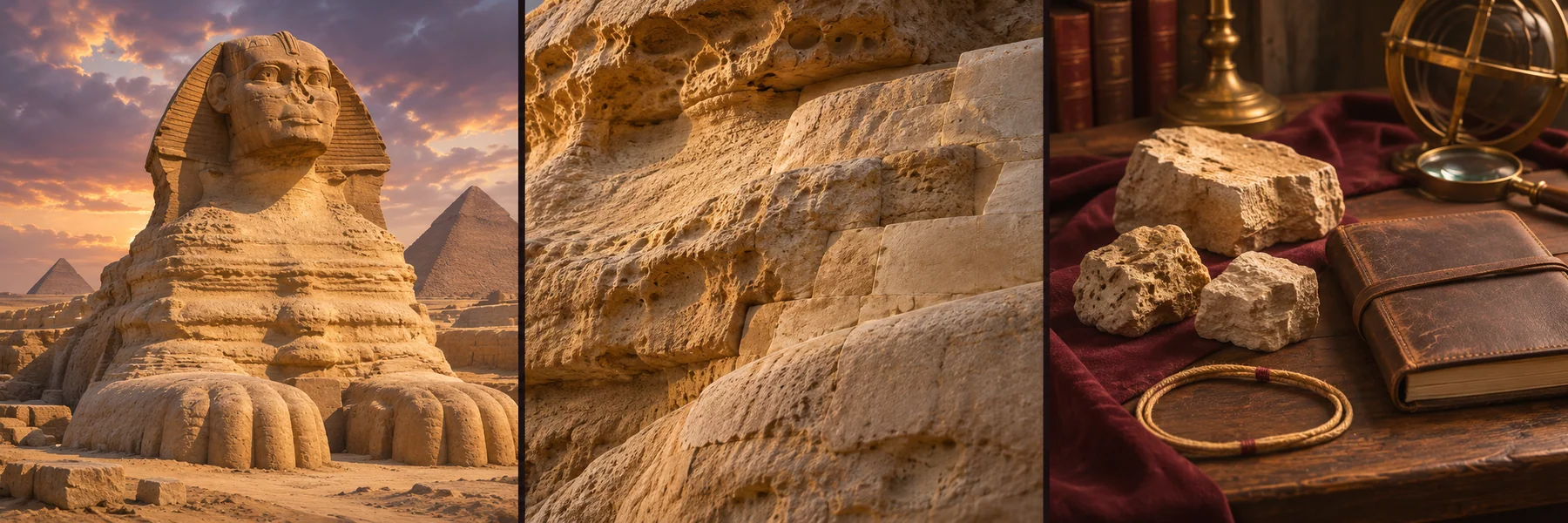
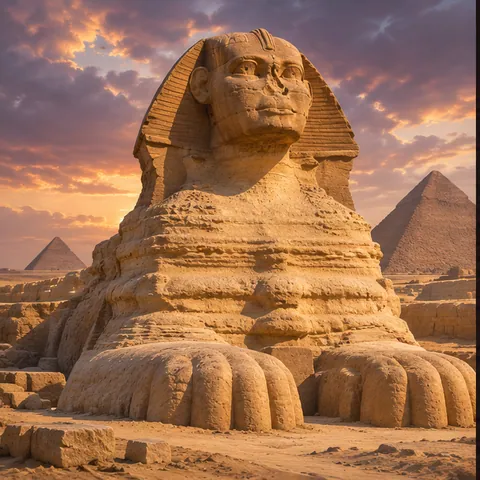
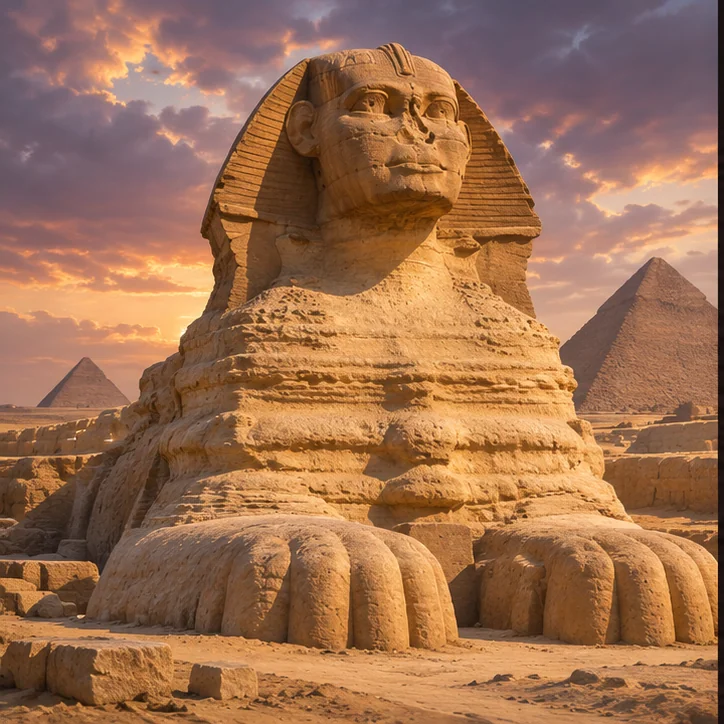
The Great Sphinx forms part of Giza’s Old Kingdom royal landscape. Egypt’s Ministry of Tourism and Antiquities associates it with Khafre. Archaeological research tests that attribution through the relationship between the carved monument, its enclosure, and nearby temple construction. [1] [2]
More context & timeline
The monument was cut from living limestone rather than assembled as a giant statue from separate blocks. Its appearance also records restoration and environmental change. A present surface may therefore contain several periods of work, complicating attempts to read every visible feature as an untouched original. [1] [2]