
All mysteries

Financial history · Documented history

The Templar Fortune: Follow the Accounts

0 of 3 evidence items examined
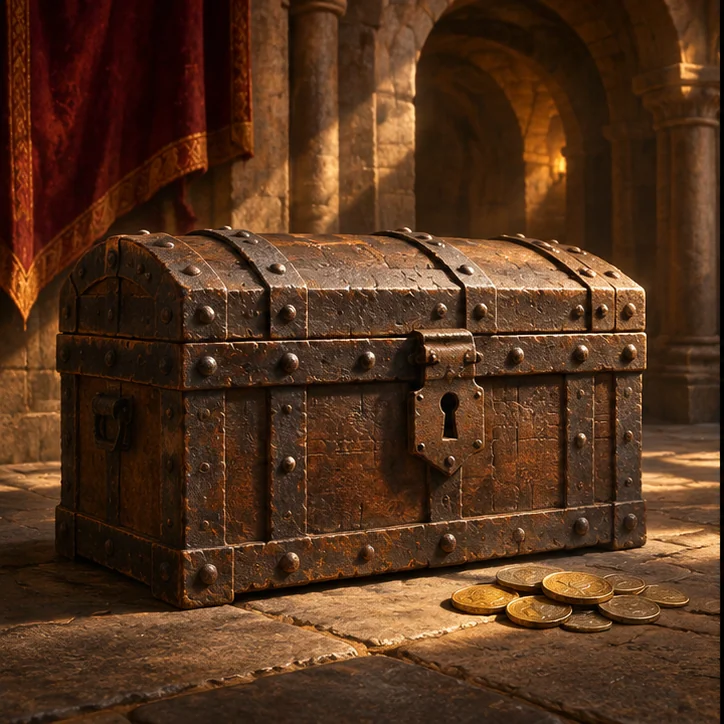
AI-generated editorial illustration: A medieval-style accounting chest with a few generic coins.View image
AI illustration · imagined scene

What happened to a powerful institution’s assets when governments took control?

1307–1313 and later accounting

The story

What we know

The Knights Templar held extensive property and managed resources across medieval Europe. Their suppression became fertile ground for stories about a vanished fortune. Surviving records offer a more concrete investigation: who seized particular estates, what officials recorded, what income they collected, and where the property went. [1] [3]

More context & timeline

This case follows secular financial history. English records include estate surveys, confiscation inventories, accounts, and later transfers. Much property passed to the Hospitallers, while other assets reached royal favourites. The records are incomplete and vary by region; neither a perfect financial reconstruction nor a universal hidden-treasure story follows from them. [1] [3]

  1. 1307

    Arrests in France precede the English and Welsh seizures discussed in later accounting records. [3]

  2. January 1308

    Officials inventory English and Welsh estates after the arrests there. [3]

  3. 1313 onward

    Property transfers and continuing accounting disputes leave records of redistribution and management. [1]
Look closely

Follow the evidence

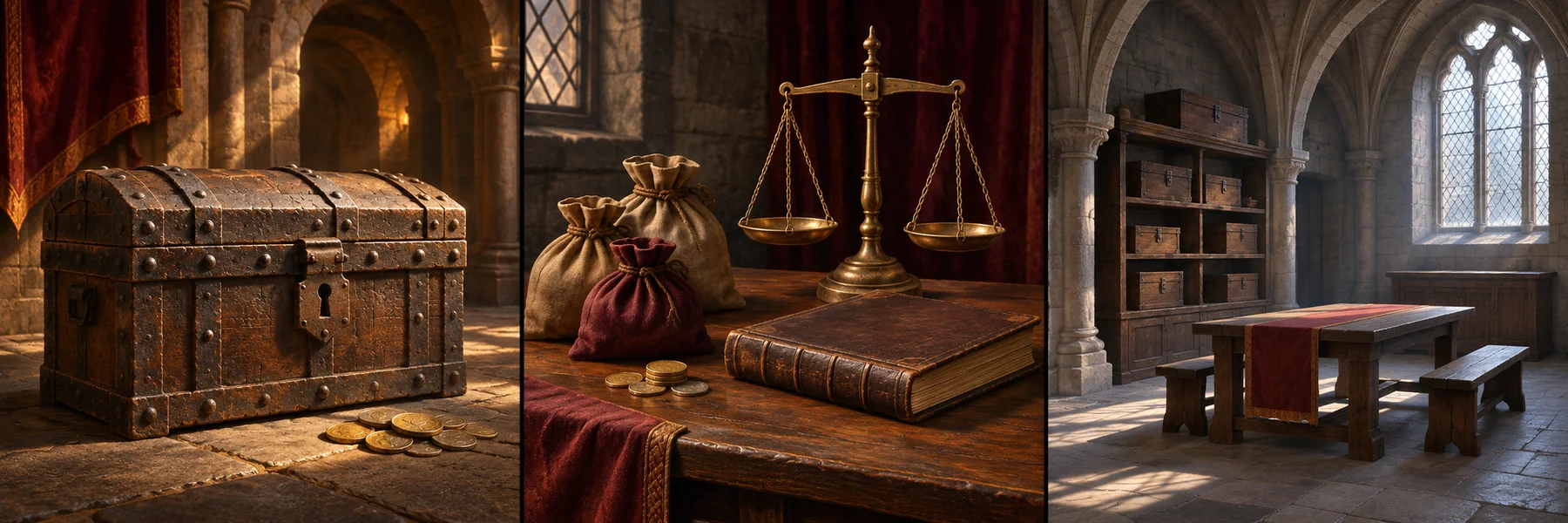
Imagined financial-history settings. This case concerns property, credit, confiscation, and records, with no Grail, miracle, relic hunt, or verified secret fortune implied.

AI-generated editorial illustration: A medieval-style accounting chest with a few generic coins.
AI illustration · imagined scene
Evidence 1

Wealth was not just coins

Estate records concern land, crops, animals, employees, rents, and debts. An institution can be wealthy without holding an equivalent fortune in portable bullion. [3]

AI-generated editorial illustration: Scales and pouches on an imagined counting table.
AI illustration · imagined scene
Evidence 2

There is a transfer trail

National Archives guidance identifies surveys, Exchequer accounts, and land grants that trace confiscated property. These documents give specific claims something to be tested against. [1]

AI-generated editorial illustration: An empty stone administrative chamber.
AI illustration · imagined scene
Evidence 3

Bad administration leaves gaps

Irish records describe official complaints about patchy and insufficient accounts. Missing information may reflect management failures or misconduct without establishing that a great treasure was secretly removed. [2]

Interpret the evidence

Fact, record and legend

Follow a possibility. Weigh what supports it. See where the evidence stops.

AI artwork sets the scene; it does not reconstruct an established answer.

Explore an explanationAssets were confiscated and redistributed

The support

Documented transfers and revenues explain where substantial portions of the institution’s property went after seizure. [1]

The limit

This does not account for every movable object or every jurisdiction. The history must be reconstructed estate by estate, not assumed from a single national example. [1]

Explore an explanationMismanagement obscured part of the balance sheet

The support

The Irish inquiry shows why royal administrators could leave an unreliable account of property and income entrusted to them. [2]

The limit

An accusation of accounting failure requires documentary interpretation; it cannot quantify a missing fortune or prove a particular secret cache. [2]

If an organisation’s buildings survived but its accounts did not, how would you estimate what it owned?
AI-generated editorial illustration: A medieval-style accounting chest with a few generic coins.
AI illustration · imagined scene

Connected place

The National Archives, Kew

A public archive holding financial and legal records used in this case.

Visitor guide

Consult official visitor and research guidance. Some original records require arrangements; this is an archive destination, not a proposed treasure-search site.

AI-generated editorial illustration: An empty stone administrative chamber.
AI illustration · imagined scene

Keep investigating

Step beyond the story.

Explore the connected place, examine the records, and form your own reading of the evidence.

Photo credits & full-image view
AI-generated editorial illustration for The Knights Templar’s lost fortune — financial history. It is an imagined scene, not a historical photograph or source evidence.

Created for TrekboundX · Image source · AI artwork details

Left panel extracted from a generated triptych and optimized as WebP without enlargement. The original PNG and generation prompt are preserved in the project artwork ledger.

Scene artwork is AI-generated editorial illustration. Real photographs and original records retain their separate credits.

Sources & further reading

Original TrekBoundX writing. Research reviewed November 25, 2026. Source links do not imply institutional endorsement.

  1. The National ArchivesResearch guide: Religious houses and their lands, section 9, The Knights TemplarExamine the source
  2. The National ArchivesRevealing the (corrupt) record in 14th-century IrelandExamine the source
  3. Helen Nicholson / Cardiff University repositoryThe inventories, accounts, and records of debts for the Templars’ estates in England and Wales, 1308–1313Examine the source
  4. The National ArchivesVisit usExamine the source
Suggest a correction
All mysteriesNext mysteryCaptain Kidd’s Treasure: A Cache and a Legend

The Templar Fortune: Follow the Accounts — image

AI-generated editorial illustration: A medieval-style accounting chest with a few generic coins.
AI-generated editorial illustration for The Knights Templar’s lost fortune — financial history. It is an imagined scene, not a historical photograph or source evidence.

Created for TrekboundX · Image source · AI artwork details

Left panel extracted from a generated triptych and optimized as WebP without enlargement. The original PNG and generation prompt are preserved in the project artwork ledger.