What do werewolf stories and prosecutions establish about belief, rather than human transformation?
Medieval period onward
The story
What we know
Werewolf traditions describe humans becoming wolves or behaving as wolf-like beings. Their forms vary across literature, popular art, and legal accusations. Surviving manuscripts, prints, and court records document the tradition’s historical presence; they do not demonstrate a biological power to change species. [1][2][3]
More context & timeline
The Metropolitan Museum preserves artworks carrying the werewolf motif, from an early modern Cranach woodcut to a 1911 print by Josef Diveky. A study of Franche-Comté prosecutions examines how accusation, legend, and judicial decisions interacted, including cases where sufficient proof was not found. [1][2][3]
Medieval storytelling
Wolf transformations appear in European literary traditions. [4]
1521–1664
Franche-Comté proceedings provide a regional record of werewolf accusations. [3]
1911
Diveky’s Werewolf print demonstrates the motif’s later artistic life. [2]
Look closely
Follow the evidence
Folklore imagery, not evidence of human transformation. Do not associate real medical conditions or accused historical people with a monstrous identity.
AI illustration · imagined scene
Evidence 1
An artwork declares its own medium
Cranach’s woodcut belongs to the history of representation. Its subject and imagery can reveal cultural anxieties, but a print is not a witnessed natural-history observation. The museum’s catalogue identifies an artwork, not an authenticated creature. [1]
AI illustration · imagined scene
Evidence 2
A prosecution is not proof of its accusation
The Franche-Comté research follows proceedings from arrest to judgment and considers how judges evaluated claims. The existence of a trial establishes that an accusation was made and handled, not that its supernatural premise was true. [3]
AI illustration · imagined scene
Evidence 3
The story changes with its setting
Medieval literature, early modern accusations, and modern illustration use related motifs for different purposes. Comparing them reveals transmission and adaptation. Treating all as identical reports discards the genre and context needed to interpret each source. [4]
1 / 3
Interpret the evidence
Fact, record and legend
Follow a possibility. Weigh what supports it. See where the evidence stops.
AI artwork sets the scene; it does not reconstruct an established answer.
AIExplore an explanationA flexible story expressed fears about human behavior
The support
The boundary between a person and a dangerous animal offers storytellers a way to explore violence, exclusion, and the wilderness. Art and literary records support studying that symbolism. [4]
The limit
A symbolic interpretation need not explain every local accusation. Meaning must be established in the particular text or community, rather than assigned from a modern universal theory. [4]
AIExplore an explanationHistorical accusations record real transformations
The support
Some prosecutions and stories describe the transformation as an event rather than a metaphor. That language helps establish what an author, accuser, or court was prepared to consider. [3]
The limit
A sincere or officially recorded assertion does not establish its physical cause. These sources provide no independently verified evidence that a human body became a wolf. [3]
If a court rejected an accusation, would later retelling preserve the rejection as faithfully as the frightening claim?
AI illustration · imagined scene
Connected place
The Metropolitan Museum of Art
Public collection records place werewolf imagery within the history of printmaking and storytelling.
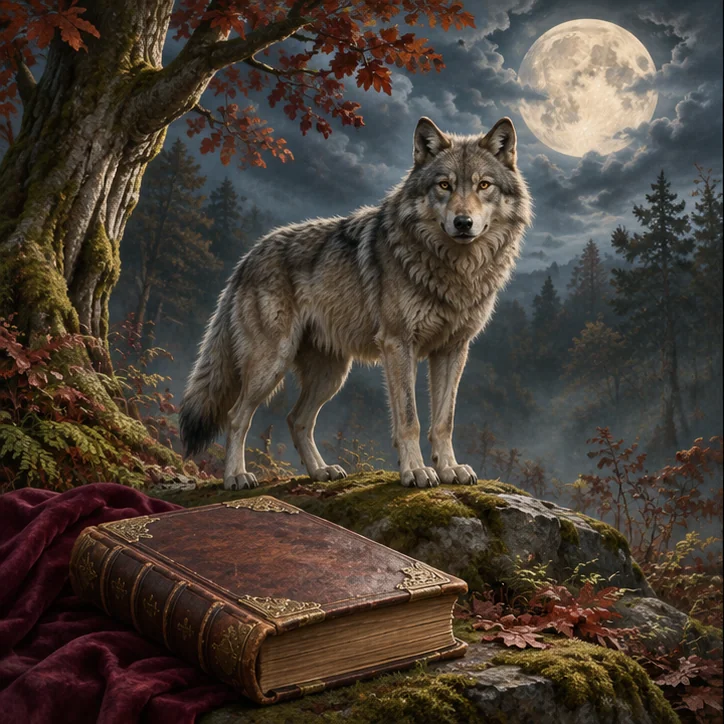
Left panel extracted from a generated triptych and optimized as WebP without enlargement. The original PNG and generation prompt are preserved in the project artwork ledger.
Scene artwork is AI-generated editorial illustration. Real photographs and original records retain their separate credits.
Sources & further reading
Original TrekBoundX writing. Research reviewed November 25, 2026. Source links do not imply institutional endorsement.