What happens when a legendary creature becomes a claim that biology can test?
Longstanding traditions / modern research
The story
What we know
Yeti traditions belong to a varied Himalayan cultural landscape. Expeditions and popular media helped turn different stories into a search for an unknown animal. Biology asks a narrower question: what are particular hair, bone, tooth, or skin samples actually from? [1][2]
More context & timeline
A 2017 study examined material attributed to yetis and compared genetic evidence with known animals. The nine purported yeti specimens in that research were identified as eight bears and one dog. This is evidence about those samples; it does not translate every tradition or reconstruct every reported encounter. [1][2]
1959
A U.S. embassy memo records Nepalese regulations concerning expeditions seeking the yeti. [3]
2014
An earlier genetic claim raises a disputed possibility involving unusual bear ancestry. [1]
2017
More extensive genetic research places the tested purported remains among known regional animals. [1]
Look closely
Follow the evidence
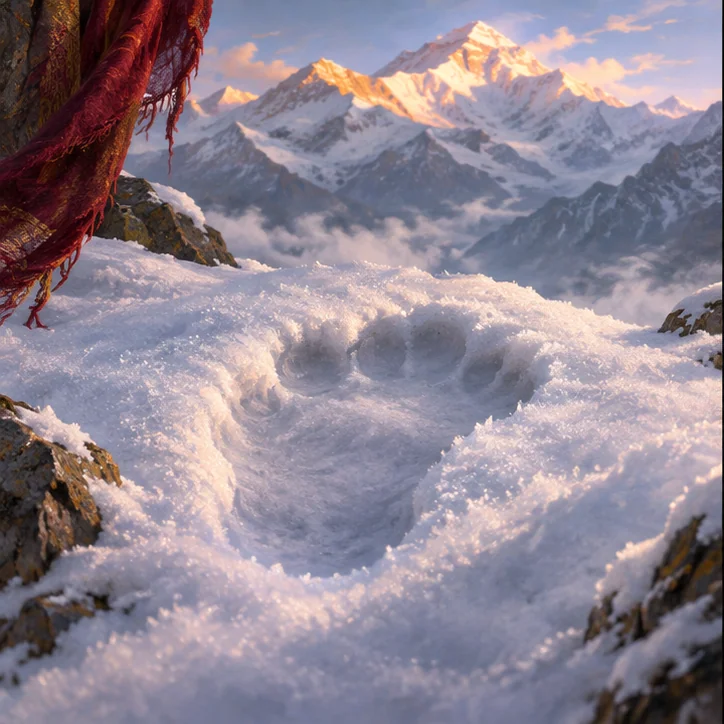
Imagined imagery connecting Himalayan folklore with biological investigation. The snow mark is invented and does not establish an unknown animal or reproduce a reported footprint.
AI illustration · imagined scene
Evidence 1
A label is not an identification
A specimen supplied as yeti material must be examined without accepting that description as its biological identity. The tested examples demonstrate how the label and the result can differ. [2]
AI illustration · imagined scene
Evidence 2
More information can overturn an exciting match
The 2017 researchers explained why a short genetic fragment could not reliably distinguish closely related bears. Broader sequence analysis produced a clearer identification. [1]
AI illustration · imagined scene
Evidence 3
A government file is not a zoological discovery
The 1959 memo shows that officials regulated expeditions responding to public interest. Issuing rules for a search did not establish that the searched-for animal existed. [3]
1 / 3
Interpret the evidence
Fact, record and legend
Follow a possibility. Weigh what supports it. See where the evidence stops.
AI artwork sets the scene; it does not reconstruct an established answer.
AIExplore an explanationKnown animals account for tested material
The support
The genetic findings connect the examined remains with regional bears and a dog, supporting ordinary animal origins for those particular claims. [1]
The limit
The sample set is finite. It cannot identify an untested object or tell us exactly what every distant observer saw. [1]
AIExplore an explanationTradition and later interpretation shaped the search
The support
The stories, the expedition memo, and modern interest show how cultural narratives became a biological investigation. [3]
The limit
Cultural meaning is not reduced to a DNA result. Nor does the significance of a tradition supply physical evidence for an unknown species. [3]
Could a scientific test settle what a specimen is while leaving the meaning of a story untouched?
AI illustration · imagined scene
Connected place
National Archives Museum
A public learning institution preserving the historical yeti expedition memo.
The document has been exhibited previously and is available online; current physical display is not promised. The historical memo is not present-day expedition or animal-handling advice.
AI illustration · imagined scene
Keep investigating
Step beyond the story.
Explore the connected place, examine the records, and form your own reading of the evidence.
Photo credits & full-image view
AI-generated editorial illustration for The Yeti. It is an imagined scene, not a historical photograph or source evidence.
Left panel extracted from a generated triptych and optimized as WebP without enlargement. The original PNG and generation prompt are preserved in the project artwork ledger.
Scene artwork is AI-generated editorial illustration. Real photographs and original records retain their separate credits.
Sources & further reading
Original TrekBoundX writing. Research reviewed November 25, 2026. Source links do not imply institutional endorsement.