

All mysteries

Historic investigations · Documented history

The Hunt for Adolf Eichmann

0 of 3 evidence items examined
AI-generated editorial illustration: Symbolic archive file and empty courtroom chair.View image
AI illustration · imagined scene

How did investigators establish identity and responsibility after a perpetrator had lived under another name?

1945–1962

The story

What we know

Adolf Eichmann helped organize the deportation of Jews to ghettos and killing centres during the Holocaust. After the war he lived in Argentina under another identity. Israeli agents captured him in 1960 and brought him to Israel, where his trial opened in 1961. [1] [2]

More context & timeline

The Jerusalem court convicted Eichmann, and he was executed in 1962. This is a documented manhunt with a known outcome. The proceedings brought survivor testimony and extensive documentary evidence before an international audience, while the seizure in Argentina also created a dispute over national sovereignty. [1] [2]
  1. 1960

    Israeli agents capture Eichmann in Argentina and bring him to Israel. [1]

  2. April 1961

    His trial begins in Jerusalem, drawing worldwide attention. [2]

  3. 1962

    The conviction and appeal are followed by his execution. [1]

Look closely

Follow the evidence

A documented capture and trial, not a continuing disappearance. Imagery must not glorify a perpetrator or imitate evidence, victims, capture tactics, or evasion methods.

AI-generated editorial illustration: Symbolic archive file and empty courtroom chair.
AI illustration · imagined scene
Evidence 1

Identity requires more than a resemblance

The search had to connect a person living under an assumed identity with a particular wartime official. Historical accounts of capture describe that identification process; they should be distinguished from the later courtroom proof of his criminal responsibility. [1]

AI-generated editorial illustration: Illustrative courthouse exterior.
AI illustration · imagined scene
Evidence 2

Bureaucratic records reveal agency

Documents concerning deportation and administration connect decisions with actions across borders. The trial’s documentary record challenges the claim that a functionary’s place within an organization automatically removes personal responsibility for what he organized. [2]

AI-generated editorial illustration: Imagined museum archive corridor and reading desk.
AI illustration · imagined scene
Evidence 3

Survivors supplied another kind of evidence

The trial made individual experiences central to public understanding of the Holocaust. Testimony and documents answer related but different questions: what people endured, which systems operated, and how a defendant participated in those systems. [3]

Interpret the evidence

Fact, record and legend

Follow a possibility. Weigh what supports it. See where the evidence stops.

AI artwork sets the scene; it does not reconstruct an established answer.

Explore an explanationAn obedient subordinate carried out others’ decisions

The support

Eichmann portrayed his role in terms of obedience and bureaucracy. A chain of command is relevant to reconstructing how state persecution operated. [2]

The limit

The court evaluated his own participation and responsibility. The existence of superiors does not erase the evidence of organizing deportations or convert conviction into an unresolved question of identity. [2]

Explore an explanationCapture stories alone explain the historical significance

The support

The pursuit and removal from Argentina provide a dramatic narrative, and retrospective accounts can illuminate the people involved. [3]

The limit

The enduring evidentiary achievement also lies in the public trial. Capture accounts differ in purpose from sworn testimony, documentary exhibits, and a reasoned judgment; they should not replace them. [3]

How would you distinguish evidence that establishes a person’s identity from evidence that establishes responsibility for a particular crime?
AI-generated editorial illustration: Symbolic archive file and empty courtroom chair.
AI illustration · imagined scene

Connected place

Yad Vashem

Public educational resources explain the Eichmann trial and the history of the Holocaust.

Visitor guide

This learning connection is to a memorial and research institution. No display of a particular original trial exhibit is guaranteed.

AI-generated editorial illustration: Imagined museum archive corridor and reading desk.
AI illustration · imagined scene

Keep investigating

Step beyond the story.

Explore the connected place, examine the records, and form your own reading of the evidence.

Photo credits & full-image view
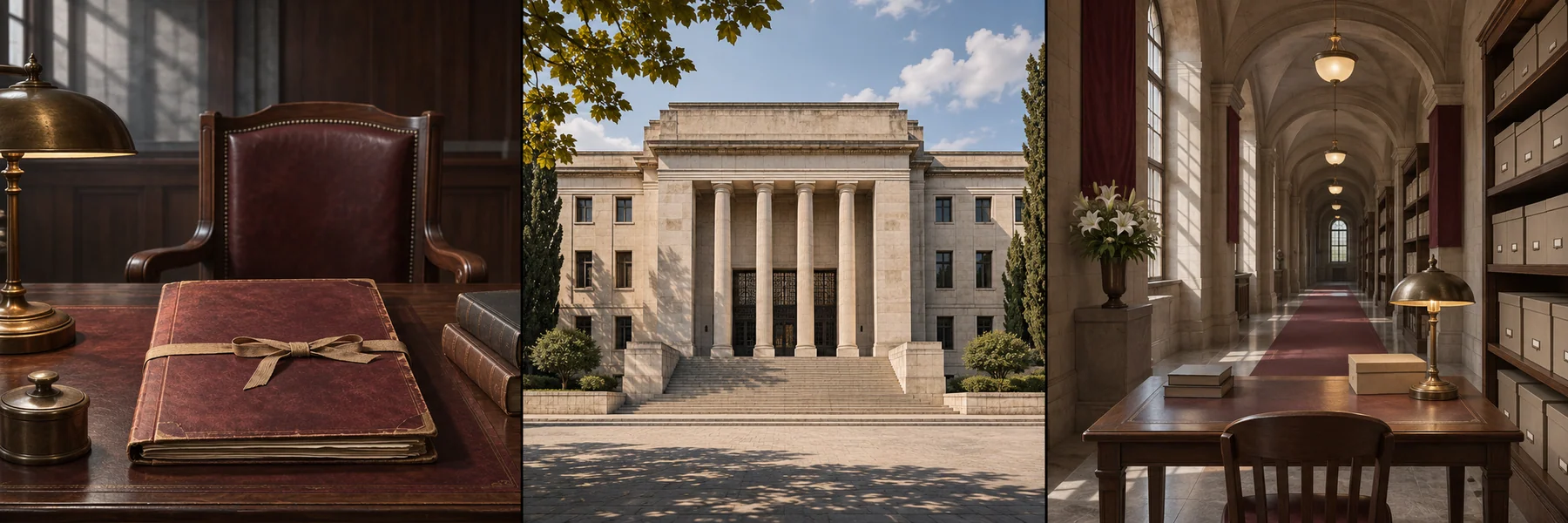
AI-generated editorial illustration for The hunt for Adolf Eichmann. It is an imagined scene, not a historical photograph or source evidence.

Created for TrekboundX · Image source · AI artwork details

Left panel extracted from a generated triptych and optimized as WebP without enlargement. The original PNG and generation prompt are preserved in the project artwork ledger.

Scene artwork is AI-generated editorial illustration. Real photographs and original records retain their separate credits.

Sources & further reading

Original TrekBoundX writing. Research reviewed November 25, 2026. Source links do not imply institutional endorsement.

  1. United States Holocaust Memorial MuseumAdolf Eichmann: Key DatesExamine the source
  2. United States Holocaust Memorial MuseumEichmann TrialExamine the source
  3. Yad VashemEichmann’s Trial in JerusalemExamine the source
  4. United States Holocaust Memorial MuseumThe Search for PerpetratorsExamine the source
Suggest a correction
All mysteriesNext mysteryThe Legend of the Werewolf

The Hunt for Adolf Eichmann — image

AI-generated editorial illustration: Symbolic archive file and empty courtroom chair.
AI-generated editorial illustration for The hunt for Adolf Eichmann. It is an imagined scene, not a historical photograph or source evidence.

Created for TrekboundX · Image source · AI artwork details

Left panel extracted from a generated triptych and optimized as WebP without enlargement. The original PNG and generation prompt are preserved in the project artwork ledger.