
All mysteries

Prison escapes

The Alcatraz Escape

0 of 3 evidence items examined
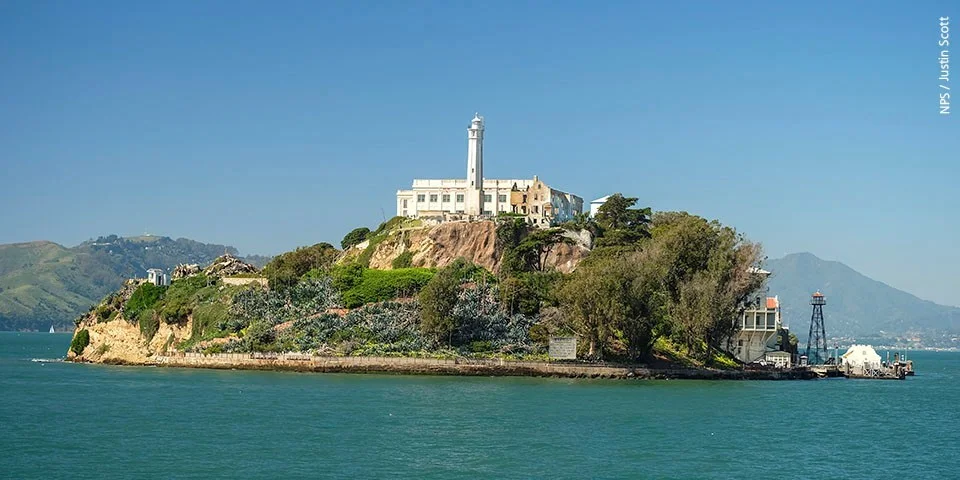
Alcatraz Island and its former prison buildings viewed across San Francisco Bay.View image
Real place photograph

They got out of their cells. Did they get out of the bay?

June 1962

The story

What we know

On June 12, 1962, officers discovered that Frank Morris and brothers John and Clarence Anglin were missing from Alcatraz. The men had left decoys in their beds and reached the shore the previous night. The mystery begins beyond the prison: nobody has proved what happened to them afterward. [1] [2]

More context & timeline

A fourth participant, Allen West, remained behind and helped investigators reconstruct the preparations. Physical evidence established a real escape from the cellhouse. The FBI investigated until 1979, then transferred responsibility to the U.S. Marshals Service. A later claim or possible sighting is not an authenticated account of survival. [1] [2]
  1. June 11–12, 1962

    Three prisoners leave the island; the morning count reveals their absence. [1]

  2. 1962 investigation

    Searchers recover items associated with the attempt and compare accounts. [1]

  3. 1979

    The FBI closes its investigation and transfers responsibility to the Marshals. [1]

Look closely

Follow the evidence

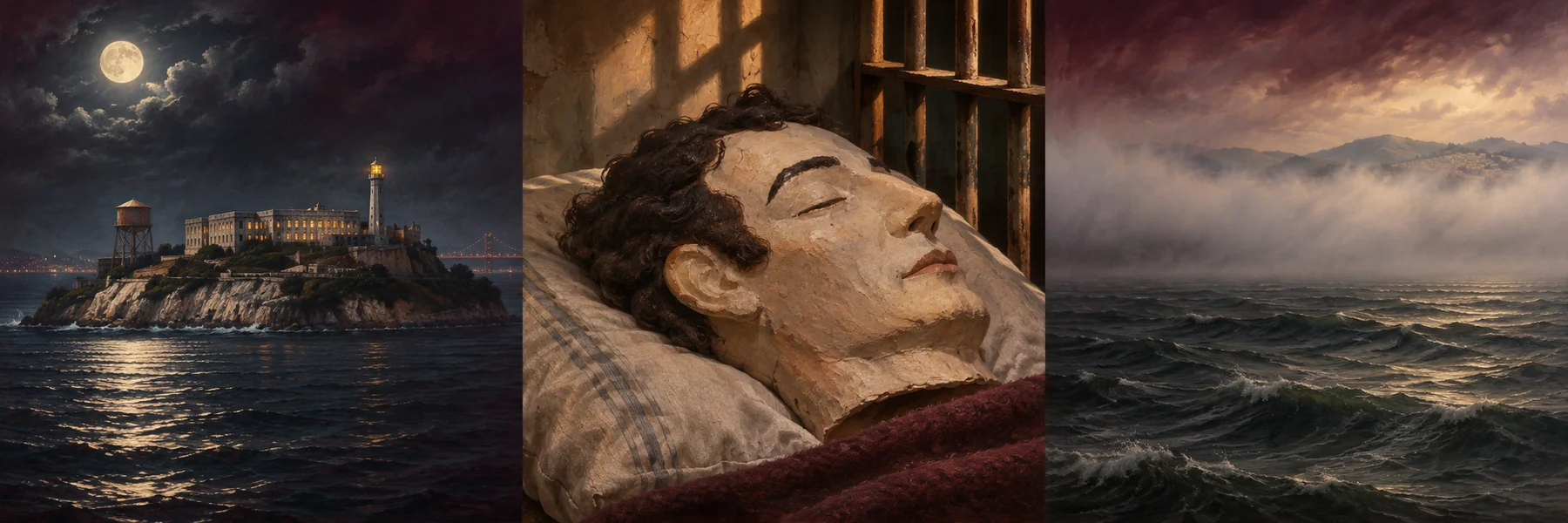
Imagined island, decoy and bay scenes. They do not reproduce an exact escape route, original evidence photograph or a proven outcome.

AI-generated editorial illustration: An imagined prison island across a moonlit bay
AI illustration · imagined scene
Evidence 1

The men in the beds were decoys

The heads left on the pillows explain how the missing men initially escaped notice. National Park Service collections preserve escape material. These objects establish deception inside the prison, not survival outside it. [2]

AI-generated editorial illustration: An imagined sculpted decoy head on a prison pillow
AI illustration · imagined scene
Evidence 2

Equipment reached the water

Investigators recovered a paddle, raincoat material and a packet containing personal effects. The finds connect the prison preparations to the bay, but do not provide a complete record of the crossing. [1]

AI-generated editorial illustration: Cold bay water disappearing into fog
AI illustration · imagined scene
Evidence 3

A bay that could kill

Cold water and powerful currents were formidable hazards. The Bureau of Prisons also records a different prisoner reaching the San Francisco shore later in 1962, before being returned to custody. Possibility and proof are different things. [3]

Interpret the evidence

What could explain it?

Follow a possibility. Weigh what supports it. See where the evidence stops.

AI artwork sets the scene; it does not reconstruct an established answer.

Explore an explanationThey died in the bay

The support

Cold conditions, the improvised equipment and the lack of authenticated later contact support this possibility. [1]

The limit

No identified remains establish the deaths of these three men. [1]

Explore an explanationThey reached land and disappeared

The support

Another prisoner’s later crossing shows that reaching the mainland was physically possible. [3]

The limit

A different person’s survival does not establish the fate of Morris or either Anglin brother. [3]

Explore an explanationLater stories preserve a genuine lead

The support

Reports of survival have repeatedly renewed interest in the case. [1]

The limit

The FBI’s account describes no credible evidence of survival during its investigation. A story needs independent authentication to change that record. [1]

What evidence could distinguish survival from an object that drifted ashore without its owner?
Alcatraz Island and its former prison buildings viewed across San Francisco Bay.
Real place photograph

Connected place

Alcatraz Island

The preserved historic setting of the 1962 escape, within Golden Gate National Recreation Area.

Visitor guide

Use the National Park Service for current authorized visitor arrangements. The case does not provide a recreation of the escape or an entry route outside public access.

AI-generated editorial illustration: Cold bay water disappearing into fog
AI illustration · imagined scene

Keep investigating

Step beyond the story.

Explore the connected place, examine the records, and form your own reading of the evidence.

Photo credits & full-image view
Alcatraz Island in a modern National Park Service photograph.

Justin Scott / National Park Service · Image source · Public domain (U.S. federal government / NPS)

Resized without enlargement and converted to WebP; orientation follows source metadata. No manual crop or content alteration. The complete downloaded frame is preserved; card or banner display crops may be used. Image derivatives retain the stated image rights or license.

Scene artwork is AI-generated editorial illustration. Real photographs and original records retain their separate credits.

Sources & further reading

Original TrekBoundX writing. Research reviewed November 24, 2026. Source links do not imply institutional endorsement.

  1. Federal Bureau of InvestigationAlcatraz Escape: evidence and investigationExamine the source
  2. National Park ServiceAlcatraz Museum CollectionsExamine the source
  3. Federal Bureau of PrisonsAlcatraz: history and escape attemptsExamine the source
Suggest a correction
All mysteriesNext mysterySing Sing: Behind the Walls

The Alcatraz Escape — image

Alcatraz Island and its former prison buildings viewed across San Francisco Bay.
Alcatraz Island in a modern National Park Service photograph.

Justin Scott / National Park Service · Image source · Public domain (U.S. federal government / NPS)

Resized without enlargement and converted to WebP; orientation follows source metadata. No manual crop or content alteration. The complete downloaded frame is preserved; card or banner display crops may be used. Image derivatives retain the stated image rights or license.