Sing Sing began in 1825 on the Hudson River, where incarcerated men quarried stone and built the prison that would confine them. A century later, bank robber Willie Sutton escaped its walls. This is documented prison history, not an unresolved disappearance: Sutton was later caught. [1][2]
More context & timeline
The original cellblock became known as the Big House. Its tiny cells and industrial labour shaped daily life far more than the famous fugitives did. The museum’s history also records that an enclosing wall was not built until 1877. Sing Sing’s formidable public image developed over time. [1][2]
1825
Incarcerated labourers begin the prison and its original stone cellblock. [1]
December 11, 1932
Willie Sutton escapes after receiving a thirty-year sentence. [3]
February 1934
Sutton is apprehended and sent to another prison; later escapes belong to other institutions. [3]
Look closely
Follow the evidence
Imagined historic prison and archival scenes, not an exact current layout, Sutton’s identified cell or an original criminal-history document.
AI illustration · imagined scene
Evidence 1
The prison was made by its prisoners
Quarrying and construction linked the institution to the limestone on its site. The surviving 1825 cellblock anchors a history of labour and confinement behind the notorious name. [1]
AI illustration · imagined scene
Evidence 2
The breakout has a paper trail
The FBI’s account records Sutton’s 1932 departure and his subsequent apprehension. His criminal-history record connects separate arrests and institutions, helping keep distinct escapes from becoming one cinematic story. [3]
AI illustration · imagined scene
Evidence 3
The legend joins different prisons
Sutton also escaped Eastern State Penitentiary in 1945 and Philadelphia County Prison in 1947. A tunnel or a guard disguise belongs to those later episodes, not automatically to Sing Sing. [3]
1 / 3
Interpret the evidence
Fact, record and legend
Follow a possibility. Weigh what supports it. See where the evidence stops.
AI artwork sets the scene; it does not reconstruct an established answer.
AIExplore an explanationA changing institution
The support
The museum records additions, industrial work and changing physical boundaries. [2]
The limit
A reputation for severity does not mean every part of the prison remained unchanged from 1825 onward. [2]
AIExplore an explanationAn escape followed by recapture
The support
The 1932 breakout and 1934 apprehension are documented in the FBI’s chronology. [3]
The limit
Getting out of Sing Sing did not give Sutton an unexplained lifelong disappearance. [3]
AIExplore an explanationSeveral events became one legend
The support
Sutton’s nicknames and repeated escapes supplied material for a dramatic public image. [3]
The limit
Details must stay attached to their actual dates and prisons. A memorable story is not an independent source. [3]
Which detail can you connect to a contemporary record, and which arrived through a later retelling?
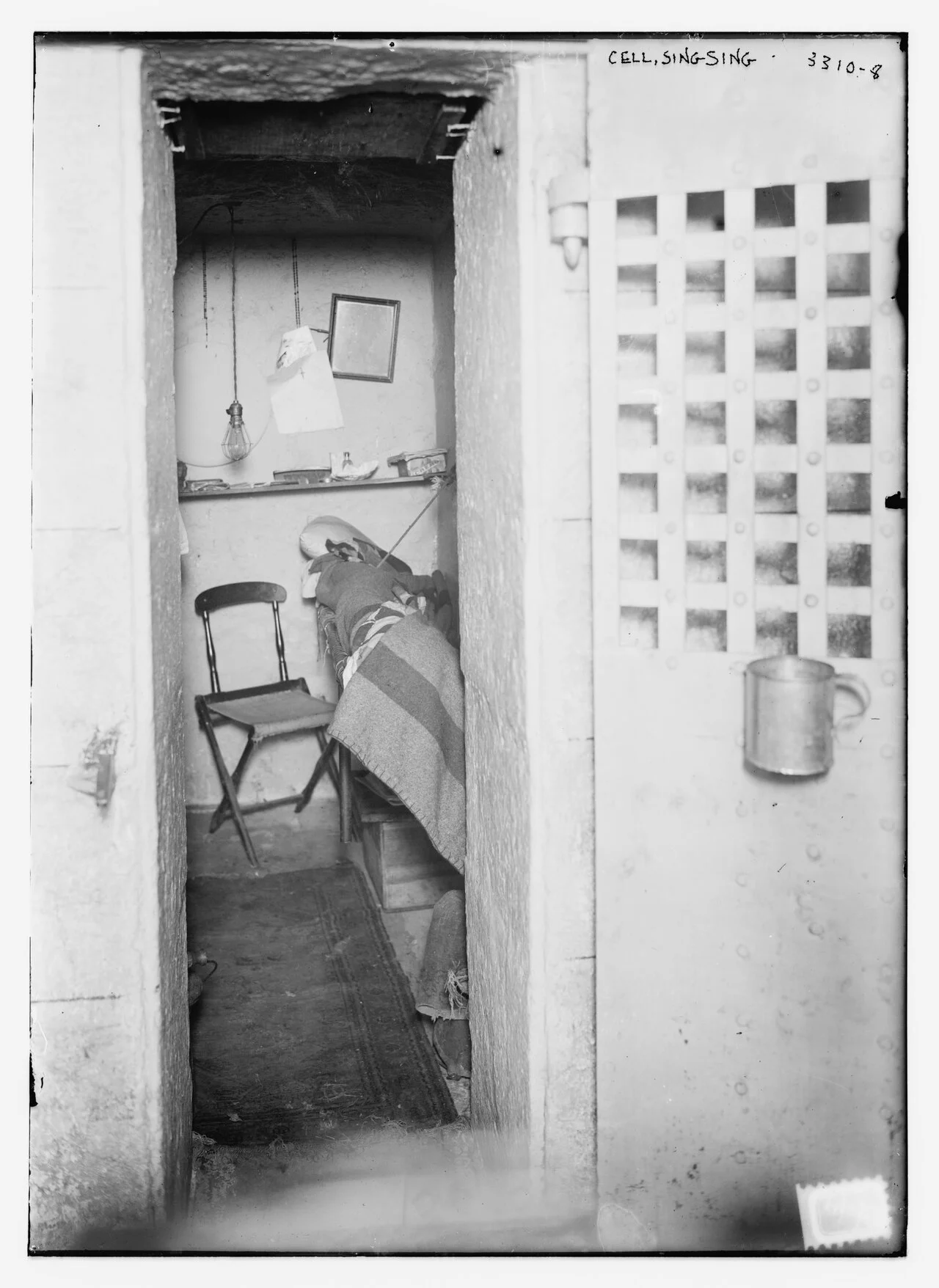
Archival photograph
Connected place
Sing Sing Prison Museum
Public history programs and resources in Ossining, separate from admission to the operating correctional facility.
Check the museum’s current public programs. The operating prison is not an unrestricted tourist attraction; the historical cell photograph is not identified as Sutton’s cell.
AI illustration · imagined scene
Keep investigating
Step beyond the story.
Explore the connected place, examine the records, and form your own reading of the evidence.
Photo credits & full-image view
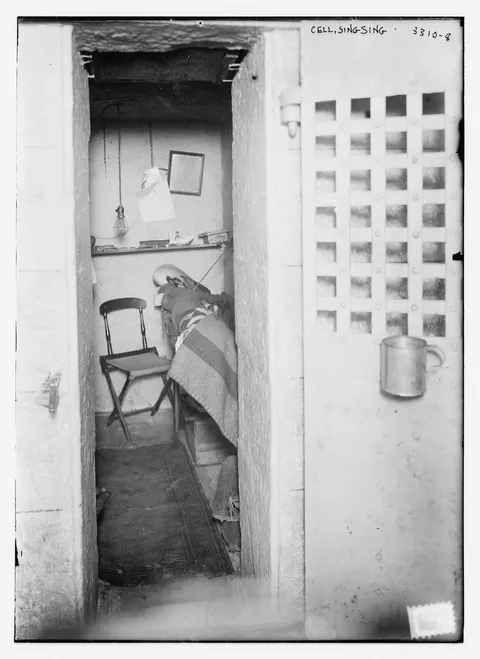
An early twentieth-century photograph of a Sing Sing prison cell, from the Library of Congress Bain collection.
Resized without enlargement and converted to WebP; orientation follows source metadata. No manual crop or content alteration. The complete downloaded frame is preserved; card or banner display crops may be used. Image derivatives retain the stated image rights or license.
Scene artwork is AI-generated editorial illustration. Real photographs and original records retain their separate credits.
Sources & further reading
Original TrekBoundX writing. Research reviewed November 24, 2026. Source links do not imply institutional endorsement.