Do separate accidents establish a dangerous anomaly, or a memorable way of grouping them?
1945–present
The story
What we know
The Bermuda Triangle is a popular name for a loosely defined Atlantic region associated with missing ships and aircraft. NOAA finds no evidence that mysterious disappearances occur there more often than in other large, heavily travelled ocean areas. Individual losses can remain unresolved without establishing a regional supernatural cause. [1][2]
More context & timeline
Flight 19 provides a concrete test. Five Navy Avengers carrying fourteen men disappeared on a training mission on December 5, 1945. Communications indicated navigation difficulties. A search aircraft was also lost. These were distinct aircraft, crews and circumstances; collecting them beneath a single label should not erase the separate investigations. [1][2]
December 5, 1945
Flight 19 fails to return from a training flight over the Bahamas. [2]
1945
A large air and sea search fails to recover the missing Avengers. [3]
2010
NOAA publishes its assessment of the Triangle’s alleged exceptional risk. [1]
Look closely
Follow the evidence
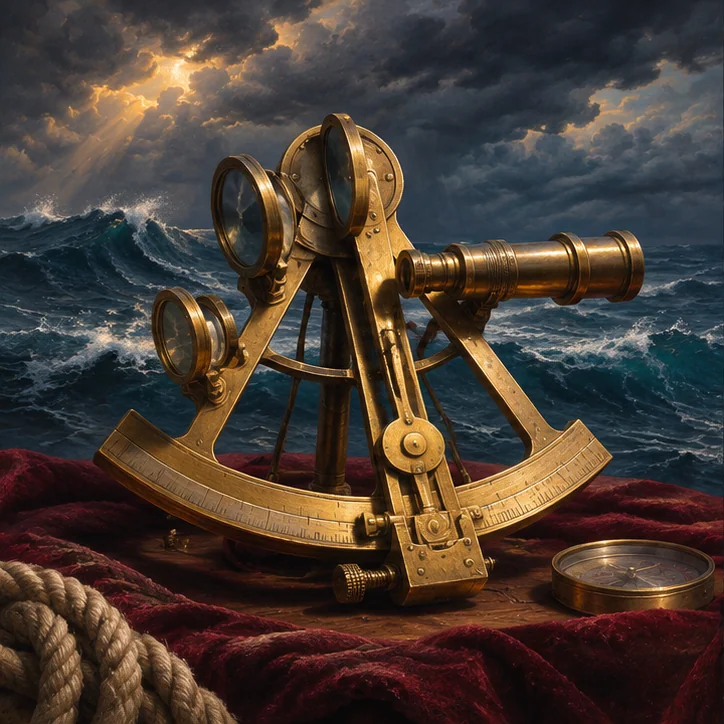
The images illustrate navigation and weather; they do not document a particular disappearance or a supernatural ocean region.
AI illustration · imagined scene
Evidence 1
A boundary without official standing
NOAA notes that the name has no official geographic definition. Changing a boundary or a list of included cases changes the apparent pattern, so a meaningful comparison requires a fixed area and a measure of traffic. [1]
AI illustration · imagined scene
Evidence 2
Radio reports rather than total silence
Flight 19 was not simply erased without communication. Received transmissions point to confusion about position and compass readings. They constrain an explanation while leaving uncertainty about the flight’s exact final path. [2]
AI illustration · imagined scene
Evidence 3
Two losses, different evidence
The Navy history separates the missing Avengers from a PBM search aircraft, whose loss was associated with a reported explosion. Treating every aircraft as one simultaneous disappearance discards relevant evidence and creates an artificial puzzle. [3]
1 / 3
Interpret the evidence
Fact, record and legend
Follow a possibility. Weigh what supports it. See where the evidence stops.
AI artwork sets the scene; it does not reconstruct an established answer.
AIExplore an explanationWeather, sea conditions and human error
The support
Storms, hazardous shallows and navigation mistakes are established dangers in this heavily used ocean region. [1]
The limit
These general hazards do not retrospectively identify the cause of every accident without case-specific records. [1]
AIExplore an explanationDisorientation followed by exhaustion of options
The support
Flight 19’s radio traffic supports a sequence involving navigational confusion and dwindling fuel. [2]
The limit
The aircraft have not been conclusively located, leaving the final route and precise circumstances unresolved. [2]
AIExplore an explanationAn exceptional force tied to the Triangle
The support
Stories group unresolved losses into a single geographic phenomenon. That grouping explains the legend’s appeal. [1]
The limit
Neither an undefined boundary nor an unanswered accident supplies evidence of an unknown regional force. NOAA finds no demonstrated excess of mysterious losses. [1]
Would you investigate the most famous disappearance first, or first test whether the supposed cluster exceeds the normal risks of a busy sea?
AI illustration · imagined scene
Connected place
Naval History and Heritage Command
Public historical resources connect Flight 19 to Navy records and aviation history.
Left panel extracted from a generated triptych and optimized as WebP without enlargement. The original PNG and generation prompt are preserved in the project artwork ledger.
Scene artwork is AI-generated editorial illustration. Real photographs and original records retain their separate credits.
Sources & further reading
Original TrekBoundX writing. Research reviewed November 25, 2026. Source links do not imply institutional endorsement.