What would turn an intriguing encounter into independently verifiable evidence of an animal?
1958–present
The story
What we know
Bigfoot, often called Sasquatch, is described as a large hairy biped in North American forests. Sightings and alleged traces sustain popular interest. A museum can preserve associated material as cultural history while carefully labelling its claimed origin. Preserving a report differs from accepting its biological conclusion. [1][2][3][4]
More context & timeline
The FBI examined submitted hair in the 1970s and reported deer-family origin. A 2014 genetic study found known mammals rather than a new North American primate. In October 2026, the Forest Service posted historical Bigfoot-related records. That release makes old reports accessible; it does not announce a confirmed species. [1][2][3][4]
1958
Publicity around alleged giant tracks helps popularise modern Bigfoot interest. [2]
1976–1977
FBI correspondence and laboratory work examine a submitted hair sample. [1]
October 15, 2026
The Forest Service reading room lists historical Bigfoot/Sasquatch records. [4]
Look closely
Follow the evidence
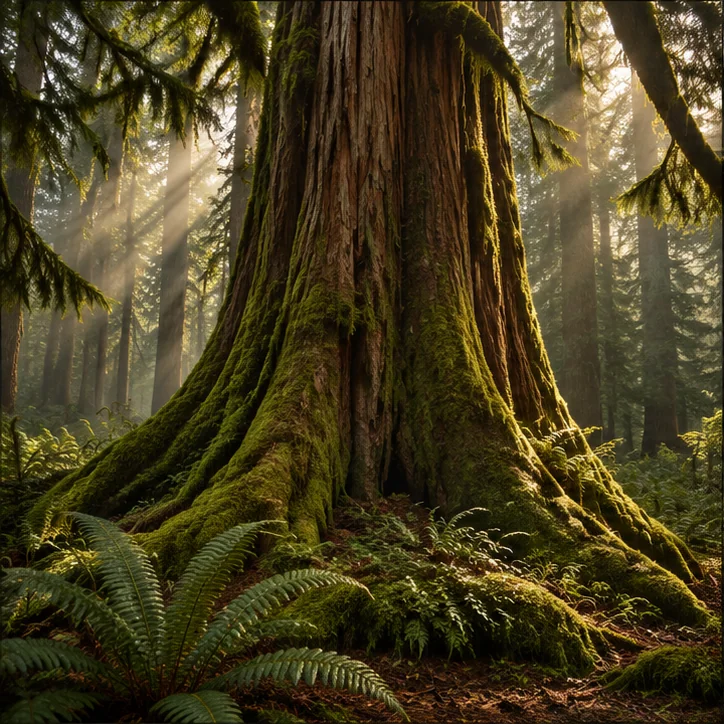
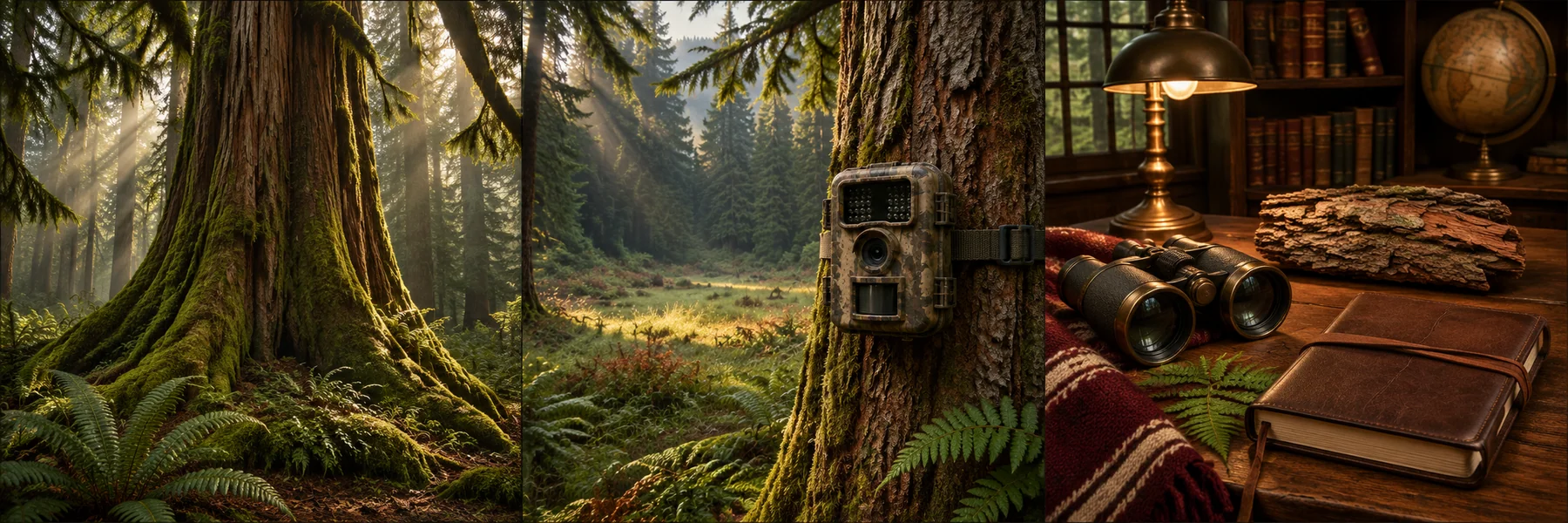
The scenes evoke folklore and wildlife research; no fabricated photograph, footprint, hair sample, or Bigfoot specimen is shown as evidence.
AI illustration · imagined scene
Evidence 1
A cast with a chain of copies
The Arizona State Museum describes a cast made from another cast associated with an alleged 1967 footprint. Its documented museum history does not independently identify whatever made the original impression. The difference between an object and its attribution matters. [2]
AI illustration · imagined scene
Evidence 2
A laboratory can resolve one sample
The FBI’s hair conclusion concerns the material submitted for examination. It contradicts an unknown-animal claim for that sample; it neither surveys every forest nor proves that every person reporting an encounter deliberately lied. [1]
AI illustration · imagined scene
Evidence 3
A new release can contain old evidence
The Forest Service’s 2026 reading-room entry includes a 1982 tracks investigation and other historical records. The upload date and the event date must remain distinct. An agency retaining a report is not an endorsement of its strongest interpretation. [4]
1 / 3
Interpret the evidence
Fact, record and legend
Follow a possibility. Weigh what supports it. See where the evidence stops.
AI artwork sets the scene; it does not reconstruct an established answer.
AIExplore an explanationKnown animals or ordinary material misidentified
The support
The genetic study demonstrates how material submitted under an extraordinary label can originate from familiar mammals. [3]
The limit
That result applies to the tested samples. It does not retrospectively explain every distant observation or unidentified sound. [3]
AIExplore an explanationConstructed traces and a circulating legend
The support
Footprint reports, casts and publicity can reinforce expectations about what later observers think they see. [2]
The limit
A cultural explanation does not establish that every trace was made deliberately or reduce distinct Indigenous traditions to a single modern creature claim. [2]
AIExplore an explanationAn undocumented large primate
The support
Supporters propose that an elusive animal produces the reports. [3]
The limit
The cited tests do not establish one. A new species claim requires authenticated biological evidence that independent specialists can examine and reproduce. [3]
What chain of collection and testing would you need before accepting that an unusual sample belonged to an animal unknown to science?
AI illustration · imagined scene
Connected place
Arizona State Museum
A public collection interpretation examines an alleged footprint cast and the history of the legend.
Left panel extracted from a generated triptych and optimized as WebP without enlargement. The original PNG and generation prompt are preserved in the project artwork ledger.
Scene artwork is AI-generated editorial illustration. Real photographs and original records retain their separate credits.
Sources & further reading
Original TrekBoundX writing. Research reviewed November 25, 2026. Source links do not imply institutional endorsement.