Can a small delayed avalanche explain evidence that once seemed to rule an avalanche out?
1959
The story
What we know
In February 1959, nine members of Igor Dyatlov’s ski expedition died in the northern Urals. Their abandoned tent and the later recovery of the group created difficult questions about a hurried departure, exposure and injuries. A tragedy involving real people gradually accumulated stories of secret weapons, attackers and extraordinary forces. [1][2]
More context & timeline
A 2021 peer-reviewed study proposed a small slab avalanche after wind deposited additional snow above a cut made for the tent. Its purpose was to test physical plausibility, including objections about slope angle and delay. Follow-up field expeditions documented avalanche activity in the area. Neither a model nor a modern avalanche is a recording of what happened in 1959. [1][2]
February 1–2, 1959
The group’s final camp is followed by the fatal incident. [1]
January 28, 2021
Gaume and Puzrin publish their slab-avalanche model. [1]
2021–2022
Follow-up expeditions gather terrain observations and evidence of avalanches. [2]
Look closely
Follow the evidence
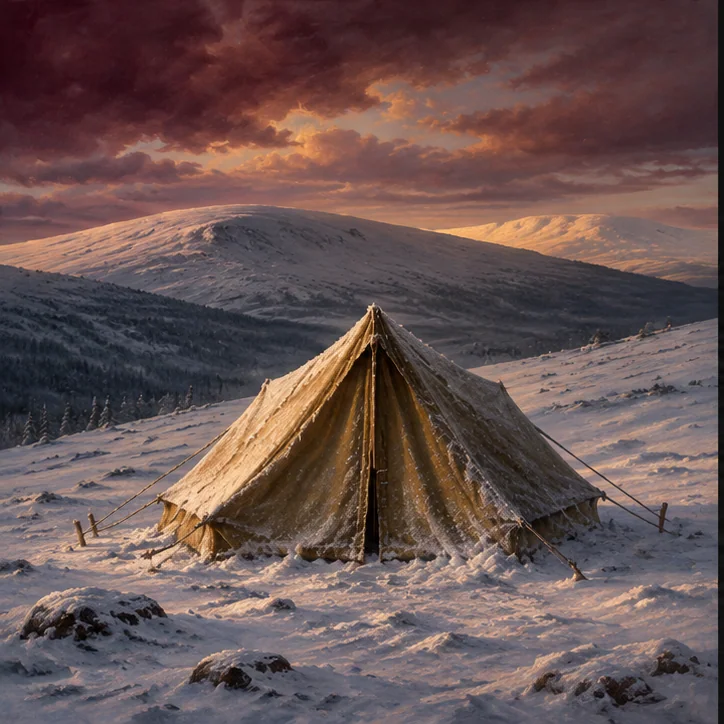
Illustrations evoke terrain and expedition conditions without reconstructing victims, injuries, a precise avalanche, or an unverified attack.
AI illustration · imagined scene
Evidence 1
The average slope can conceal a steeper step
The researchers distinguish the broad slope from local terrain above the tent. A sheltered placement beneath a shoulder could matter more than a single average angle when assessing snow instability. [1]
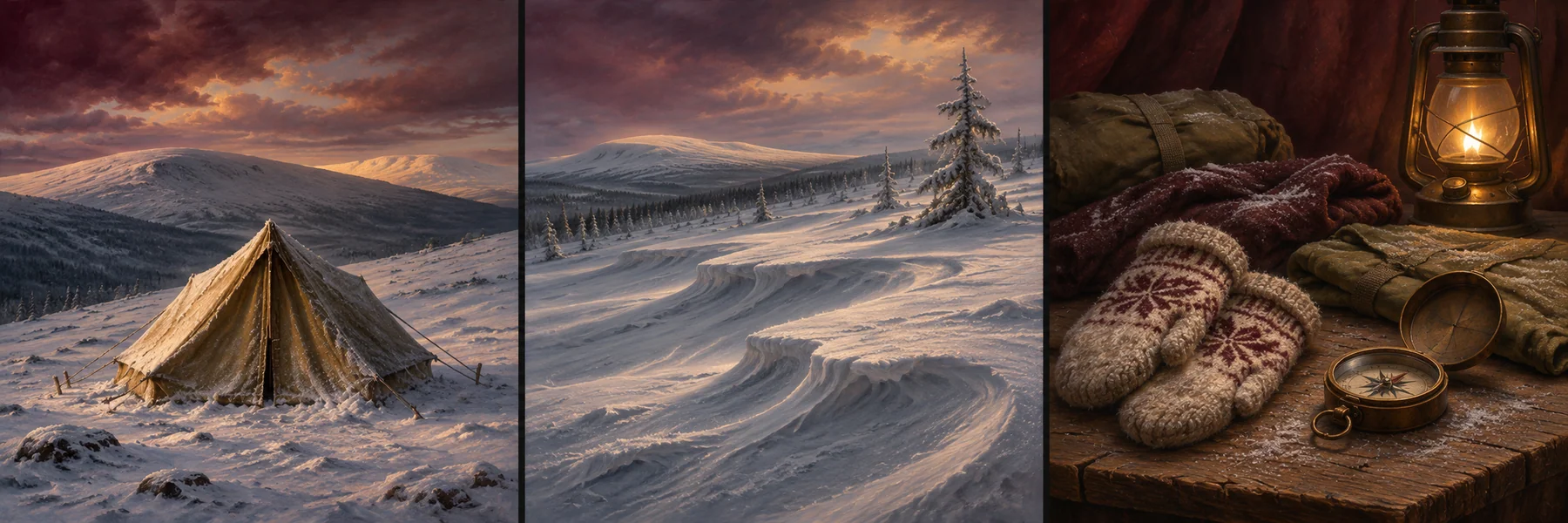
AI illustration · imagined scene
Evidence 2
A possible delay mechanism
Wind-driven accumulation could progressively load a slab after the group prepared its camp. This addresses the objection that a snow failure should have happened immediately, without requiring an unexplained disturbance hours later. [3]
AI illustration · imagined scene
Evidence 3
Field evidence with a clear limit
Later visitors observed avalanche conditions and collected additional topographic information. These observations challenge claims that avalanches cannot occur there. They cannot establish the weather, snow layers or exact camp position on the fatal night. [2]
1 / 3
Interpret the evidence
What could explain it?
Follow a possibility. Weigh what supports it. See where the evidence stops.
AI artwork sets the scene; it does not reconstruct an established answer.
AIExplore an explanationA delayed slab release
The support
The model combines terrain, a cut in the snow and later wind loading into a physically plausible event. [1]
The limit
The necessary 1959 conditions cannot be measured directly, so plausibility should not be described as complete forensic reconstruction. [1]
AIExplore an explanationSevere wind and exposure without a slab
The support
Wind was an important environmental danger and appears in alternative natural explanations of the departure. [3]
The limit
An account must also explain the injuries and the decision to leave equipment behind; naming bad weather alone is incomplete. [3]
AIExplore an explanationAn attack or secret experiment
The support
Unusual fragments of the story have encouraged human and extraordinary-cause narratives. [1]
The limit
The cited research supplies no verified evidence of an attacker or experiment. An unexplained detail is not positive evidence for either. [1]
If a model shows that something could happen, what additional evidence would show that it did happen on this particular night?
AI illustration · imagined scene
Connected place
ETH Zurich geomechanics research
A public research page explains the snow-mechanics investigation.
Left panel extracted from a generated triptych and optimized as WebP without enlargement. The original PNG and generation prompt are preserved in the project artwork ledger.
Scene artwork is AI-generated editorial illustration. Real photographs and original records retain their separate credits.
Sources & further reading
Original TrekBoundX writing. Research reviewed November 25, 2026. Source links do not imply institutional endorsement.