
All mysteries

Lost expeditions

Percy Fawcett and the Lost City of Z

0 of 3 evidence items examined
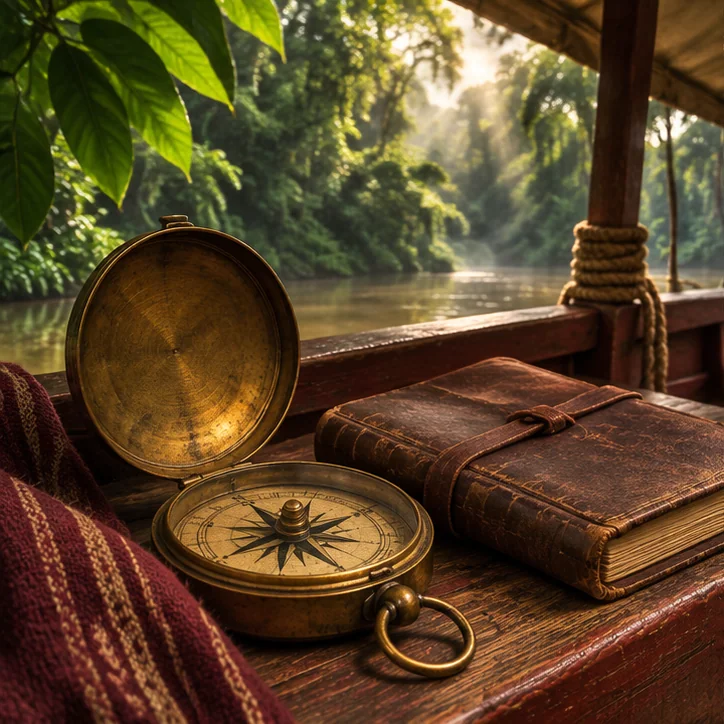
AI-generated editorial illustration: Illustrative expedition compass and closed notebooks.View image
AI illustration · imagined scene

How do we separate an expedition’s unknown fate from the archaeology of the landscape it crossed?

1925

The story

What we know

In 1925, Percy Fawcett travelled into Brazil’s interior with his son Jack and Raleigh Rimell. He hoped to find the ancient settlement he called Z. His final communications survive, but no authenticated discovery has established the three men’s fate. [1] [2]

More context & timeline

The forest was not an empty stage awaiting European discovery. Indigenous peoples possessed knowledge, histories, and settlements of their own. Research conducted with Kuikuro communities has documented complex ancient landscapes in the Upper Xingu, providing evidence about Amazonian societies rather than a retrospective solution to Fawcett’s disappearance. [1] [2]
  1. 1925

    Fawcett, Jack, and Rimell undertake the final expedition. [1]

  2. After the last communications

    Searches and competing accounts fail to establish their fate. [1]

  3. 2008

    Published Upper Xingu research describes networks of substantial ancient settlements. [2]

Look closely

Follow the evidence

Imagined expedition context, not Fawcett’s recovered equipment or proof of a lost city; Indigenous communities and Amazonian archaeology are not portrayed as vanished.

AI-generated editorial illustration: Illustrative expedition compass and closed notebooks.
AI illustration · imagined scene
Evidence 1

A last message has a limited reach

Fawcett’s correspondence places him on the expedition at a particular stage. A letter sent before a disappearance cannot reveal what happened afterward. A detailed route reconstruction should not be mistaken for an eyewitness account of the end. [1]

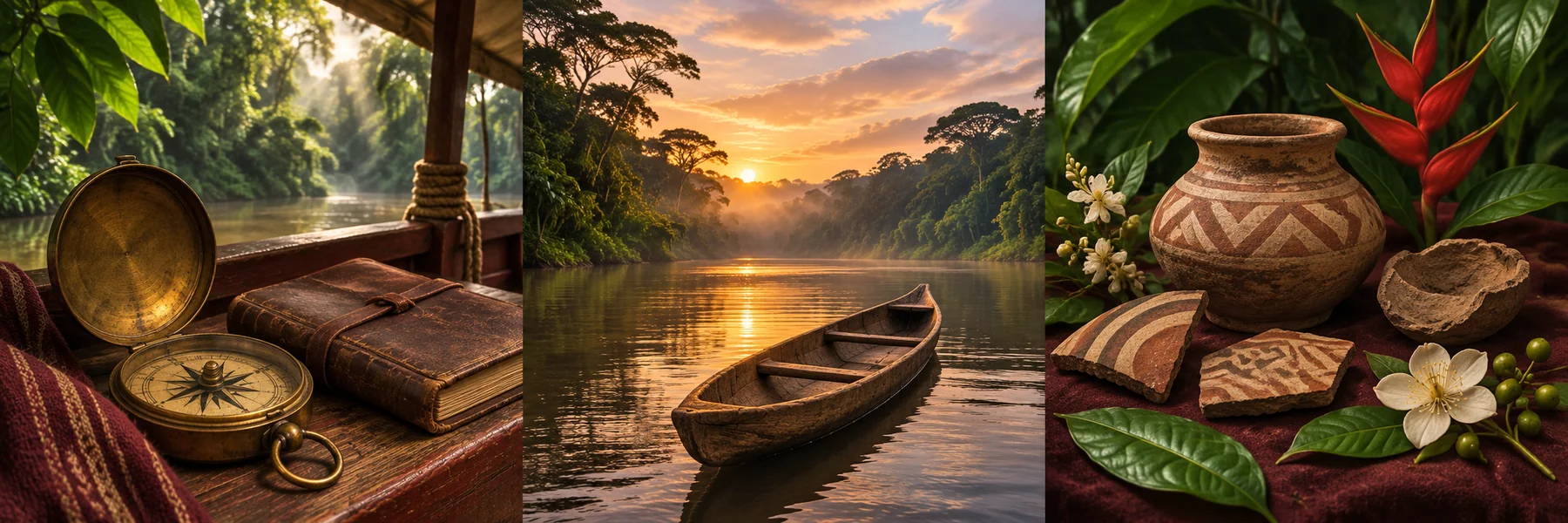
AI-generated editorial illustration: Imagined empty canoe on a forest river.
AI illustration · imagined scene
Evidence 2

Indigenous knowledge belongs in the record

University of Florida researchers describe collaboration with Kuikuro people and the use of local histories to understand ancient settlements. Treating that knowledge as mere assistance to an outsider obscures who knew and maintained the landscape. [3]

AI-generated editorial illustration: Illustrative archaeological and botanical study objects.
AI illustration · imagined scene
Evidence 3

Settlements are archaeological evidence

Roads, plazas, earthworks, and settlement patterns support a history of large interconnected communities. Their documentation challenges older assumptions about Amazonia, but does not establish that any site was the precise city Fawcett imagined. [2]

Interpret the evidence

What could explain it?

Follow a possibility. Weigh what supports it. See where the evidence stops.

AI artwork sets the scene; it does not reconstruct an established answer.

Explore an explanationThe party died during the journey

The support

Illness, exhaustion, accident, or conflict could end a small expedition without producing an accessible written record. Later accounts offer different versions of an encounter or disappearance. [1]

The limit

No authenticated remains or securely corroborated final account establishes one sequence. Uncertainty does not justify blaming an Indigenous community for a crime that has not been proved. [1]

Explore an explanationArchaeology vindicated the whole Z story

The support

Evidence of extensive ancient settlements confirms that sophisticated societies shaped parts of Amazonia. Fawcett’s broad rejection of an entirely uninhabited past can therefore sound prescient. [2]

The limit

A broad similarity cannot verify his specific sources, imagined city, or eventual destination. Archaeology must be interpreted through its own dating and community context. [2]

Does finding an ancient settlement confirm a traveller’s prediction, or first require testing exactly what that prediction claimed?
AI-generated editorial illustration: Illustrative expedition compass and closed notebooks.
AI illustration · imagined scene

Connected place

University of Florida / Indigenous Amazon research

A public account of collaborative archaeological and heritage research with Kuikuro communities.

Visitor guide

This is a learning link, not permission to enter Indigenous territories or undertake an expedition.

AI-generated editorial illustration: Illustrative archaeological and botanical study objects.
AI illustration · imagined scene

Keep investigating

Step beyond the story.

Explore the connected place, examine the records, and form your own reading of the evidence.

Photo credits & full-image view
AI-generated editorial illustration for Percy Fawcett and the Lost City of Z. It is an imagined scene, not a historical photograph or source evidence.

Created for TrekboundX · Image source · AI artwork details

Left panel extracted from a generated triptych and optimized as WebP without enlargement. The original PNG and generation prompt are preserved in the project artwork ledger.

Scene artwork is AI-generated editorial illustration. Real photographs and original records retain their separate credits.

Sources & further reading

Original TrekBoundX writing. Research reviewed November 25, 2026. Source links do not imply institutional endorsement.

  1. Smithsonian MagazineBehind the search for the Lost City of ZExamine the source
  2. University of FloridaAmazonian settlements rivaled Greece, EuropeExamine the source
  3. University of FloridaUF and Kuikuro Tribe Join Forces to Preserve the AmazonExamine the source
  4. Royal Geographical SocietyHidden Histories of Exploration: exhibition catalogueExamine the source
Suggest a correction
All mysteriesNext mysteryThe Secrets of the Sphinx

Percy Fawcett and the Lost City of Z — image

AI-generated editorial illustration: Illustrative expedition compass and closed notebooks.
AI-generated editorial illustration for Percy Fawcett and the Lost City of Z. It is an imagined scene, not a historical photograph or source evidence.

Created for TrekboundX · Image source · AI artwork details

Left panel extracted from a generated triptych and optimized as WebP without enlargement. The original PNG and generation prompt are preserved in the project artwork ledger.