
All mysteries

Lost expeditions

The Franklin Expedition

0 of 5 evidence items examined
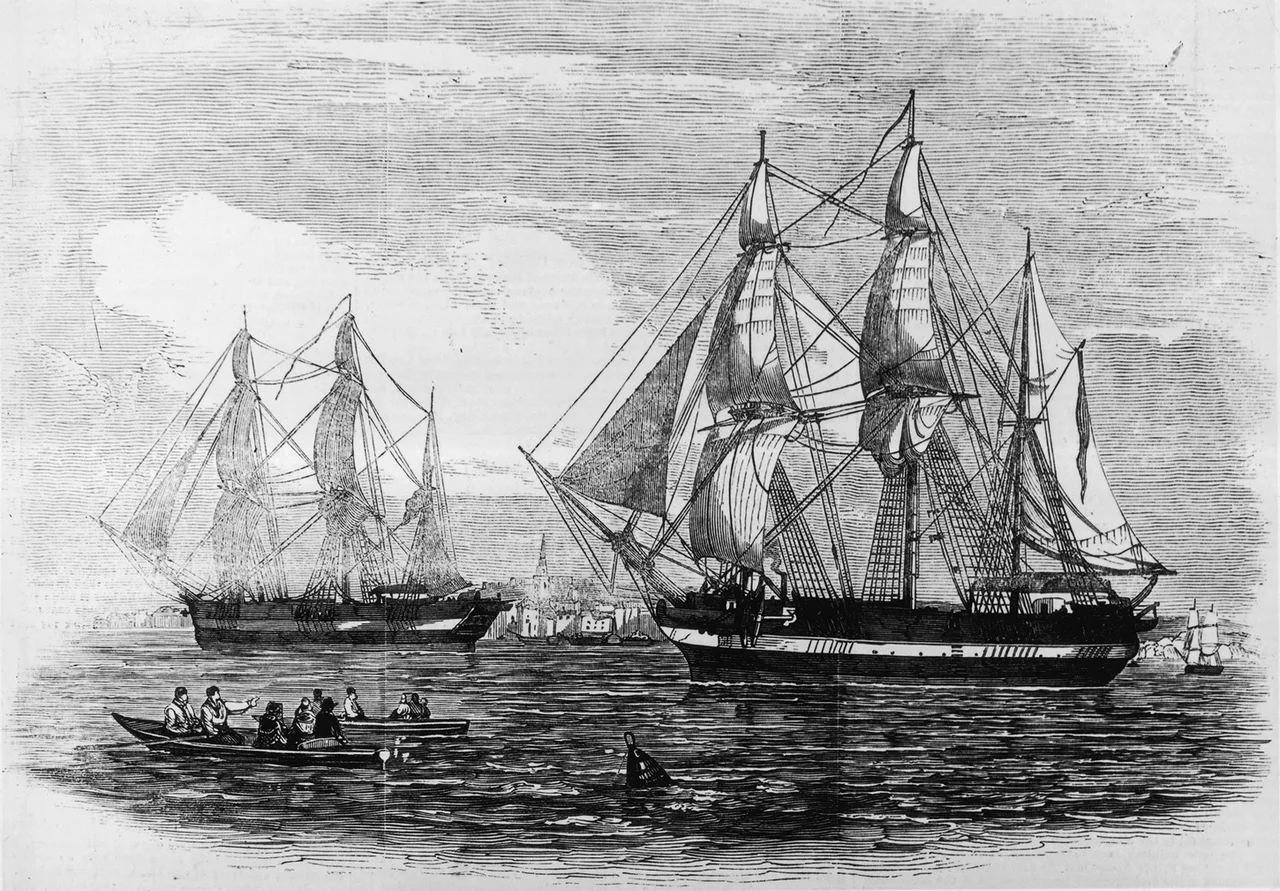
A nineteenth-century engraving showing the sailing ships Erebus and Terror with smaller boats nearby.View image
1845 archival engraving

What happened after the crews left their ships?

1845–1848 and beyond

The story

What we know

The Franklin story is no longer a search for two missing ships. Erebus was found in 2014 and Terror in 2016. The remaining questions concern the people, movements, and decisions that followed the expedition’s entrapment in ice. Inuit knowledge has been essential to the investigation. [1]

More context & timeline

The expedition departed in 1845 and became icebound in 1846. A surviving written record reports Franklin’s death in June 1847 and abandonment of the ships in April 1848. That record is crucial, but it is not a complete diary of the survivors’ later movements. [1]
  1. 1845–1846

    The expedition departs; the ships become trapped in ice. [1]

  2. 1847–1848

    The Victory Point record reports Franklin’s death and the crews’ departure from the ships. [1]

  3. 2014 & 2016

    Erebus and Terror are located, informed by Inuit knowledge and archaeological investigation. [1]

Look closely

Follow the evidence

Imagined naval paper, Arctic landscape and wreck views—not the Victory Point record or photographs of either wreck.

AI-generated editorial illustration: A naval paper and compass in lamplight
AI illustration · imagined scene
Evidence 1

Two messages on one sheet

The Victory Point record preserves a change in circumstances and a stated intention to move south. It establishes key dates without documenting everything that followed. [1]

AI-generated editorial illustration: An atmospheric Arctic coastal landscape
AI illustration · imagined scene
Evidence 2

Knowledge that endured

Inuit accounts and knowledge of expedition objects preserved evidence that European searchers sometimes dismissed. Inuit Qaujimajatuqangit helped guide the modern discoveries. [2]

AI-generated editorial illustration: A conceptual wooden shipwreck beneath cold water
AI illustration · imagined scene
Evidence 3

The ships themselves

The wrecks’ locations and condition must be reconciled with testimony and documents. Finding a ship answers where it lies, not every question about how it arrived there. [3]

AI-generated editorial illustration: A naval paper and compass in lamplight
AI illustration · imagined scene
Evidence 4

Initials on the silver

John Rae obtained silverware from Inuit in 1854, including pieces marked with officers’ initials and Franklin’s medal. Such identifiable objects connect testimony with expedition material. Their survival does not, by itself, establish the route followed by every person who once owned them. [1]

AI-generated editorial illustration: An atmospheric Arctic coastal landscape
AI illustration · imagined scene
Evidence 5

A boat carried over land

McClintock’s search encountered a ship’s boat on a heavy sledge, alongside other abandoned possessions and human remains. This is physical evidence of an overland effort involving expedition equipment. It does not supply a complete itinerary or tell us why particular objects were left behind. [1]

Interpret the evidence

What could explain it?

Follow a possibility. Weigh what supports it. See where the evidence stops.

AI artwork sets the scene; it does not reconstruct an established answer.

Explore an explanationMovement with ice and currents

The support

Parks Canada’s expert discussion describes drifting ice and currents as a way Erebus could have moved south. [3]

The limit

A possible transport process does not supply a complete chronology or account for every event. [3]

Explore an explanationLater activity aboard the ships

The support

Terror’s sheltered location raises questions about possible later occupation or navigation. [3]

The limit

Renewed human activity remains a hypothesis to test. This account draws on a dated expert discussion, not a claim of current consensus. [3]

How does the investigation change when Inuit testimony is treated as essential evidence rather than a footnote?
A nineteenth-century engraving showing the sailing ships Erebus and Terror with smaller boats nearby.
Archival departure engraving

Connected place

Gjoa Haven / Nattilik Heritage Centre

A learning destination on King William Island connected to Inuit history and the Franklin story.

Visitor guide

The protected wreck sites have no public access. No wreck coordinates or directions are provided here. [4]

AI-generated editorial illustration: A conceptual wooden shipwreck beneath cold water
AI illustration · imagined scene

Keep investigating

Step beyond the story.

Explore the connected place, examine the records, and form your own reading of the evidence.

Photo credits & full-image view
An 1845 engraving of Erebus and Terror departing for the Arctic, published in The Illustrated London News.

The Illustrated London News, unknown staff artist; published May 24, 1845 · Image source · Public domain

Resized and converted to WebP. Cards and banners show display crops; the expanded image preserves the complete downloaded frame. Adapted images retain the stated image license.

Scene artwork is AI-generated editorial illustration. Real photographs and original records retain their separate credits.

Sources & further reading

Original TrekBoundX writing. Research reviewed November 26, 2026. Source links do not imply institutional endorsement.

  1. Parks CanadaSearching for FranklinExamine the source
  2. Parks CanadaInuit culture and knowledgeExamine the source
  3. Parks CanadaMeet the experts (2016 discussion)Examine the source
  4. Parks CanadaPlan your visit: protected wreck accessExamine the source
Suggest a correction
All mysteriesNext mysteryThe Alcatraz Escape

The Franklin Expedition — image

A nineteenth-century engraving showing the sailing ships Erebus and Terror with smaller boats nearby.
An 1845 engraving of Erebus and Terror departing for the Arctic, published in The Illustrated London News.

The Illustrated London News, unknown staff artist; published May 24, 1845 · Image source · Public domain

Resized and converted to WebP. Cards and banners show display crops; the expanded image preserves the complete downloaded frame. Adapted images retain the stated image license.