
All mysteries

Undeciphered

The Indus Script

0 of 3 evidence items examined
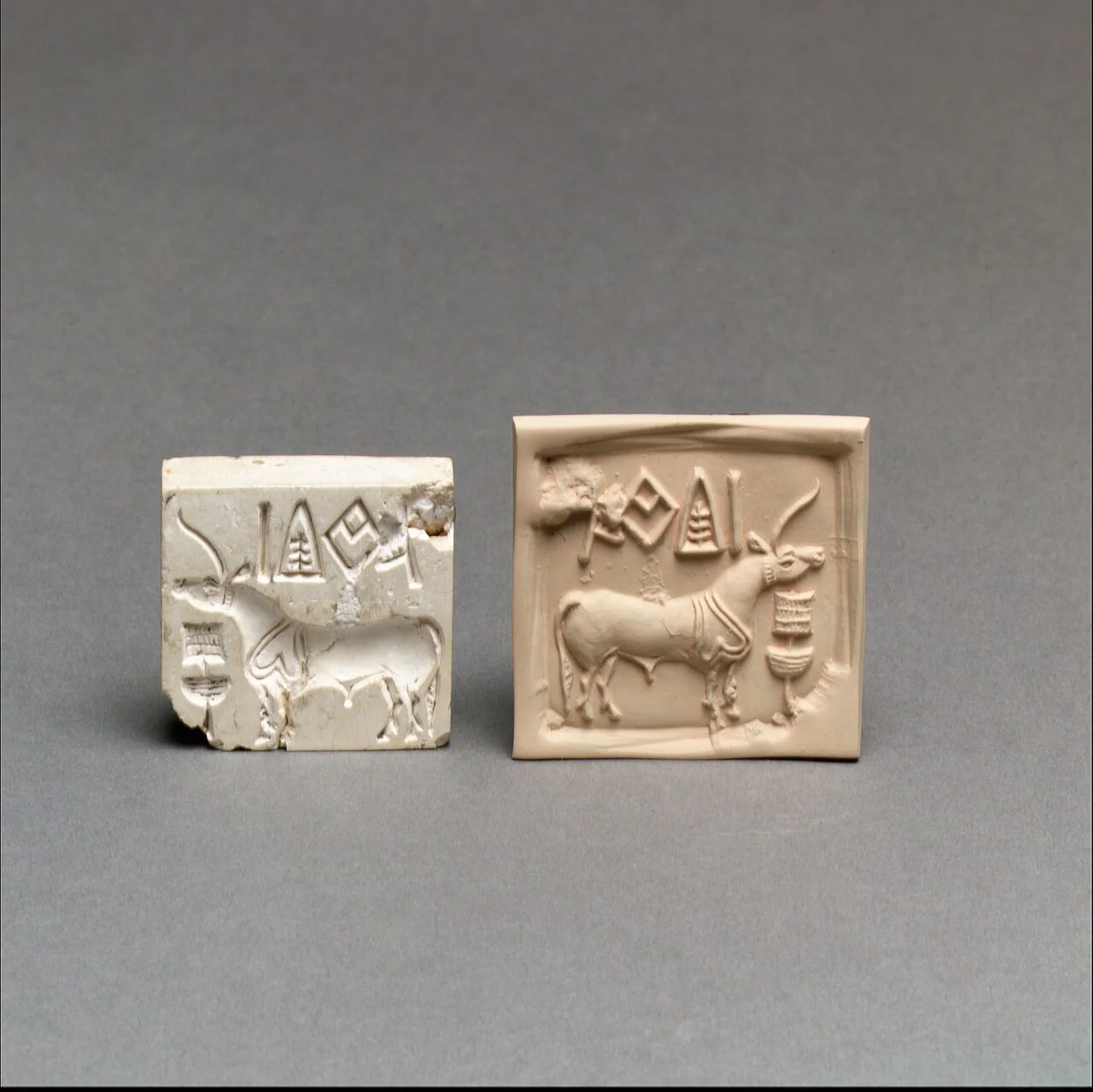
An Indus stamp seal and a modern impression showing a one-horned animal and a line of signs.View image
Ancient seal and modern impression

What did the people of the Indus cities write on their seals?

Especially c. 2600–1900 BCE

The story

What we know

A small carved seal can outlast the institutions that made it useful. Across the Indus civilisation, craftspeople combined animals, carefully cut signs, and reusable stamp surfaces. These objects belonged to a sophisticated urban society. [1] [2]

More context & timeline

Excavations recover inscriptions on seals, tablets, pottery, and other objects, often in short sequences. Context reveals their manufacture and use while the texts remain undeciphered. No translation has secured general acceptance; the signs’ relationship with spoken language is debated. [1] [2]

  1. c. 2600–1900 BCE

    Mature Harappan communities use the familiar seals represented in museum collections. [4]

  2. 1986–2007

    Harappa excavations document inscribed objects within their archaeological contexts. [1]

  3. 2011 onward

    Studies test sign design, sequence structure, and possible economic uses without delivering an accepted decipherment. [2]
Look closely

Follow the evidence

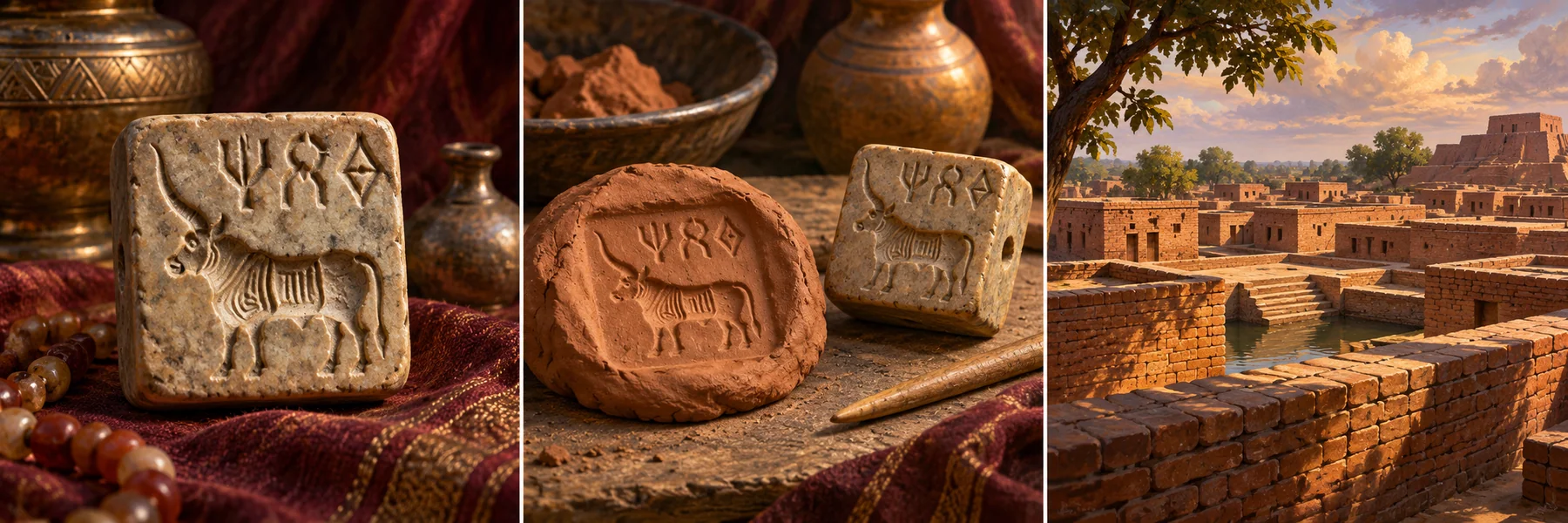
Imagined seals and signs, not authentic inscriptions or a proposed decipherment. Real objects and research remain linked separately.

AI-generated editorial illustration: An invented animal seal and indistinct signs
AI illustration · imagined scene
Evidence 1

Context survives where words do not

Find locations, manufacturing traces, and impressions connect inscriptions to activities. Researchers can ask what an object did before claiming to know exactly what its signs said. [1]

AI-generated editorial illustration: An imagined seal impression in clay
AI illustration · imagined scene
Evidence 2

The signs have structure

Sign-design research identifies recurring basic elements, modifiers, and compound forms. Patterned construction supports systematic communication, but does not by itself provide sounds or translations. [2]

AI-generated editorial illustration: An imagined ancient South Asian brick setting
AI illustration · imagined scene
Evidence 3

Repeatable messages

Groups of miniature tablets repeat closely related inscriptions. Their repetition has prompted researchers to examine transactions, quantities, and labour administration rather than assuming every seal simply named its owner. [3]

Interpret the evidence

What could explain it?

Follow a possibility. Weigh what supports it. See where the evidence stops.

AI artwork sets the scene; it does not reconstruct an established answer.

Explore an explanationNames and social identities

The support

A traditional interpretation treats seals as identifying people or institutions involved in exchanges, consistent with their ability to reproduce a mark. [3]

The limit

That general function does not identify any particular name or tell us which language a text represents. [3]

Explore an explanationRecords for repeated transactions

The support

Rao proposes that some miniature tablets acted as ration tokens, comparing their repetition with ancient accounting practices elsewhere. [3]

The limit

It is a functional hypothesis about particular objects, not a translation of the entire corpus or proof that every seal served one purpose. [3]

Explore an explanationA broader system of writing

The support

The consistent organisation of signs motivates research into rules beyond simple pictures or isolated emblems. [2]

The limit

Recognising structure cannot settle how much speech was encoded. A claimed reading must explain new texts, not only fit selected examples. [2]

Could you work out how a receipt functioned without being able to read its language?
An Indus stamp seal and a modern impression showing a one-horned animal and a line of signs.
Ancient seal and modern impression

Connected place

The Metropolitan Museum of Art, New York

A museum collection with a documented Indus seal and modern impression.

Visitor guide

The linked object record currently says “Not on view.” Its online image is useful evidence; a visit does not guarantee access to this particular object.

AI-generated editorial illustration: An imagined ancient South Asian brick setting
AI illustration · imagined scene

Keep investigating

Step beyond the story.

Explore the connected place, examine the records, and form your own reading of the evidence.

Photo credits & full-image view
An ancient Indus stamp seal shown with a modern impression, Metropolitan Museum of Art.

The Metropolitan Museum of Art; ancient maker unknown · Image source · CC0 1.0

Resized without enlargement and converted to WebP; orientation follows source metadata. No manual crop or content alteration. The complete downloaded frame is preserved; card or banner display crops may be used. Image derivatives retain the stated rights or license.

Scene artwork is AI-generated editorial illustration. Real photographs and original records retain their separate credits.

Sources & further reading

Original TrekBoundX writing. Research reviewed November 24, 2026. Source links do not imply institutional endorsement.

  1. Jonathan Mark Kenoyer and Richard H. Meadow / Harappa Archaeological Research ProjectInscribed Objects from Harappa Excavations: 1986–2007Examine the source
  2. Nisha Yadav and Mayank Vahia / Scripta, hosted by HarappaIndus Script: A Study of its Sign DesignExamine the source
  3. Rajesh P. N. Rao / ArchaeopressThe Indus Script and Economics: A Role for Indus Seals and Tablets in Rationing and Administration of LaborExamine the source
  4. The Metropolitan Museum of ArtStamp seal and modern impression: unicorn and incense burner (?)Examine the source
Suggest a correction
All mysteriesNext mysteryThe Rongorongo Tablets

The Indus Script — image

An Indus stamp seal and a modern impression showing a one-horned animal and a line of signs.
An ancient Indus stamp seal shown with a modern impression, Metropolitan Museum of Art.

The Metropolitan Museum of Art; ancient maker unknown · Image source · CC0 1.0

Resized without enlargement and converted to WebP; orientation follows source metadata. No manual crop or content alteration. The complete downloaded frame is preserved; card or banner display crops may be used. Image derivatives retain the stated rights or license.