All mysteries

Undeciphered

The Rongorongo Tablets

0 of 3 evidence items examined
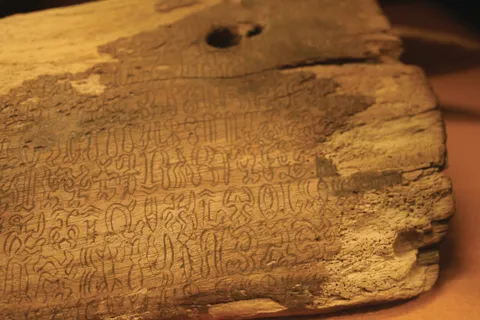
A wooden rongorongo tablet with rows of incised signs in a Bishop Museum display.View image
Original tablet photograph

What knowledge did Rapa Nui’s carved tablets preserve?

Origin uncertain / documented in the nineteenth century

The story

What we know

Rongorongo belongs to the cultural history of the Rapa Nui people. Its carved figures form carefully organised rows. These objects preserve skilled work, but have not yielded a generally accepted decipherment. [1] [3]

More context & timeline

Researchers disagree about whether the signs encode spoken language comprehensively or help a trained reader recall knowledge. Dating is another question. A 2024 study found that one tablet’s wood predates European arrival, while explicitly warning that wood can be older than its carving. The two questions must stay separate. [1] [3]

  1. 1722

    The first recorded European arrival provides a reference point for debates about the tradition’s origin. [1]

  2. Nineteenth century

    The surviving tablet tradition enters European documentation; this is not a secure date for its invention. [3]

  3. 2024

    Research dates four tablets and examines the limitations of reused wood. [1]
Look closely

Follow the evidence

Imagined tablets and marks, not an authentic rongorongo text, a translation or an identified original scene.

AI-generated editorial illustration: An imagined incised wooden tablet
AI illustration · imagined scene
Evidence 1

Orderly rows

Alternating orientations and repeated forms indicate organised inscription. A visual pattern can tell us how a surface was used without establishing what its signs meant. [3]

AI-generated editorial illustration: Invented marks on weathered wood
AI illustration · imagined scene
Evidence 2

Old wood is not an old sentence

Radiocarbon measurements date the organic material. Repurposed timber, including non-native wood, can separate the tree’s lifetime from the moment somebody carved a tablet. [1]

AI-generated editorial illustration: A conceptual volcanic Pacific coastline
AI illustration · imagined scene
Evidence 3

Objects need individual histories

The Berlin tablet study combines wood identification, dating, and detailed surface recording. Such work tests particular artefacts instead of assigning every tablet one convenient age. [2]

Interpret the evidence

What could explain it?

Follow a possibility. Weigh what supports it. See where the evidence stops.

AI artwork sets the scene; it does not reconstruct an established answer.

Explore an explanationA script recording language

The support

The systematic arrangement and substantial combinations of signs support continued investigation as writing rather than decorative imagery. [3]

The limit

No accepted reading links the surviving sequences to language with enough independent confirmation to translate the corpus. [3]

Explore an explanationA framework for remembered knowledge

The support

A mnemonic interpretation connects the tablets with expert recitation: marks could prompt information a trained person already knew. [3]

The limit

Calling a system mnemonic does not recover that knowledge or establish one meaning for every sign. It need not make the objects culturally less sophisticated. [3]

Explore an explanationAn independent invention before contact

The support

The early wood date keeps a pre-contact origin in serious discussion and challenges a simple late-invention story. [1]

The limit

The study itself allows later carving on older wood. Dating a tree cannot by itself demonstrate when writing was invented. [1]

How much of a text survives when the object remains but its teaching tradition is interrupted?
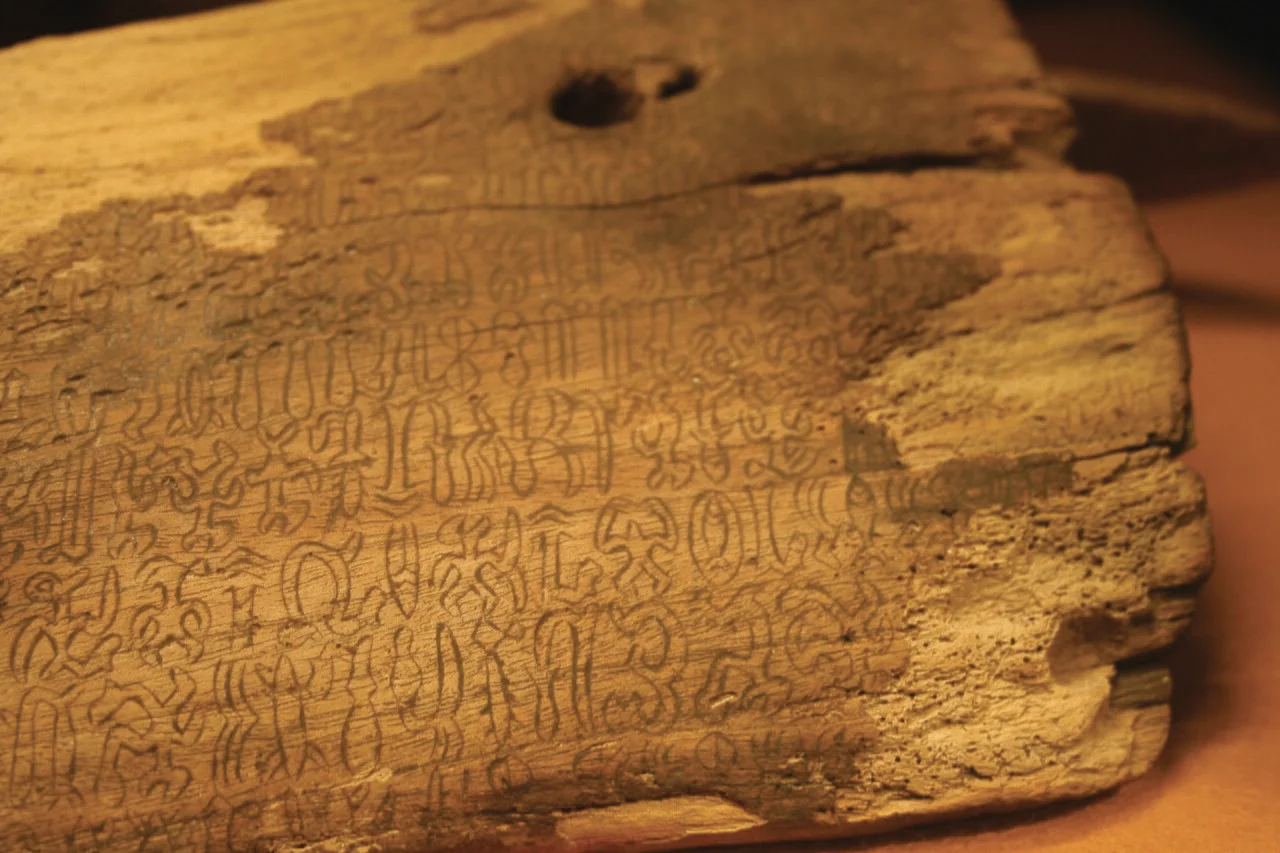
A wooden rongorongo tablet with rows of incised signs in a Bishop Museum display.
Original tablet photograph

Connected place

Museo Rapa Nui / MAPSE

A local institutional resource for Rapa Nui cultural history and collections.

Visitor guide

The official site currently announces preparations to reopen and resume in-person service. Use its digital collections now and verify access before planning a museum visit.

AI-generated editorial illustration: A conceptual volcanic Pacific coastline
AI illustration · imagined scene

Keep investigating

Step beyond the story.

Explore the connected place, examine the records, and form your own reading of the evidence.

Photo credits & full-image view
Rongorongo tablet T, also called Honolulu tablet 1, in a Bishop Museum display, photographed in 2010.

christopherhu · Image source · CC BY 2.0

Resized without enlargement and converted to WebP; orientation follows source metadata. No manual crop or content alteration. The complete downloaded frame is preserved; card or banner display crops may be used. Image derivatives retain the stated rights or license.

Scene artwork is AI-generated editorial illustration. Real photographs and original records retain their separate credits.

Sources & further reading

Original TrekBoundX writing. Research reviewed November 24, 2026. Source links do not imply institutional endorsement.

  1. Ferrara and colleagues / Scientific ReportsThe invention of writing on Rapa Nui (Easter Island). New radiocarbon dates on the Rongorongo scriptExamine the source
  2. Wieczorek and colleagues / Journal of Island and Coastal ArchaeologyThe rongorongo tablet from Berlin and the time-depth of Easter Island’s writing systemExamine the source
  3. British Museum / Google Arts & CultureWooden tablet with rongorongo inscriptionExamine the source
  4. Museo Rapa Nui / Chilean National Cultural Heritage ServiceOfficial museum website and visitor noticeExamine the source
  5. Museo Rapa NuiColección etnográfica de tallado en madera del Museo Rapa NuiExamine the source
Suggest a correction
All mysteriesNext mysteryThe Peoples Behind the Sea Peoples

The Rongorongo Tablets — image

A wooden rongorongo tablet with rows of incised signs in a Bishop Museum display.
Rongorongo tablet T, also called Honolulu tablet 1, in a Bishop Museum display, photographed in 2010.

christopherhu · Image source · CC BY 2.0

Resized without enlargement and converted to WebP; orientation follows source metadata. No manual crop or content alteration. The complete downloaded frame is preserved; card or banner display crops may be used. Image derivatives retain the stated rights or license.