Which parts of the robbery’s familiar story are established by records, and which remain allegations or dramatization?
1978; later investigations
The story
What we know
On December 11, 1978, robbers stole a large quantity of cash and jewelry from Lufthansa’s cargo operation at John F. Kennedy International Airport. FBI records preserve the investigation. The case’s later cultural life, including a fictionalized film account, can blur what was actually proved. [1][2]
More context & timeline
An FBI report from 1979 describes approximately five million dollars in cash and additional jewelry. Earlier reports carried different provisional figures. Later court records also require careful reading: Vincent Asaro was acquitted in 2015 of a racketeering conspiracy charge that included the robbery among its alleged acts. [1][2]
December 11, 1978
The Lufthansa robbery prompts an immediate federal investigation. [1]
1979
Investigative reports preserve revised loss estimates and witness interviews. [1]
2015
A jury acquits Asaro of the racketeering conspiracy charge discussed in later litigation. [2]
Look closely
Follow the evidence
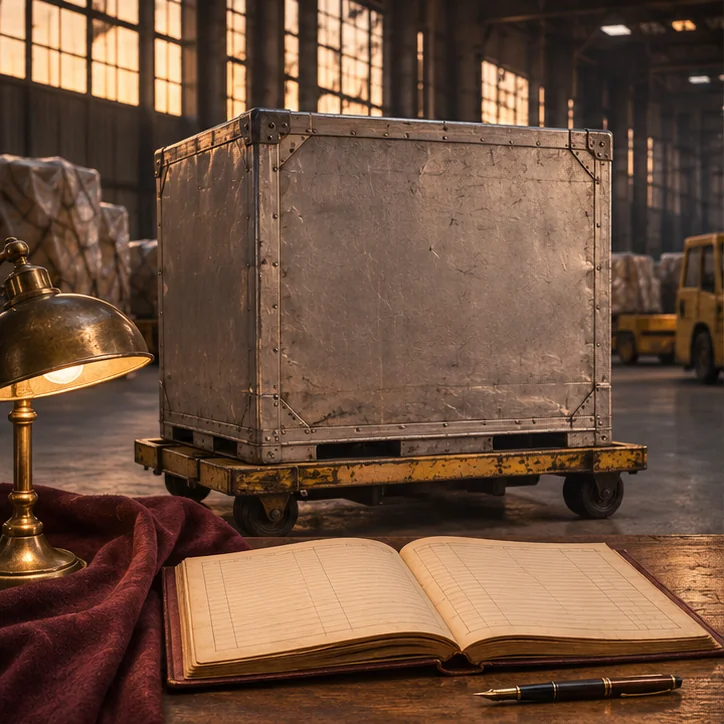
Historical crime context only; no reconstructed access route, present-day airport layout, stolen-money glamour, fabricated exhibit, or assertion of guilt beyond documented proceedings.
AI illustration · imagined scene
Evidence 1
Amounts change as an investigation develops
Contemporary documents contain initial and later valuations. Their difference is a reason to identify the date and basis of an estimate, rather than presenting every published figure as an equally precise final accounting of the loss. [1]
AI illustration · imagined scene
Evidence 2
A film is not a transcript
A government court brief explicitly describes the cinematic account as fictionalized. A dramatization may preserve broad relationships while combining characters, inventing dialogue, or compressing events. Its memorable scene cannot independently corroborate an investigative allegation. [2]
AI illustration · imagined scene
Evidence 3
A later sentence has a different legal basis
The Justice Department records Asaro’s later sentence for arson. A sentencing court’s discussion of alleged historical conduct is different from a jury conviction for that conduct. The later proceeding does not erase the earlier acquittal. [3]
1 / 3
Interpret the evidence
What could explain it?
Follow a possibility. Weigh what supports it. See where the evidence stops.
AI artwork sets the scene; it does not reconstruct an established answer.
AIExplore an explanationOrganized-crime participants planned and divided the proceeds
The support
The investigation and later prosecution placed the robbery within an organized-crime framework. Witness accounts and financial relationships therefore matter to reconstructing the alleged participants and proceeds. [2]
The limit
The legal result must accompany an accusation. A charge, an informant’s account, or a later sentencing assessment does not establish that an acquitted person was convicted of the heist. [2]
AIExplore an explanationThe familiar popular account supplies the missing details
The support
A vivid narrative can connect the robbery with later violence and explain why participants might conceal their involvement. It gives audiences an apparently complete chain of cause and effect. [2]
The limit
Narrative completeness is not corroboration. Each claimed decision, participant, and transfer needs support from records; invented dialogue and cinematic sequencing supply none by themselves. [2]
Would you assess an accusation differently after learning that its best-known portrayal was fictionalized and the relevant defendant was acquitted?
AI illustration · imagined scene
Connected place
FBI Records Vault
Publicly released historical files preserve investigative reporting about the robbery.
Left panel extracted from a generated triptych and optimized as WebP without enlargement. The original PNG and generation prompt are preserved in the project artwork ledger.
Scene artwork is AI-generated editorial illustration. Real photographs and original records retain their separate credits.
Sources & further reading
Original TrekBoundX writing. Research reviewed November 25, 2026. Source links do not imply institutional endorsement.