
All mysteries

Disputed identities

The Man in the Iron Mask

0 of 3 evidence items examined
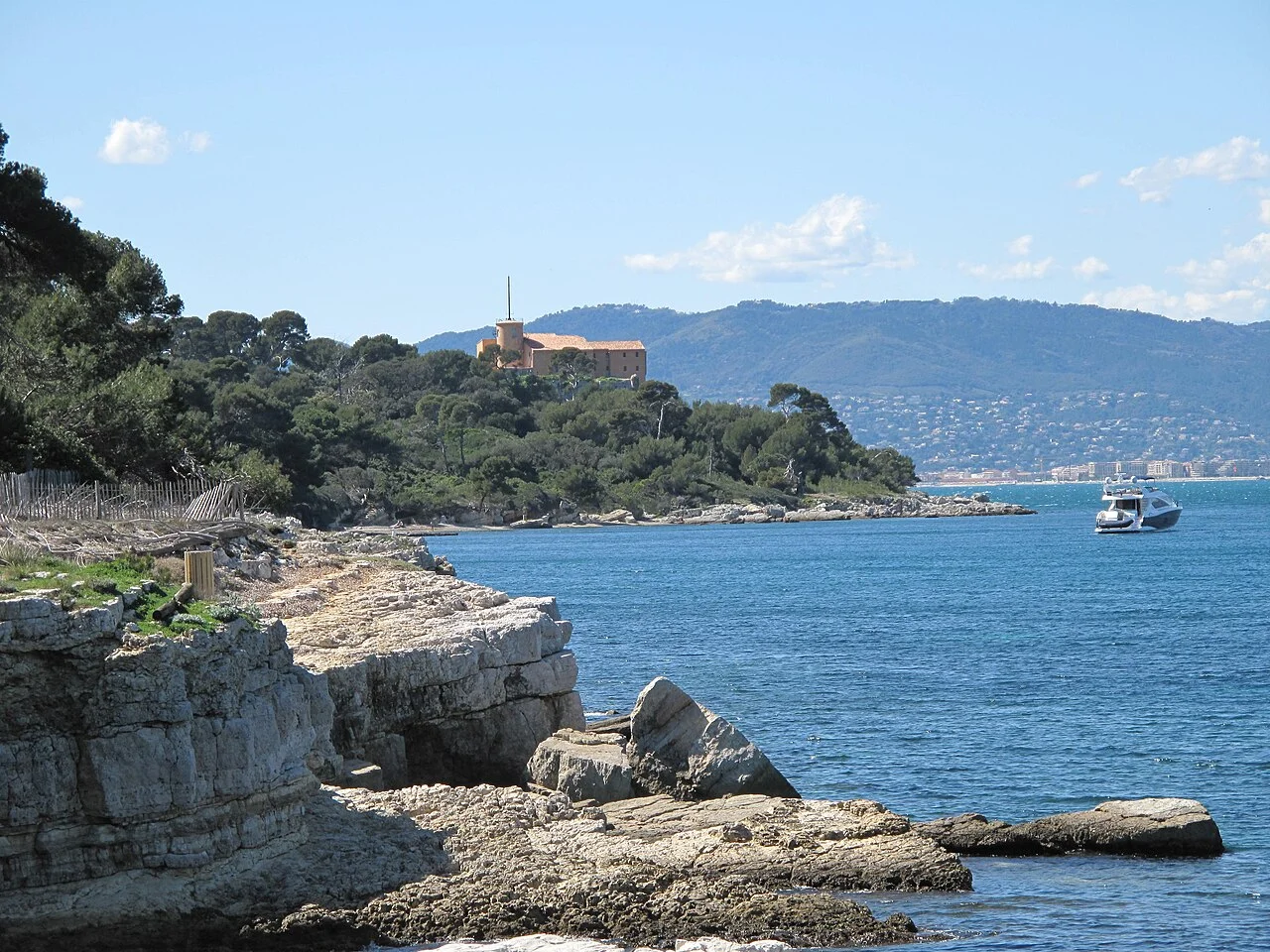
A modern exterior photograph of Fort Royal’s stone buildings on Île Sainte-Marguerite.View image
Related island photograph

Does a name in the correspondence recover the person kept in secret?

Seventeenth century–1703

The story

What we know

A secret state prisoner held under Saint-Mars spent years at Sainte-Marguerite before his transfer to the Bastille, where he died in 1703. His story became famous through Voltaire, Dumas, and later films. The surviving trail is more revealing about imprisonment than about the man’s earlier life. [1]

More context & timeline

The Fort Royal museum distinguishes the historical prisoner from the twin-brother legend. It also describes the mask more cautiously than the popular title: possibly velvet or leather with metal fittings. The case concerns enforced silence and concealed identity, not a demonstrated lifetime inside a rigid iron helmet. [1]
  1. 1669

    Correspondence orders secure confinement of a prisoner named Eustache Dauger. [3]

  2. 1687–1698

    The masked prisoner is held at Sainte-Marguerite. [2]

  3. 1703

    The prisoner dies at the Bastille. [1]

Look closely

Follow the evidence

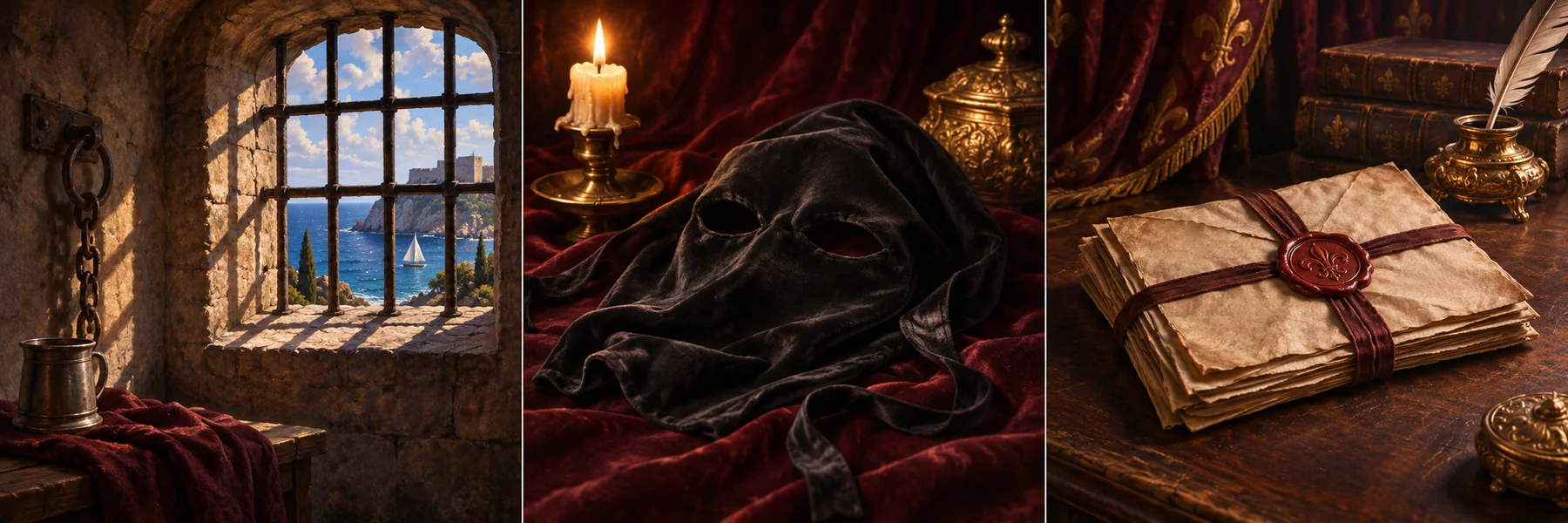
Imagined prison and archival scenes. They do not identify the prisoner; the famous iron-mask legend must be distinguished from contemporary descriptions.

AI-generated editorial illustration: An imagined Mediterranean prison window
AI illustration · imagined scene
Evidence 1

Instructions about communication

Louvois’s 1669 letter calls Dauger a valet and demands strict isolation. Its language establishes concern about communication, but does not explain the earlier events behind the imprisonment. [3]

AI-generated editorial illustration: A symbolic black velvet face covering
AI illustration · imagined scene
Evidence 2

A route through prisons

The museum traces the prisoner through Pignerol, Exilles, Sainte-Marguerite, and the Bastille under Saint-Mars. Connecting movements is central to identifying which earlier prisoner became the later masked man. [1]

AI-generated editorial illustration: Invented sealed archival letters
AI illustration · imagined scene
Evidence 3

The mask changes in the telling

The scholarly account describes a cloth covering in the later imprisonment and distinguishes that from the iron-mask tradition. A familiar illustration can preserve a legend more clearly than a historical object. [3]

Interpret the evidence

What could explain it?

Follow a possibility. Weigh what supports it. See where the evidence stops.

AI artwork sets the scene; it does not reconstruct an established answer.

Explore an explanationThe prisoner was Eustache Dauger

The support

Current museum interpretation focuses on Dauger, whose imprisonment and restrictions can be followed through correspondence. [2]

The limit

A name does not recover his biography or explain the secret. Even the museum frames the link as a question to investigate. [2]

Explore an explanationThe recorded name concealed another identity

The support

False names and nicknames were used for state prisoners. That practice makes the meaning of the name itself a legitimate problem. [3]

The limit

A general administrative practice cannot prove that this particular name was invented, or supply a replacement identity. [3]

Explore an explanationA royal twin or relative

The support

Later literary retellings made royal kinship the famous explanation for concealment. [1]

The limit

The museum treats the twin story as fanciful. Its popularity provides evidence about the legend’s appeal, not proof of a hidden prince. [1]

If a prison record deliberately concealed identity, what independent document could establish who the prisoner had been?
A modern exterior photograph of Fort Royal’s stone buildings on Île Sainte-Marguerite.
Related island photograph

Connected place

Musée du Masque de fer et du Fort Royal

The documented Sainte-Marguerite prison setting and a museum examining its history.

Visitor guide

The museum is on an island reached by boat; check current transport and access. A preserved cell does not prove the prisoner’s identity.

AI-generated editorial illustration: Invented sealed archival letters
AI illustration · imagined scene

Keep investigating

Step beyond the story.

Explore the connected place, examine the records, and form your own reading of the evidence.

Photo credits & full-image view
Fort Royal on Île Sainte-Marguerite, photographed from the east in 2013.

Tangopaso · Image source · Public domain (photographer release)

Resized without enlargement and converted to WebP; orientation follows source metadata. No manual crop or content alteration. The complete downloaded frame is preserved; card or banner display crops may be used. Image derivatives retain the stated rights or license.

Scene artwork is AI-generated editorial illustration. Real photographs and original records retain their separate credits.

Sources & further reading

Original TrekBoundX writing. Research reviewed November 24, 2026. Source links do not imply institutional endorsement.

  1. City of Cannes / Musée du Masque de ferÀ voir au musée: the prisoner and state prisonExamine the source
  2. City of Cannes / Fort Royal MuseumMap of Sainte-Marguerite island: historical interpretationExamine the source
  3. Early Modern France / scholarly journalThe Valet: Louvois’s Invited Guest in the Mystery of the Man in the Iron Mask (2016)Examine the source
  4. Institut national de l’audiovisuelQui se cachait derrière le masque de fer: archive programme recordExamine the source
Suggest a correction
All mysteriesNext mysteryThe Copper Scroll

The Man in the Iron Mask — image

A modern exterior photograph of Fort Royal’s stone buildings on Île Sainte-Marguerite.
Fort Royal on Île Sainte-Marguerite, photographed from the east in 2013.

Tangopaso · Image source · Public domain (photographer release)

Resized without enlargement and converted to WebP; orientation follows source metadata. No manual crop or content alteration. The complete downloaded frame is preserved; card or banner display crops may be used. Image derivatives retain the stated rights or license.