
All mysteries

Disappearance

The Mary Celeste

0 of 3 evidence items examined
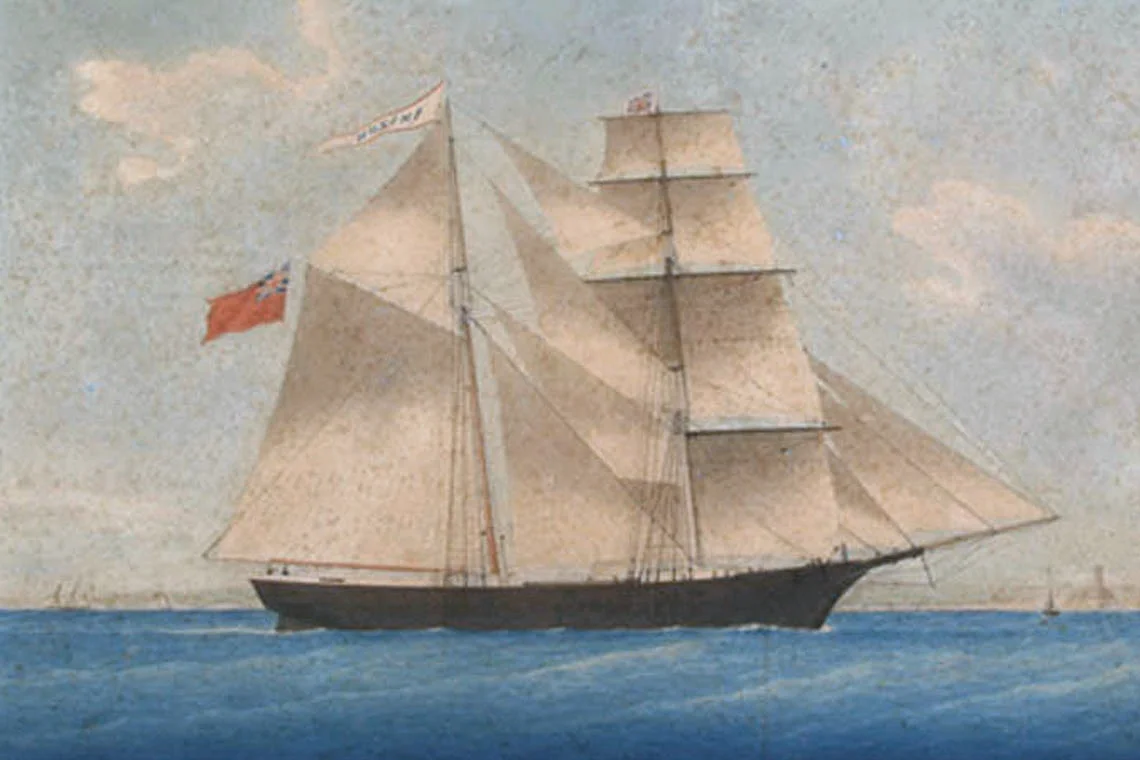
Historical painting of the brigantine Amazon, later renamed Mary Celeste, under sail near Marseille.View image
Historical painting

What made ten people leave a vessel that other sailors could bring safely to port?

1872

The story

What we know

In November 1872, Captain Benjamin Briggs sailed toward Genoa with his wife, young daughter, and seven crew members. In early December, sailors from Dei Gratia boarded their abandoned ship. They found nobody, but the vessel could still sail. Its occupants were never found. [1] [2]

More context & timeline

Mary Celeste was carrying industrial alcohol. Her discoverers sailed her to Gibraltar, where a salvage inquiry became an investigation of suspected violence. Later fiction made the story famous, often adding details absent from the evidence. An abandoned vessel is established; a supernatural disappearance is not. [1] [2]
  1. November 1872

    Briggs, his family, and the crew depart New York for Genoa. [1]

  2. Early December 1872

    Dei Gratia encounters the abandoned vessel in the Atlantic. [2]

  3. 1872–1873

    The Gibraltar inquiry examines the ship and the salvage claim. [2]

Look closely

Follow the evidence

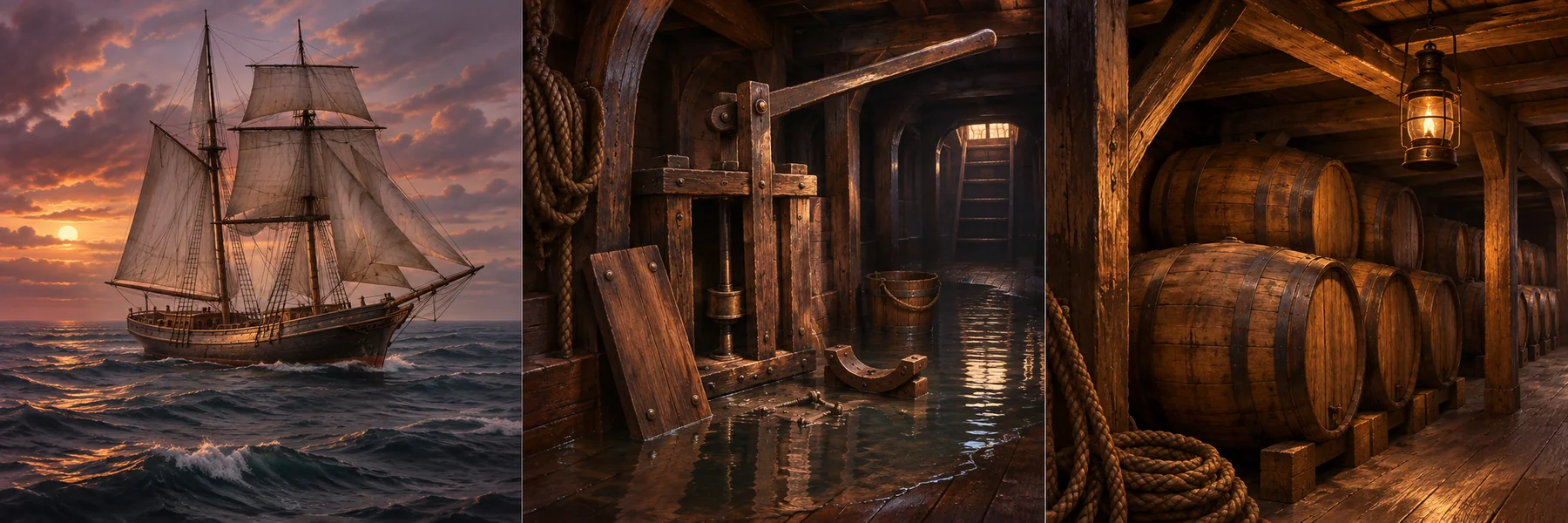
AI-generated atmosphere imagines the maritime setting. It does not show the actual abandonment, prove a theory, or reproduce historical evidence.

AI-generated editorial illustration: An imagined merchant brig on the Atlantic
AI illustration · imagined scene
Evidence 1

The missing boat

The ship’s boat was gone. That is consistent with an evacuation, but it cannot establish why everyone left, how long they expected to be away, or what happened afterward. [3]

AI-generated editorial illustration: An imagined dismantled pump and water belowdecks
AI illustration · imagined scene
Evidence 2

A pump taken apart

Water was present belowdecks and one pump had been dismantled. Those observations raise questions about what Briggs could assess at sea. The condition found later was not necessarily the danger he perceived. [3]

AI-generated editorial illustration: Wooden cargo barrels in an imagined ship hold
AI illustration · imagined scene
Evidence 3

A cargo still aboard

The alcohol cargo remained largely intact. Its survival matters when considering theft or violence, rather than treating an empty ship as proof that pirates had attacked. [2]

Interpret the evidence

What could explain it?

Follow a possibility. Weigh what supports it. See where the evidence stops.

AI artwork sets the scene; it does not reconstruct an established answer.

Explore an explanationFear that the ship was sinking

The support

An investigation proposed that rough weather and a malfunctioning pump could have left Briggs uncertain about water entering the hull. [3]

The limit

This reconstructs a possible decision; nobody who left the ship survived to explain it. [3]

Explore an explanationFear of alcohol vapour

The support

Leaking cargo could have raised concern about fire or explosion; nine barrels were later recorded empty. [3]

The limit

The boarding party reported no fumes and found the main hatch secured. Empty barrels do not prove an explosion. [3]

Explore an explanationViolence or mutiny

The support

Suspicious-looking marks prompted investigators to examine a violent explanation. [2]

The limit

The accusations were not substantiated. Investigating a suspicion is different from finding evidence that it happened. [2]

Which observations describe the ship when it was found, and which would actually tell us what its captain believed earlier?
Historical painting of the brigantine Amazon, later renamed Mary Celeste, under sail near Marseille.
Historical painting

Connected place

Sippican Historical Society

A public history connection in Marion, Massachusetts, the captain’s hometown.

Visitor guide

The society interprets the Mary Celeste story. Check current arrangements; no particular artifact or opening time is promised.

AI-generated editorial illustration: Wooden cargo barrels in an imagined ship hold
AI illustration · imagined scene

Keep investigating

Step beyond the story.

Explore the connected place, examine the records, and form your own reading of the evidence.

Photo credits & full-image view
An 1861 painting of the ship as Amazon, before it was renamed Mary Celeste. Artist unconfirmed.

Unknown artist; possibly Honoré Pellegrin, an unconfirmed attribution · Image source · Public domain (PD-old-100-expired / PD-Art)

Resized without enlargement and converted to WebP; orientation follows source metadata. No manual crop or content alteration. The complete downloaded frame is preserved; card or banner display crops may be used. Image derivatives retain the stated image rights or license.

Scene artwork is AI-generated editorial illustration. Real photographs and original records retain their separate credits.

Sources & further reading

Original TrekBoundX writing. Research reviewed November 24, 2026. Source links do not imply institutional endorsement.

  1. Historical AssociationThe Mary Celeste: the history of a mysteryExamine the source
  2. Society for Nautical ResearchMary Celeste: The Mystery ExplainedExamine the source
  3. Smithsonian MagazineAbandoned Ship: The Mary CelesteExamine the source
  4. Sippican Historical SocietyCurrent ExhibitsExamine the source
Suggest a correction
All mysteriesNext mysteryThe Lost Amber Room

The Mary Celeste — image

Historical painting of the brigantine Amazon, later renamed Mary Celeste, under sail near Marseille.
An 1861 painting of the ship as Amazon, before it was renamed Mary Celeste. Artist unconfirmed.

Unknown artist; possibly Honoré Pellegrin, an unconfirmed attribution · Image source · Public domain (PD-old-100-expired / PD-Art)

Resized without enlargement and converted to WebP; orientation follows source metadata. No manual crop or content alteration. The complete downloaded frame is preserved; card or banner display crops may be used. Image derivatives retain the stated image rights or license.