How much of a famous lost treasure can be connected to archaeological evidence?
1520 and later accounts
The story
What we know
Montezuma’s treasure stories compress many objects and events into one hidden fortune. Under Moctezuma II, gold carried cultural and political meanings beyond its bullion price. Conquest, confiscation, melting, transport, and loss changed both the objects and their later stories. [1][3][4]
More context & timeline
Spanish forces retreating from Tenochtitlan in June 1520 lost plunder during a violent escape. INAH linked a gold bar found in Mexico City in 1981 to this episode through context and scientific analysis. One object does not establish a secret treasure route across another continent. [1][3][4]
June 1520
The Spanish retreat from Tenochtitlan becomes the historical setting for accounts of lost plunder. [1]
1981
A gold bar is discovered during work in Mexico City’s historic centre. [4]
2020
INAH publicises scientific analysis supporting its connection with the retreat. [1]
Look closely
Follow the evidence
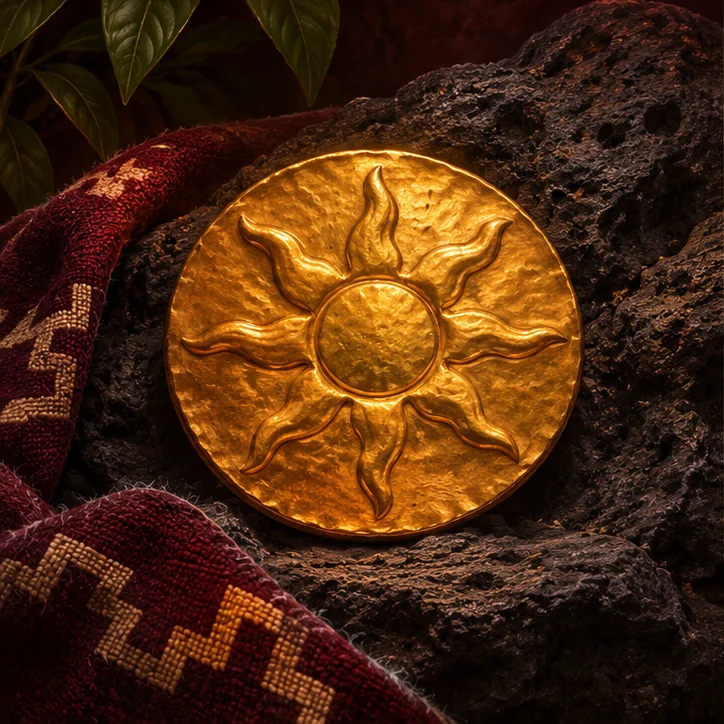
Interpretive imagery about Mexica wealth, conquest, and later treasure stories. The disc and settings are invented and do not authenticate a missing hoard or its location.
AI illustration · imagined scene
Evidence 1
One object has a context
The recovered bar has a find history and a material composition that researchers can compare with other Mexica goldwork. A provenanced object offers more than an anonymous treasure tale. [1]
AI illustration · imagined scene
Evidence 2
The record has multiple voices
The Florentine Codex preserves Nahuatl and Spanish accounts of the conquest, produced with Nahua contributors. Its perspectives require attention rather than reducing the events to a conquistador’s adventure. [2]
AI illustration · imagined scene
Evidence 3
Gold was more than currency
Museum scholarship examines goldworking, tribute, imagery, and social meaning. Melting an object into bullion erases much of the information that made it significant to its makers. [3]
1 / 3
Interpret the evidence
Fact, record and legend
Follow a possibility. Weigh what supports it. See where the evidence stops.
AI artwork sets the scene; it does not reconstruct an established answer.
AIExplore an explanationPlunder lost during the retreat
The support
A documented historical episode and the analysed Mexico City bar support real losses in the setting of Tenochtitlan. [1]
The limit
One find cannot quantify every loss, establish the full path of every object, or prove an intact hoard still awaits discovery. [1]
AIExplore an explanationA single fortune assembled from many stories
The support
Later treasure narratives can combine royal wealth, tribute, Spanish seizures, and missing objects into one apparently coherent cache. [3]
The limit
The appealing unified story requires its own evidence. Real Mexica wealth does not verify distant hiding places, anonymous maps, or every claimed inheritance of secret knowledge. [3]
What disappears from history when an artwork is valued only for the weight of its metal?
AI illustration · imagined scene
Connected place
Museo Nacional de Antropología, Mexico City
A public museum for Mexica culture and the broader histories of Mexico.
Confirm current displays through the museum. This is a cultural learning destination, not a treasure-location claim or permission to search archaeological ground.
AI illustration · imagined scene
Keep investigating
Step beyond the story.
Explore the connected place, examine the records, and form your own reading of the evidence.
Photo credits & full-image view
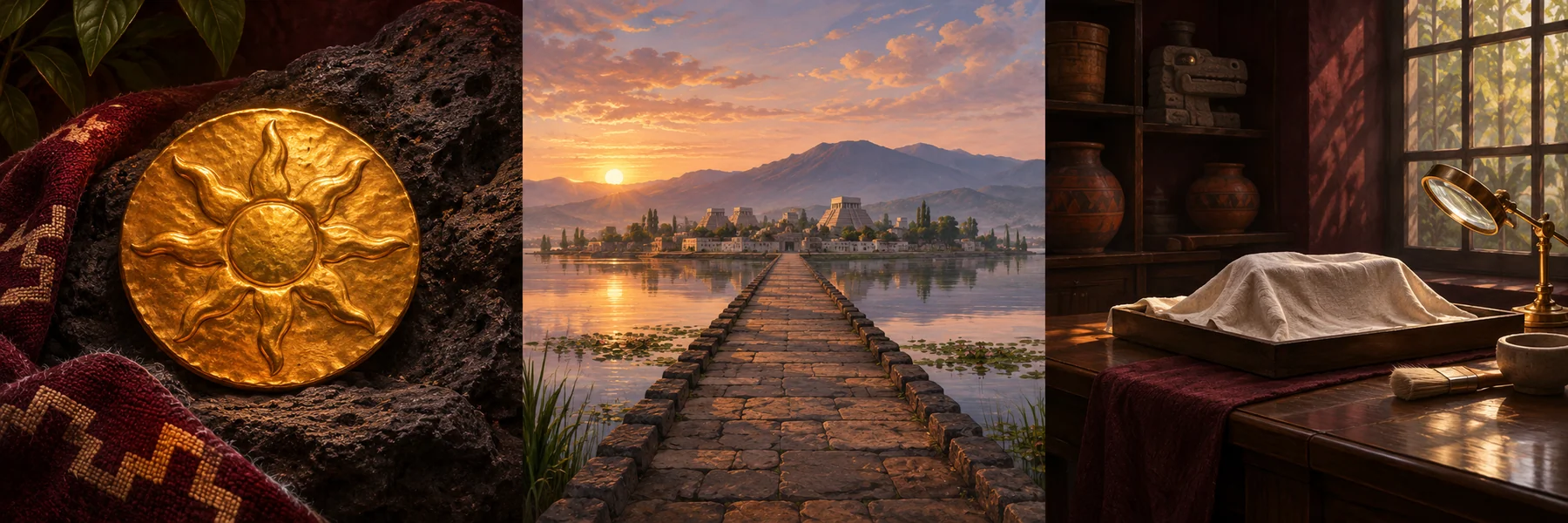
AI-generated editorial illustration for Montezuma’s lost treasure. It is an imagined scene, not a historical photograph or source evidence.
Left panel extracted from a generated triptych and optimized as WebP without enlargement. The original PNG and generation prompt are preserved in the project artwork ledger.
Scene artwork is AI-generated editorial illustration. Real photographs and original records retain their separate credits.
Sources & further reading
Original TrekBoundX writing. Research reviewed November 25, 2026. Source links do not imply institutional endorsement.