
All mysteries

Ancient worlds

The Nazca Lines

0 of 3 evidence items examined
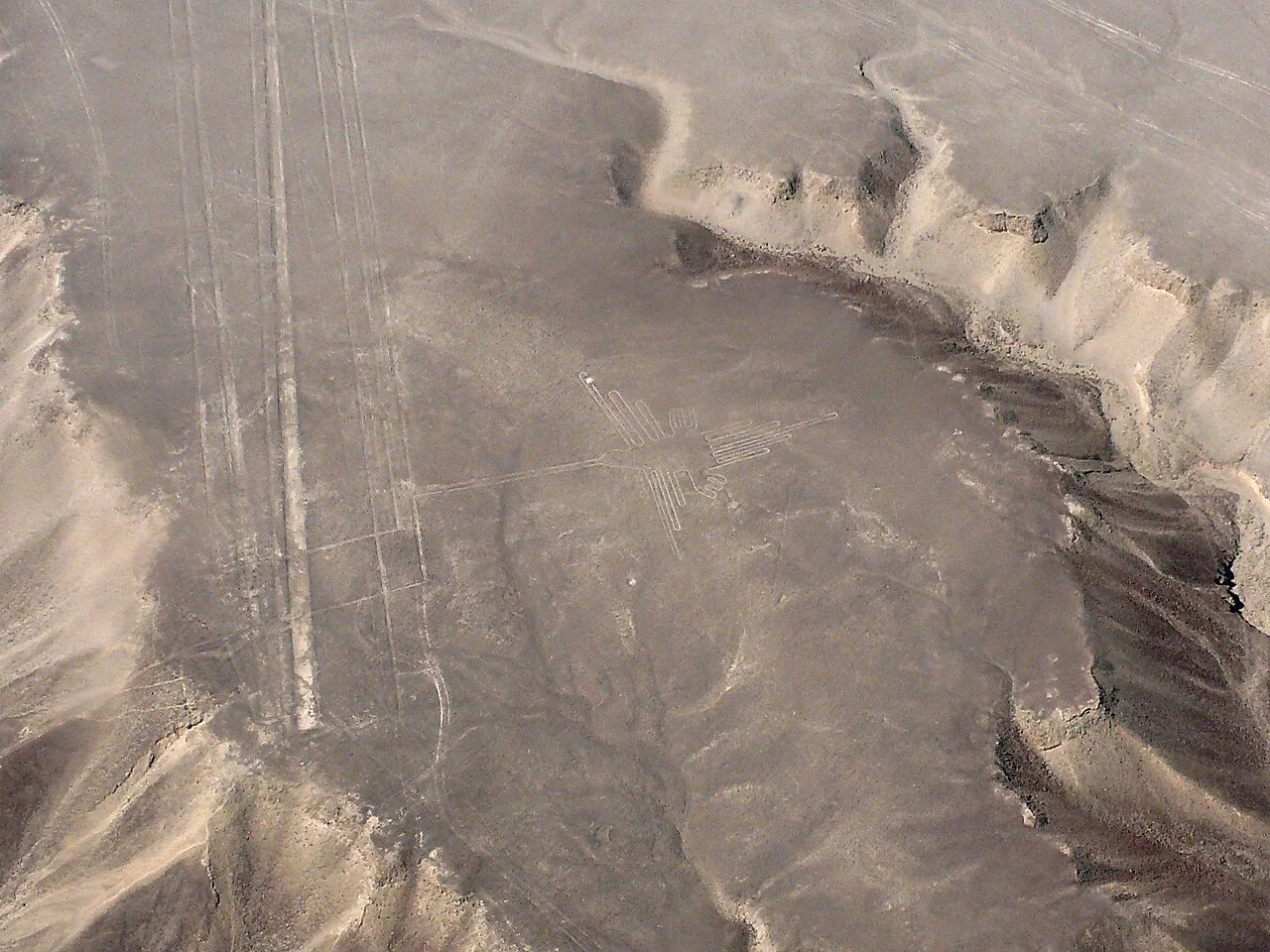
The pale outline of a hummingbird geoglyph among long lines on the brown Nazca desert floor.View image
Real place photograph

What did the figures mean to the people who made—and walked among—them?

Made over many centuries

The story

What we know

Communities on Peru’s southern coast made figures, paths, and geometric forms across the desert over many centuries. They created the designs on the ground using known human techniques. The interesting question is how different designs worked within their social and ritual world. [1] [3]

More context & timeline

The protected landscape includes animals, plants, humanlike figures, and extensive lines. Designs overlap and differ in scale and form. Treating all of them as one message made at one moment would erase that history. [1] [3]

  1. Over many centuries

    Communities create and reuse a varied geoglyph landscape. [1]

  2. Archaeological investigation

    Platforms, offerings, and relationships between paths and figures provide context. [2]

  3. 2024 research

    A university survey distinguishes patterns associated with large line figures and smaller relief figures. [3]
Look closely

Follow the evidence

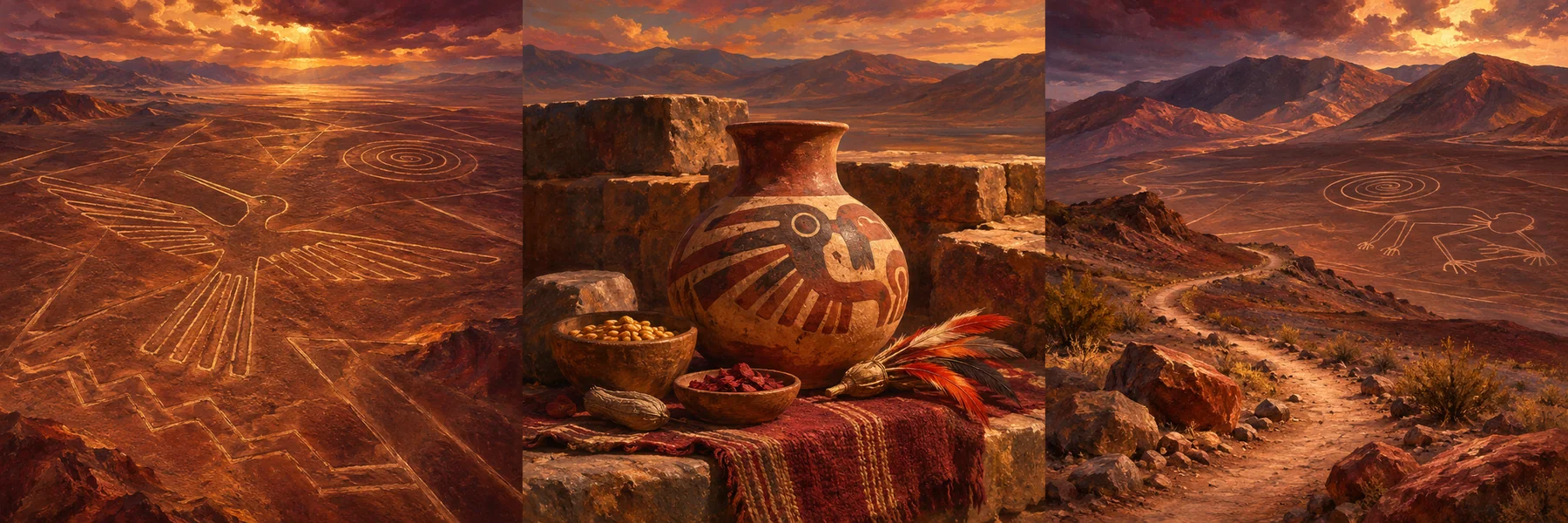
Imagined landscapes and objects, not an exact site view or excavated offering assemblage.

AI-generated editorial illustration: An illustrative layered desert landscape
AI illustration · imagined scene
Evidence 1

A landscape with layers

Overlapping forms record repeated activity. Their different sizes and relationships suggest that one explanation may not fit every geoglyph. [1]

AI-generated editorial illustration: Pottery and a low desert platform
AI illustration · imagined scene
Evidence 2

Offerings and gathering places

Archaeological platforms and offerings place the lines in a ritual landscape. They provide context beyond the shape of any individual figure. [2]

AI-generated editorial illustration: A trail through an imagined geoglyph landscape
AI illustration · imagined scene
Evidence 3

Figures beside paths

Yamagata University researchers distinguish large line figures connected to geometric networks from smaller relief figures near winding trails. How a figure was encountered may matter to its use. [3]

Interpret the evidence

What could explain it?

Follow a possibility. Weigh what supports it. See where the evidence stops.

AI artwork sets the scene; it does not reconstruct an established answer.

Explore an explanationCollective ceremonies

The support

Large figures and connected geometric spaces support interpretations involving community ritual. [3]

The limit

The surviving layout does not preserve the words or full sequence of a ceremony. [3]

Explore an explanationWater and agricultural fertility

The support

Excavated platforms and offerings support ritual interpretations connected with water and fertility. [2]

The limit

This does not decode every figure or establish one purpose across all periods. [2]

Explore an explanationCommunication along trails

The support

Researchers suggest smaller figures near paths could convey socially meaningful information to individuals or small groups. [3]

The limit

The particular messages still need interpretation; this is a research proposal. [3]

Would a design intended for people walking a trail work differently from one used in a large gathering?
The pale outline of a hummingbird geoglyph among long lines on the brown Nazca desert floor.
Related place or object

Connected place

Lines and Geoglyphs of Nasca and Palpa

Explore the existing World Heritage landscape record in TrekBoundX.

Open map

Official visitor information

The marker represents a broad protected landscape, not a walking route or entry point. Stay on authorized visitor routes; do not walk on the geoglyphs.

AI-generated editorial illustration: A trail through an imagined geoglyph landscape
AI illustration · imagined scene

Keep investigating

Step beyond the story.

Explore the connected place, examine the records, and form your own reading of the evidence.

Photo credits & full-image view
The hummingbird geoglyph at Nazca, photographed from the air in 2016.

Max Berger · Image source · CC BY-SA 4.0

Resized and converted to WebP. Cards and banners show display crops; the expanded image preserves the complete downloaded frame. Adapted images retain the stated image license.

Scene artwork is AI-generated editorial illustration. Real photographs and original records retain their separate credits.

Sources & further reading

Original TrekBoundX writing. Research reviewed November 23, 2026. Source links do not imply institutional endorsement.

  1. UNESCO World Heritage CentreLines and Geoglyphs of Nasca and PalpaExamine the source
  2. German Archaeological InstituteGeoglyphs in the desertExamine the source
  3. Yamagata University2024 geoglyph research release (PDF)Examine the source
Suggest a correction
All mysteriesNext mysteryThe Franklin Expedition

The Nazca Lines — image

The pale outline of a hummingbird geoglyph among long lines on the brown Nazca desert floor.
The hummingbird geoglyph at Nazca, photographed from the air in 2016.

Max Berger · Image source · CC BY-SA 4.0

Resized and converted to WebP. Cards and banners show display crops; the expanded image preserves the complete downloaded frame. Adapted images retain the stated image license.