Can we recover a cause of death when the medical record does not survive?
1849
The story
What we know
On October 3, 1849, Joseph Walker asked for help for Edgar Allan Poe at a Baltimore polling place and tavern. Poe was taken to Washington College Hospital and died on October 7. Where he had been beforehand, and what caused his final illness, remain uncertain. [1][2]
More context & timeline
Accounts describe distress, disorientation, and unusual clothing. Those observations invite questions, but do not identify a disease or prove an assault. The surviving descriptions were written for different purposes and at different times. Later retellings sometimes sound more precise than the evidence allows. [1][2]
September 1849
Poe leaves Richmond; his movements before October 3 become difficult to reconstruct. [2]
October 3, 1849
Walker sends an urgent appeal for assistance; Poe enters hospital. [1]
Atmospheric illustrations, not Poe’s documented last room, an authentic medical record or proof of a cause of death.
AI illustration · imagined scene
Evidence 1
An appeal, not a diagnosis
Walker’s note establishes that Poe needed immediate assistance. It does not explain how he reached the polling place. The familiar picture of a man discovered in a gutter is not established by the note. [2]
AI illustration · imagined scene
Evidence 2
Clothing that raises questions
Witness accounts describe badly fitting, shabby clothes unlike Poe’s customary appearance. A change of clothing could fit several stories, so it cannot by itself prove robbery or election fraud. [1]
AI illustration · imagined scene
Evidence 3
A missing clinical record
No official hospital record or death certificate has been located. Dr John Moran’s later accounts differ, making a confident retrospective diagnosis especially difficult. The archive’s gaps are part of the evidence. [2]
1 / 3
Interpret the evidence
What could explain it?
Follow a possibility. Weigh what supports it. See where the evidence stops.
AI artwork sets the scene; it does not reconstruct an established answer.
AIExplore an explanationCoercion connected with election fraud
The support
Poe was found on election day at a polling location. Cooping involved forcing people to vote repeatedly, sometimes in different clothes. [3]
The limit
The setting makes the proposal relevant, but no direct account proves that Poe was abducted or used this way. [3]
AIExplore an explanationAn alcohol-related illness
The support
Some contemporaries interpreted his condition as intoxication, and alcohol had complicated parts of his life. [1]
The limit
An initial assumption is not a laboratory finding. It does not explain all the circumstances or establish the final medical cause. [1]
AIExplore an explanationAnother illness or injury
The support
Medical writers have proposed several conditions, including rabies, from descriptions of his symptoms. [3]
The limit
No preserved examination, autopsy, or diagnostic testing establishes those proposals. Similar symptoms can have different causes. [3]
Which would change your conclusion more: a newly located contemporary hospital note or another detailed recollection written decades later?
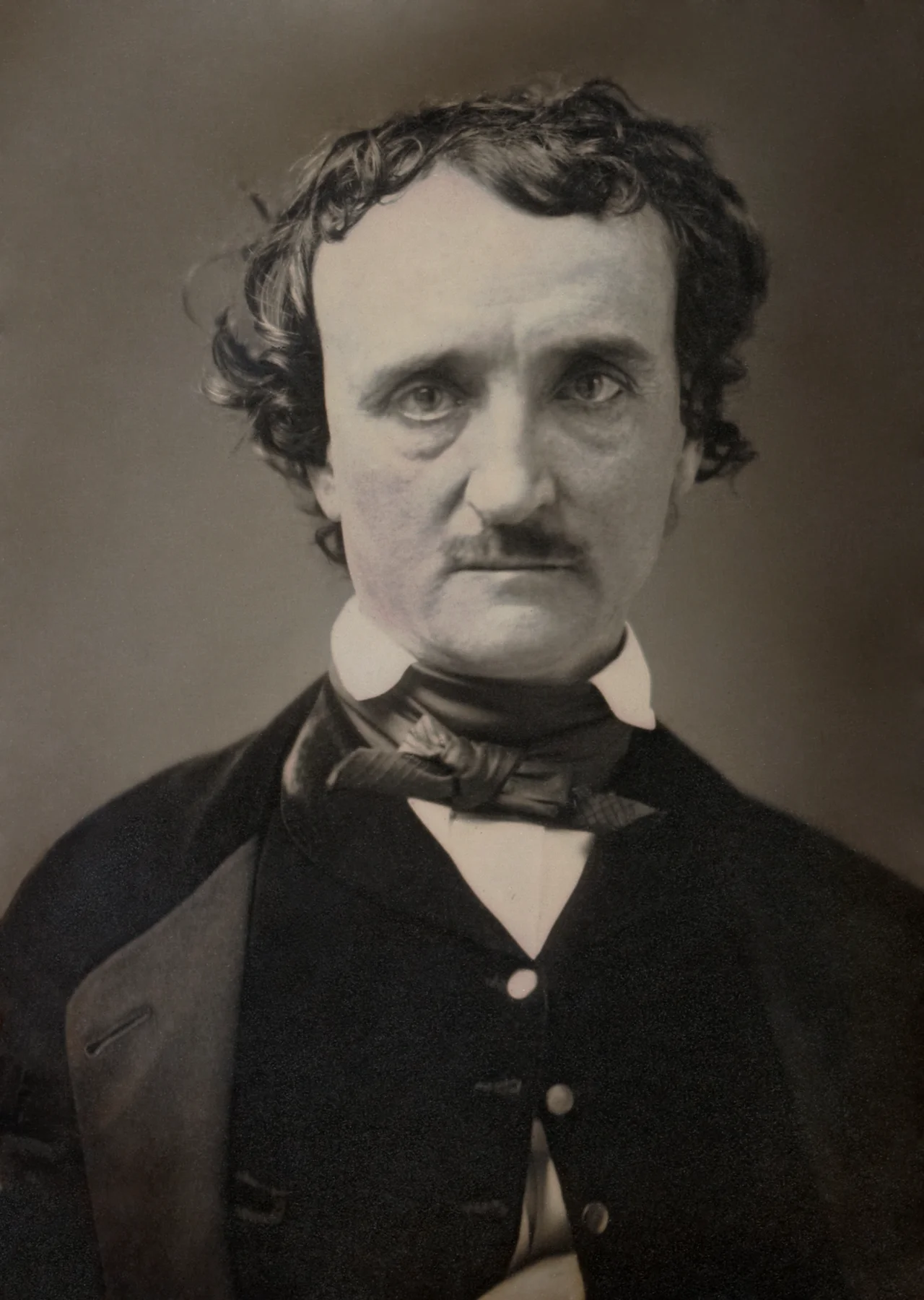
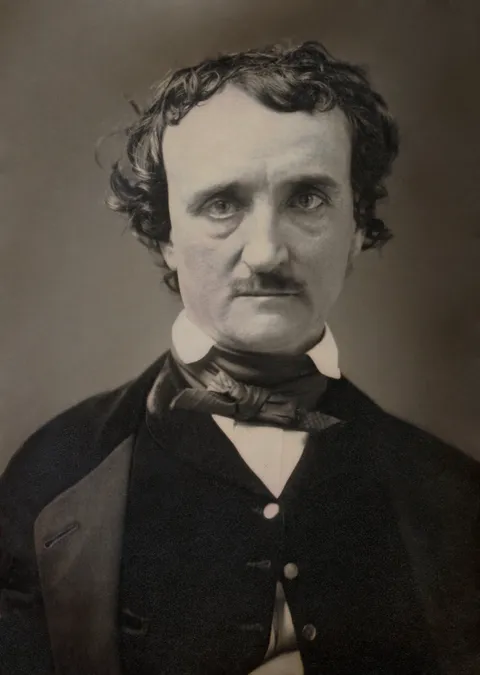
Restored archival portrait
Connected place
Edgar Allan Poe National Historic Site
A public place in Philadelphia to explore Poe’s life and work; Baltimore was the setting of his death.
Resized without enlargement and converted to WebP; orientation follows source metadata. No manual crop or content alteration. The complete downloaded frame is preserved; card or banner display crops may be used. Image derivatives retain the stated rights or license. The downloaded Commons source already has scratch/spot cleaning and slight white-balance correction credited to Yann and Adam Cuerden.
Scene artwork is AI-generated editorial illustration. Real photographs and original records retain their separate credits.
Sources & further reading
Original TrekBoundX writing. Research reviewed November 24, 2026. Source links do not imply institutional endorsement.