
All mysteries

Unsolved crimes

The Princes in the Tower

0 of 3 evidence items examined
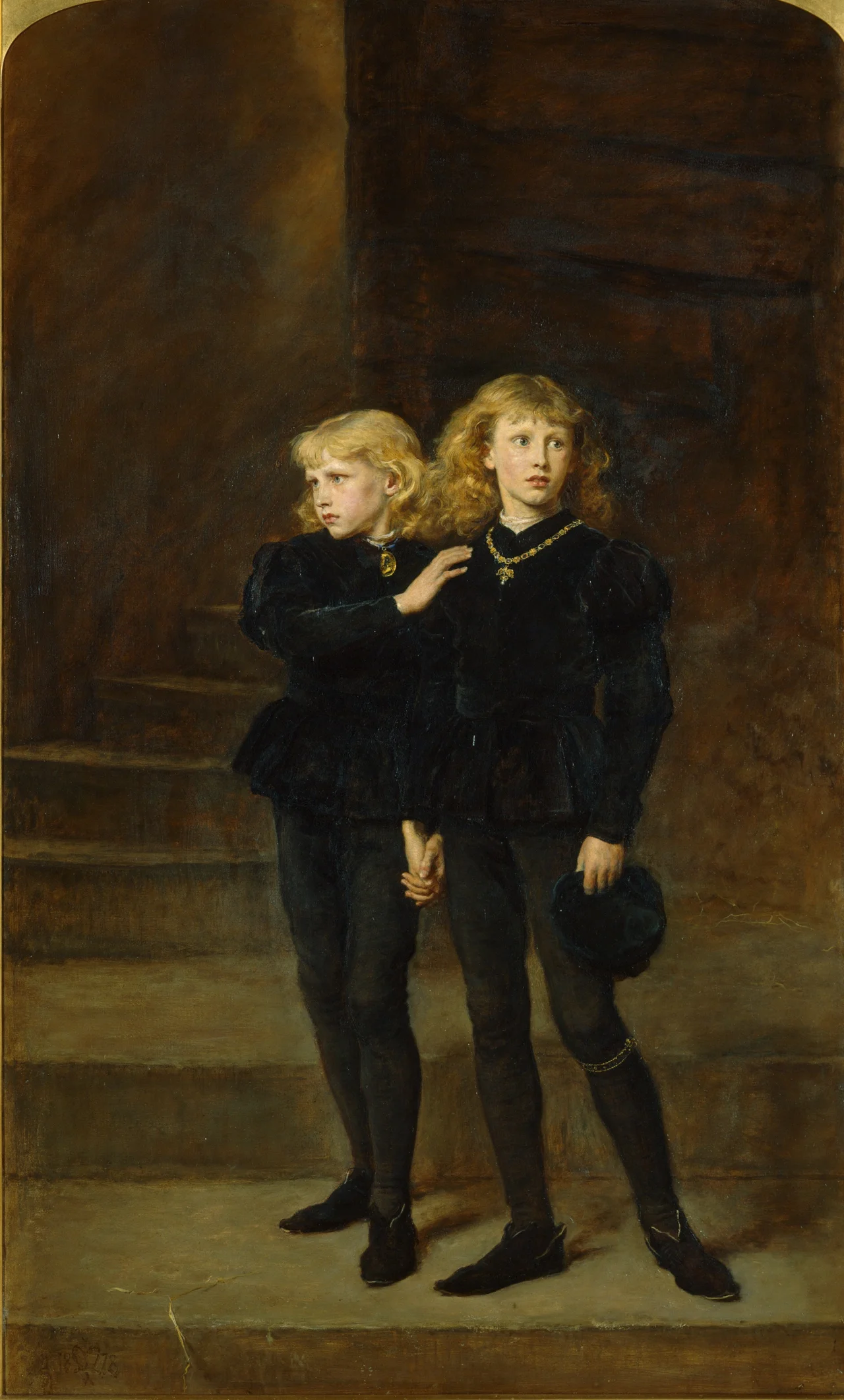
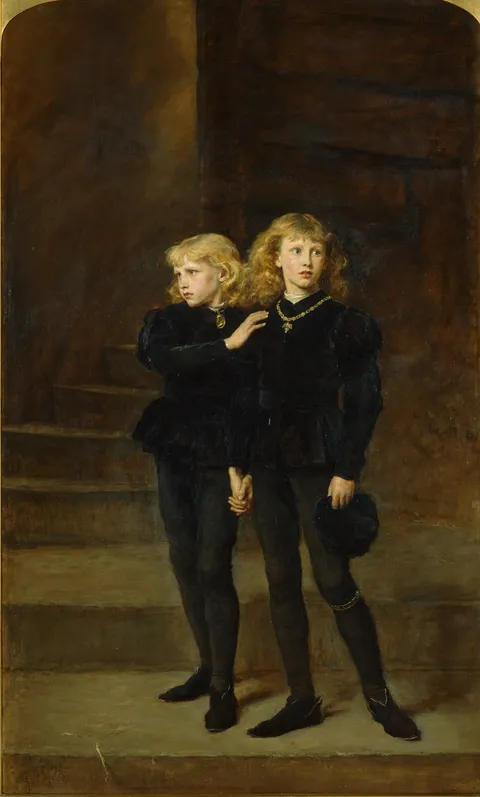
Millais’s Victorian painting imagining Edward V and Richard of Shrewsbury standing together on a staircase.View image
Historical painting

How can we investigate two missing lives when the accusations came later?

1483 and later investigations

The story

What we know

After Edward IV died in April 1483, his son became Edward V. The boy and his younger brother Richard were housed at the Tower of London. Their uncle became Richard III that summer. The brothers disappeared from public view, leaving a gap that later writers filled with accusations. [1] [3]
More context & timeline

Rumours of their deaths circulated in 1483, but a rumour is not an eyewitness account of murder. Thomas More wrote his influential narrative decades later. Neither a vivid description nor a powerful suspect supplies a complete record of the boys’ fate. [1] [3]

  1. 1483

    A succession crisis places the brothers at the Tower; Richard III becomes king. [1]

  2. 1674

    Skeletons discovered at the Tower are identified by contemporaries as the princes. [2]

  3. 2024 research

    A reference to Edward V’s chain is publicised from a later will. [3]

Look closely

Follow the evidence

AI-generated scenes evoke the setting. No likeness of the brothers, murder, original document, or surviving chain is presented as documentary evidence.

AI-generated editorial illustration: An imagined medieval fortress window
AI illustration · imagined scene
Evidence 1

Reports of diminishing sightings

Dominic Mancini described the boys being seen less often and reported suspicions about their fate. His account preserves contemporary concern, not a witnessed killing. [1]

AI-generated editorial illustration: An invented sealed parchment letter
AI illustration · imagined scene
Evidence 2

Bones with an assumed identity

The 1674 discovery was associated with the princes and the remains were reburied at Westminster. Even the precise discovery spot is debated. An attributed burial does not establish personal identity. [2]

AI-generated editorial illustration: An empty imagined stone stairway
AI illustration · imagined scene
Evidence 3

A king’s chain in another family

Research identified Edward V’s chain in Margaret Capell’s will. She was related by marriage to James Tyrell, an alleged intermediary. The document creates a connection, but does not explain how the chain changed hands. [3]

Interpret the evidence

What could explain it?

Follow a possibility. Weigh what supports it. See where the evidence stops.

AI artwork sets the scene; it does not reconstruct an established answer.

Explore an explanationA murder ordered by Richard III

The support

Control of the princes and the threat they posed give the longstanding accusation a political logic. [1]

The limit

Motive and later narrative do not amount to a surviving direct order or an identified killer. [1]

Explore an explanationAction by another powerful figure

The support

Buckingham is among the proposed suspects; others could benefit from removing rival claimants. [1]

The limit

Political advantage alone cannot establish responsibility, timing, or even the circumstances of a death. [1]

Explore an explanationSurvival beyond the disappearance

The support

Later claimant Perkin Warbeck attracted influential supporters by claiming to be the younger prince. [1]

The limit

Support for a claimant does not authenticate his identity. The survival claim remains unproved. [1]

How would you distinguish a later writer with useful connections from one repeating a politically convenient story?
Millais’s Victorian painting imagining Edward V and Richard of Shrewsbury standing together on a staircase.
Historical painting

Connected place

Tower of London

The documented setting where the brothers were housed before their disappearance.

Visitor guide

No particular room is identified here as a proven murder scene. The attributed remains are at Westminster Abbey; they are not promised as a display.

AI-generated editorial illustration: An empty imagined stone stairway
AI illustration · imagined scene

Keep investigating

Step beyond the story.

Explore the connected place, examine the records, and form your own reading of the evidence.

Photo credits & full-image view
The Princes in the Tower, John Everett Millais, 1878: a much later artistic interpretation.

John Everett Millais (1829–1896); Royal Holloway collection · Image source · Public domain (PD-old-100-expired / PD-Art)

Resized without enlargement and converted to WebP; orientation follows source metadata. No manual crop or content alteration. The complete downloaded frame is preserved; card or banner display crops may be used. Image derivatives retain the stated image rights or license.

Scene artwork is AI-generated editorial illustration. Real photographs and original records retain their separate credits.

Sources & further reading

Original TrekBoundX writing. Research reviewed November 24, 2026. Source links do not imply institutional endorsement.

  1. Historic Royal PalacesThe Princes in the Tower: murdered or survived?Examine the source
  2. Historic Royal Palaces / Dr Charles FarrisCharles II and the Discovery of the Princes in the Tower in 1674Examine the source
  3. University of HuddersfieldResearch unearths more Princes in the Tower mystery evidenceExamine the source
  4. Westminster AbbeyLady ChapelExamine the source
Suggest a correction
All mysteriesNext mysteryGenghis Khan’s Lost Tomb

The Princes in the Tower — image

Millais’s Victorian painting imagining Edward V and Richard of Shrewsbury standing together on a staircase.
The Princes in the Tower, John Everett Millais, 1878: a much later artistic interpretation.

John Everett Millais (1829–1896); Royal Holloway collection · Image source · Public domain (PD-old-100-expired / PD-Art)

Resized without enlargement and converted to WebP; orientation follows source metadata. No manual crop or content alteration. The complete downloaded frame is preserved; card or banner display crops may be used. Image derivatives retain the stated image rights or license.