
All mysteries

Disappearance

The Roanoke Colony

0 of 3 evidence items examined
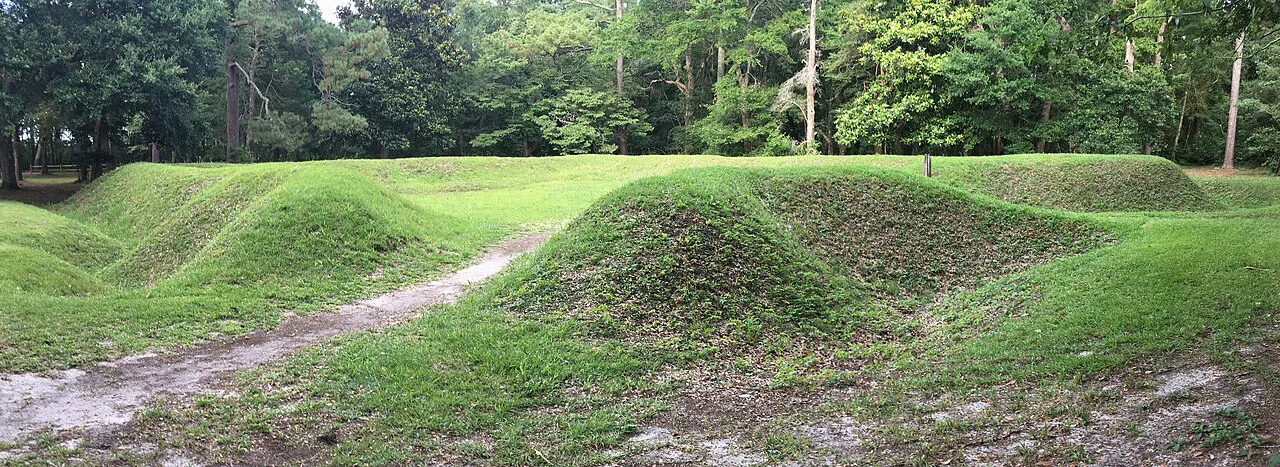
A grassy earthwork and footpath surrounded by woods at Fort Raleigh National Historic Site.View image
Real place photograph

Did the colonists leave an answer—or the beginning of another question?

1587–1590

The story

What we know

When John White returned to Roanoke Island in 1590, the English settlement he had left three years earlier was empty. But the scene was not silent: a carved message pointed toward Croatoan, a real Indigenous community. The question is what happened after the colonists left. [1] [2]

More context & timeline

The settlers arrived in an already inhabited Algonquian world. Relationships included Croatoan assistance as well as English violence against Native people. White’s account describes an abandoned settlement, not a witnessed disappearance. Archaeology must be read alongside that incomplete written record. [1] [2]
  1. 1587

    Colonists establish a settlement on Roanoke Island; White leaves for supplies. [1]

  2. 1590

    White returns, finds the settlement empty, and reads a message naming Croatoan. [2]

  3. Today

    Researchers compare documentary clues with finds on Hatteras Island and inland. [3]

Look closely

Follow the evidence

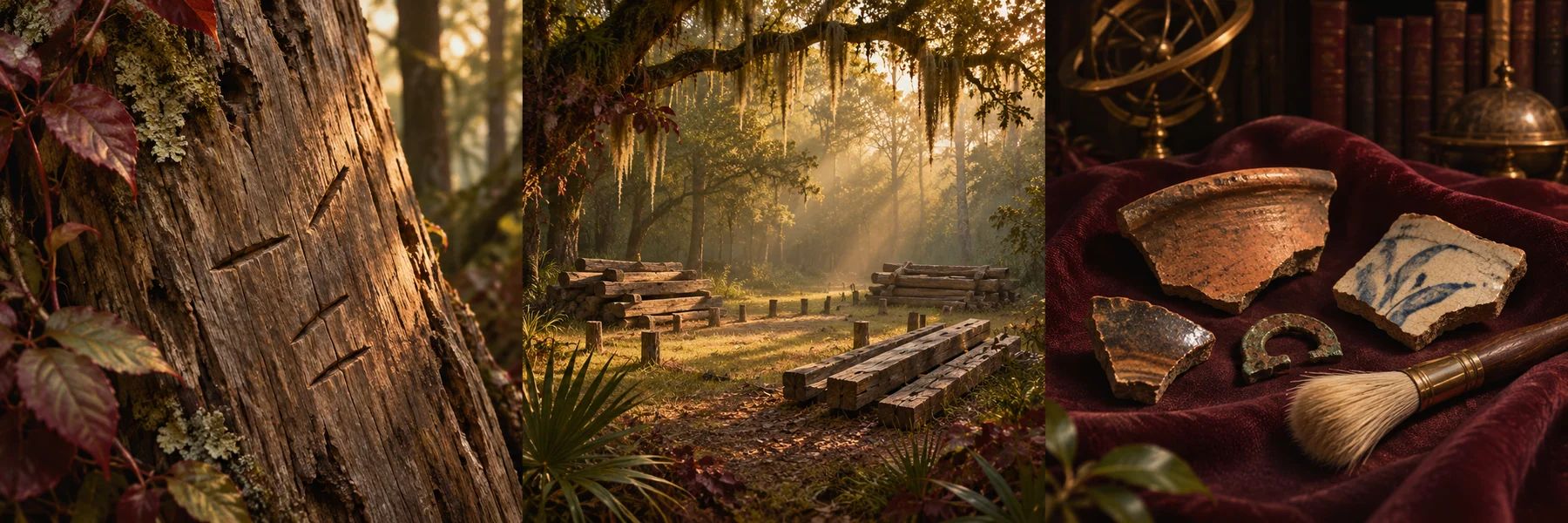
Imagined scenes and objects. The linked archaeological sources identify the actual finds.

AI-generated editorial illustration: Weathered timber in a coastal forest
AI illustration · imagined scene
Evidence 1

A name, not a code

CROATOAN was carved into a palisade; CRO appeared on a tree. White understood the longer message as a destination. The name belonged to a people and an island, not an occult warning. [2]

AI-generated editorial illustration: An imagined clearing with dismantled beams
AI illustration · imagined scene
Evidence 2

A settlement taken apart

White reported dismantled buildings and no signs of a struggle or hurried flight. That supports a deliberate departure, but cannot tell us what happened later. [2]

AI-generated editorial illustration: Ceramic sherds and an archaeological brush
AI illustration · imagined scene
Evidence 3

Objects can travel

European objects found around Hatteras Island and inland are worth investigating. They could reflect relocated settlers, trade, or later activity; an object alone does not identify its owner. [3]

Interpret the evidence

What could explain it?

Follow a possibility. Weigh what supports it. See where the evidence stops.

AI artwork sets the scene; it does not reconstruct an established answer.

Explore an explanationRelocation to Croatoan

The support

The carved destination and White’s own understanding make this an important possibility. [3]

The limit

The surviving finds do not conclusively identify the colonists or establish everyone’s fate. [3]

Explore an explanationMovement inland

The support

White had discussed an inland move; map evidence and artifact discoveries have prompted investigation around Albemarle Sound. [3]

The limit

No proposed inland site has definitively resolved where the whole group went. [3]

Explore an explanationSurvival pressures and dispersal

The support

Food shortages, drought, and disease could have encouraged relocation, separation, or deaths. [3]

The limit

These pressures explain possible decisions, not a complete sequence of events. [3]

What evidence would distinguish a relocated household from an object acquired through trade?
A grassy earthwork and footpath surrounded by woods at Fort Raleigh National Historic Site.
Related place or object

Connected place

Fort Raleigh National Historic Site

A public place to learn about the Roanoke voyages and the communities connected to them.

Visitor map

This is the documented historic site, not a claimed location for a later settlement.

AI-generated editorial illustration: Ceramic sherds and an archaeological brush
AI illustration · imagined scene

Keep investigating

Step beyond the story.

Explore the connected place, examine the records, and form your own reading of the evidence.

Photo credits & full-image view
Present-day Fort Raleigh National Historic Site, Roanoke Island, 2020.

Fredlyfish4 · Image source · CC BY-SA 4.0

Resized and converted to WebP. Cards and banners show display crops; the expanded image preserves the complete downloaded frame. Adapted images retain the stated image license.

Scene artwork is AI-generated editorial illustration. Real photographs and original records retain their separate credits.

Sources & further reading

Original TrekBoundX writing. Research reviewed November 23, 2026. Source links do not imply institutional endorsement.

  1. National Park Service1587: The Lost ColonyExamine the source
  2. National Park Service1590 Rescue VoyageExamine the source
  3. National Park ServiceMajor Theories of the Lost ColonyExamine the source
Suggest a correction
All mysteriesNext mysteryStonehenge

The Roanoke Colony — image

A grassy earthwork and footpath surrounded by woods at Fort Raleigh National Historic Site.
Present-day Fort Raleigh National Historic Site, Roanoke Island, 2020.

Fredlyfish4 · Image source · CC BY-SA 4.0

Resized and converted to WebP. Cards and banners show display crops; the expanded image preserves the complete downloaded frame. Adapted images retain the stated image license.