We can follow the sun through the stones. Can we recover what it meant?
From about 3000 BCE
The story
What we know
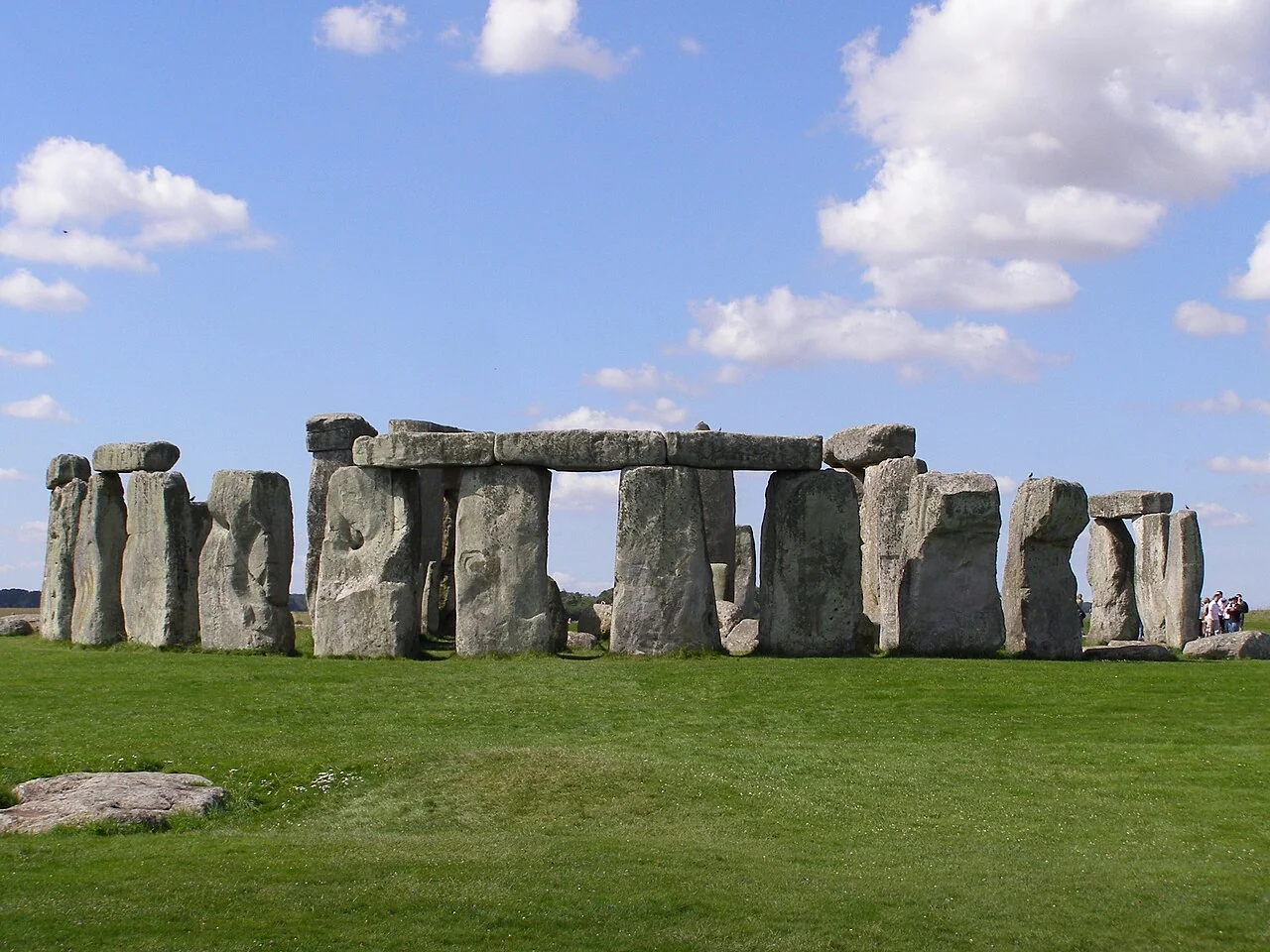
The stones stand in a landscape shaped over many generations. We know that Neolithic communities built Stonehenge, buried people there, and aligned its main axis with the sun. What we cannot recover with the same certainty is the meaning they gave these acts. [1]
More context & timeline
An early earthwork enclosure dates to around 3000 BCE; the principal stone settings followed around 2500 BCE. Cremated human remains establish a funerary role. Stonehenge was repeatedly altered, so a single explanation may not describe its entire history. [1]
About 3000 BCE
An earthwork enclosure forms an early monument. [1]
About 2500 BCE
The principal stone settings transform the site. [1]
Later generations
Stones and the wider ceremonial landscape continue to change. [1]
Look closely
Follow the evidence
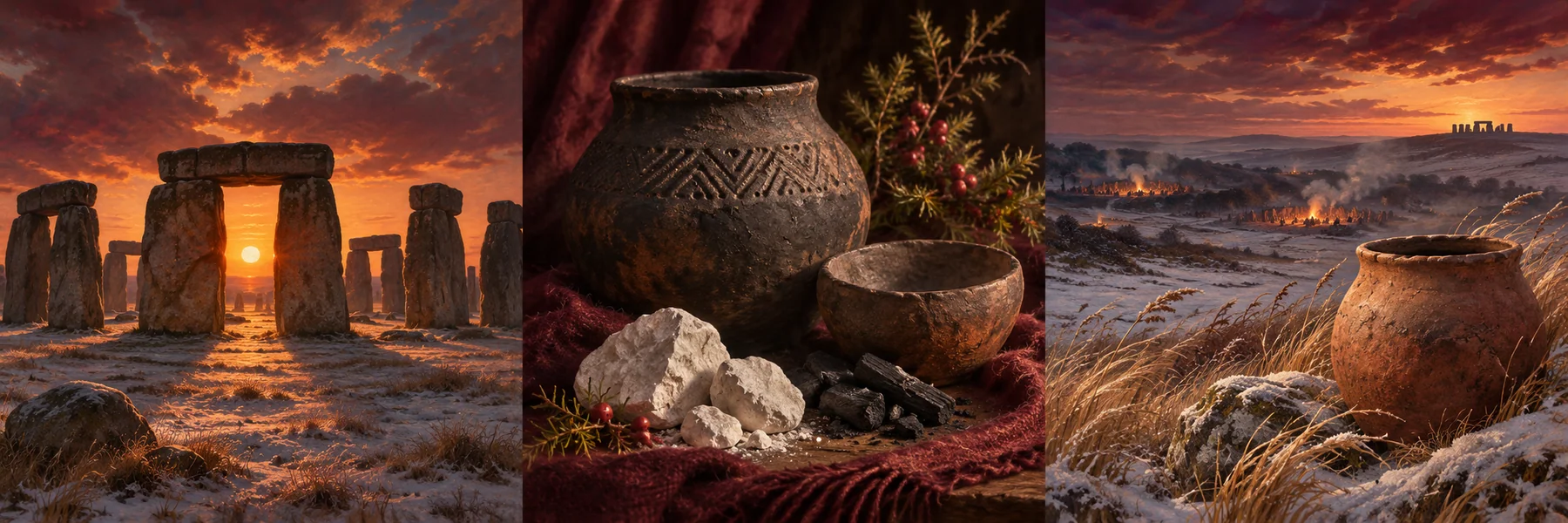
An imagined gathering and landscape, not a reconstructed ceremony or an alignment diagram.
AI illustration · imagined scene
Evidence 1
A deliberate solar axis
The main alignment follows midsummer sunrise and midwinter sunset. The alignment is established; the exact ceremonies and beliefs associated with it are not. [2]
AI illustration · imagined scene
Evidence 2
The presence of the dead
Cremated remains show that the monument served as a place of burial early in its history. That gives death and remembrance a firm place in the story. [1]
AI illustration · imagined scene
Evidence 3
A winter gathering nearby
Animal bones at Durrington Walls point to winter feasting. Livestock brought from far away suggest gatherings that connected dispersed communities. [2]
1 / 3
Interpret the evidence
What could explain it?
Follow a possibility. Weigh what supports it. See where the evidence stops.
AI artwork sets the scene; it does not reconstruct an established answer.
AIExplore an explanationCeremonies at the turning of the year
The support
Solar alignment and winter feasting support seasonal observances. [2]
The limit
Archaeology does not preserve the spoken rituals or the precise beliefs behind them. [2]
AIExplore an explanationConnections between the living and the dead
The support
Burials and the connected ceremonial landscape support an ancestral or commemorative interpretation. [2]
The limit
The spiritual meaning remains an interpretation of physical evidence. [2]
AIExplore an explanationA place for communities to gather
The support
Animals brought over substantial distances support large gatherings. [2]
The limit
We cannot directly read the social agreements or organization behind those events. [2]
How much can a monument’s alignment tell us about the beliefs of its builders?
Related place or object
Connected place
Stonehenge
Explore the same monument in the TrekBoundX map and place reader.
Resized and converted to WebP. Cards and banners show display crops; the expanded image preserves the complete downloaded frame. Adapted images retain the stated image license.
Scene artwork is AI-generated editorial illustration. Real photographs and original records retain their separate credits.
Sources & further reading
Original TrekBoundX writing. Research reviewed November 23, 2026. Source links do not imply institutional endorsement.