
All mysteries

Lost treasures

Viking Treasure: The Cuerdale Hoard

0 of 3 evidence items examined
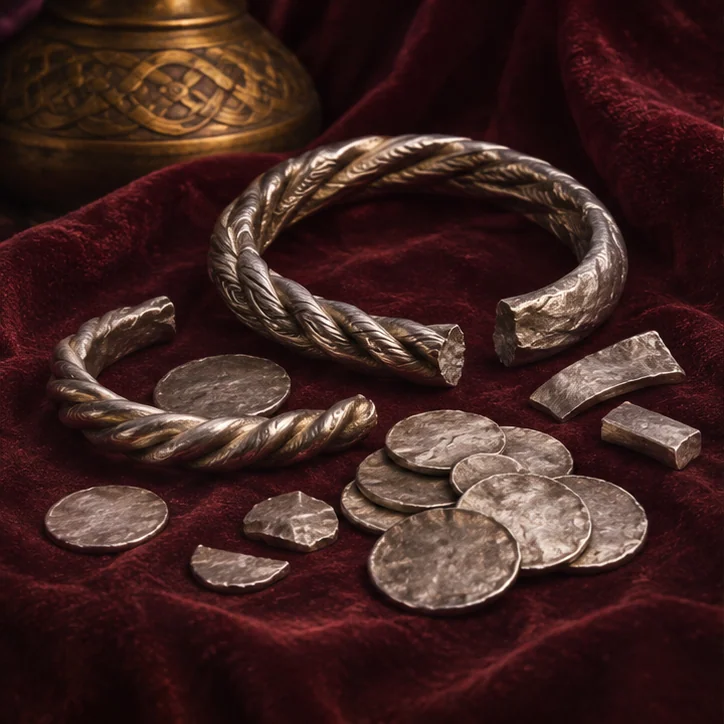
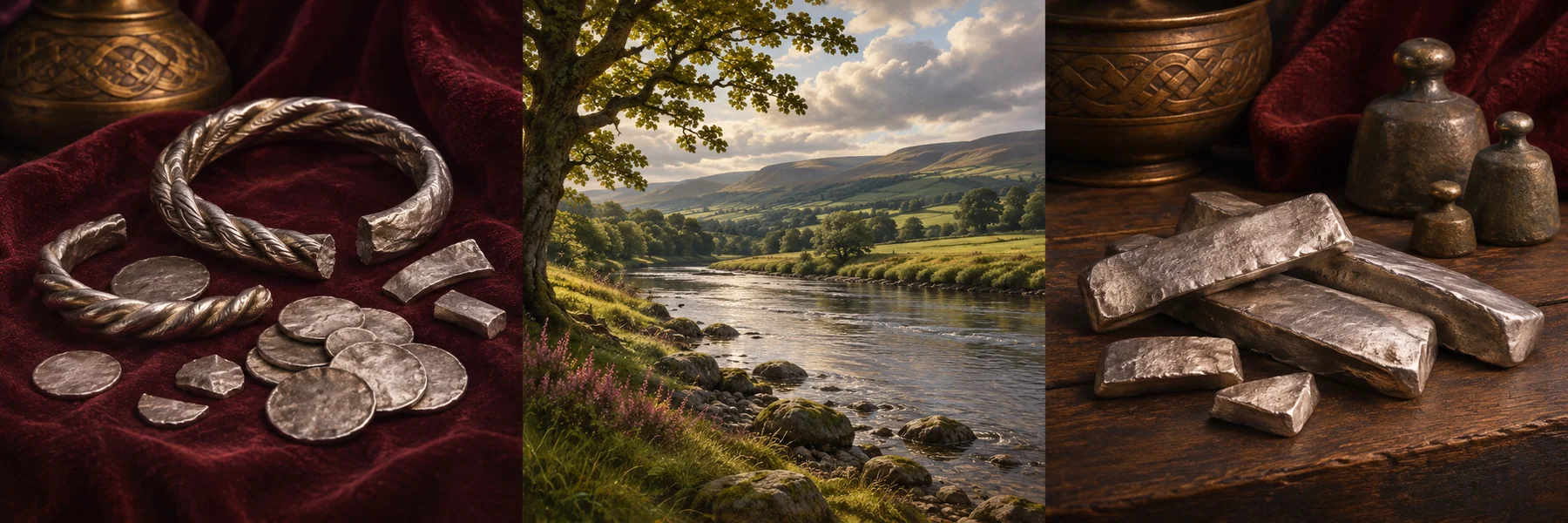
AI-generated editorial illustration: Illustrative Viking-age silver objects in a museum setting.View image
AI illustration · imagined scene

Who assembled the Cuerdale silver, and why did it remain buried until nineteenth-century workers found it?

About 905–910; found 1840

The story

What we know

In 1840, workers near the River Ribble discovered a large Viking-period hoard at Cuerdale. It contained thousands of coins alongside ingots, ornaments, and cut silver. Its material can be studied, while its original owner and the reason for burial remain uncertain. [1] [2]

More context & timeline

The Ashmolean describes approximately forty kilograms of valuables and about 8,500 items. Coins and bullion connect the hoard with several regions, including the British Isles and farther trading networks. Museum interpretations place burial around the early tenth century, using the latest coins as important chronological evidence. [1] [2]
  1. Early tenth century

    The latest coins constrain the earliest likely time of burial. [1]

  2. 1840

    Workers discover the hoard in Lancashire. [1]

  3. After discovery

    Objects enter several collections and become the subject of continuing cataloguing and research. [3]

Look closely

Follow the evidence

Scope is the documented Cuerdale Hoard, not generic Viking treasure. Generated objects are not authenticated hoard pieces, and the scenes provide no treasure-hunting location or excavation guidance.

AI-generated editorial illustration: Illustrative Viking-age silver objects in a museum setting.
AI illustration · imagined scene
Evidence 1

Coins give a boundary, not an appointment

A coin cannot be buried before it is made. The most recent issues therefore help date deposition, but do not establish an exact day, identify a depositor, or show how long older coins circulated before the hoard was assembled. [1]

AI-generated editorial illustration: Imagined broad River Ribble landscape.
AI illustration · imagined scene
Evidence 2

Different forms of silver served together

Coins, ingots, ornaments, and hacksilver occur in the same deposit. This mixture reflects silver valued in different forms, rather than requiring every object to function as a modern denomination or remain intact as jewelry. [2]

AI-generated editorial illustration: Illustrative silver fragments and historical balance weights.
AI illustration · imagined scene
Evidence 3

A catalogue preserves relationships

Specialist study compares individual coins and metalwork within the hoard and with related material. Its scholarly record matters because objects dispersed after discovery can still be interpreted together when their provenance is carefully maintained. [3]

Interpret the evidence

What could explain it?

Follow a possibility. Weigh what supports it. See where the evidence stops.

AI artwork sets the scene; it does not reconstruct an established answer.

Explore an explanationThe hoard belonged to displaced Dublin Vikings

The support

The British Museum discusses a proposal connecting it with people expelled from Dublin in 902. Irish Sea geography and the early tenth-century date make that historical context relevant. [2]

The limit

The museum explicitly identifies the connection as unproved. A plausible regional event does not name the owner or establish that the buried silver financed one particular movement or campaign. [2]

Explore an explanationIt was an accumulated reserve of mobile wealth

The support

The mixture of coins and bullion is consistent with wealth assembled through exchange and other transfers. Valuable metal could be stored while its owner expected later recovery. [1]

The limit

The objects do not provide a personal account of acquisition. Trade, tribute, payment, and conflict can leave overlapping material patterns, so the composition alone cannot establish one exclusive source. [1]

Could the same mixture of objects fit a merchant’s reserve and a political payment, and what additional evidence would separate them?
AI-generated editorial illustration: Illustrative Viking-age silver objects in a museum setting.
AI illustration · imagined scene

Connected place

Ashmolean Museum / British archaeology collections

Public collection interpretation explains the recovered Cuerdale objects and their wider context.

Visitor guide

Objects are held across collections, and current displays vary. This learning link is not an excavation location or a promise that the complete hoard is on view.

AI-generated editorial illustration: Illustrative silver fragments and historical balance weights.
AI illustration · imagined scene

Keep investigating

Step beyond the story.

Explore the connected place, examine the records, and form your own reading of the evidence.

Photo credits & full-image view
AI-generated editorial illustration for Viking treasure. It is an imagined scene, not a historical photograph or source evidence.

Created for TrekboundX · Image source · AI artwork details

Left panel extracted from a generated triptych and optimized as WebP without enlargement. The original PNG and generation prompt are preserved in the project artwork ledger.

Scene artwork is AI-generated editorial illustration. Real photographs and original records retain their separate credits.

Sources & further reading

Original TrekBoundX writing. Research reviewed November 25, 2026. Source links do not imply institutional endorsement.

  1. Ashmolean Museum, University of OxfordCuerdale HoardExamine the source
  2. British MuseumSutton Hoo and Europe: Room 41 large-print guideExamine the source
  3. British Museum research repository / James Graham-CampbellThe Cuerdale Hoard and Related Viking-Age Silver and GoldExamine the source
Suggest a correction
All mysteriesNext mysteryThe Lufthansa Heist

Viking Treasure: The Cuerdale Hoard — image

AI-generated editorial illustration: Illustrative Viking-age silver objects in a museum setting.
AI-generated editorial illustration for Viking treasure. It is an imagined scene, not a historical photograph or source evidence.

Created for TrekboundX · Image source · AI artwork details

Left panel extracted from a generated triptych and optimized as WebP without enlargement. The original PNG and generation prompt are preserved in the project artwork ledger.